

Abstract
For homeowners, developers, and procurement managers dealing with urban noise pollution, the question isn’t simply whether soundproof aluminum glass works — it’s whether it performs reliably enough to justify the investment. Street-facing facades in high-traffic corridors can experience ambient noise levels of 65–80 dB(A), well above the 35–45 dB(A) interior threshold recommended by WHO for residential spaces.
This article systematically analyzes how soundproof aluminum glass systems reduce road traffic noise, covering the acoustic physics behind glazing assemblies, critical performance specifications (STC and Rw ratings), applicable compliance standards, and real-world installation variables that determine whether a window delivers its lab-tested value in the field. Whether you are specifying curtain wall systems for a mixed-use tower or retrofitting street-facing apartments, this guide provides the technical grounding and procurement intelligence to make an informed decision.
How Soundproof Aluminum Glass Works Against Street Noise
The Physics of Noise Reduction in Glazing Systems
Soundproof aluminum glass doesn’t rely on a single mechanism — it leverages three complementary physical principles working in concert.
Mass Law states that acoustic transmission loss increases with the surface mass of a barrier. Heavier glass panes require more energy to vibrate, meaning less sound energy passes through. This is why thicker glass panes (e.g., 8 mm vs. 4 mm) consistently outperform lighter alternatives at mid-to-high frequencies.
Damping interlayers — typically polyvinyl butyral (PVB) or Sentry Glass Plus (SGP) — are laminated between glass plies to convert acoustic vibration energy into heat via internal friction. This is particularly effective at attenuating low-frequency road noise (50–500 Hz) that standard mass-only configurations struggle to block.
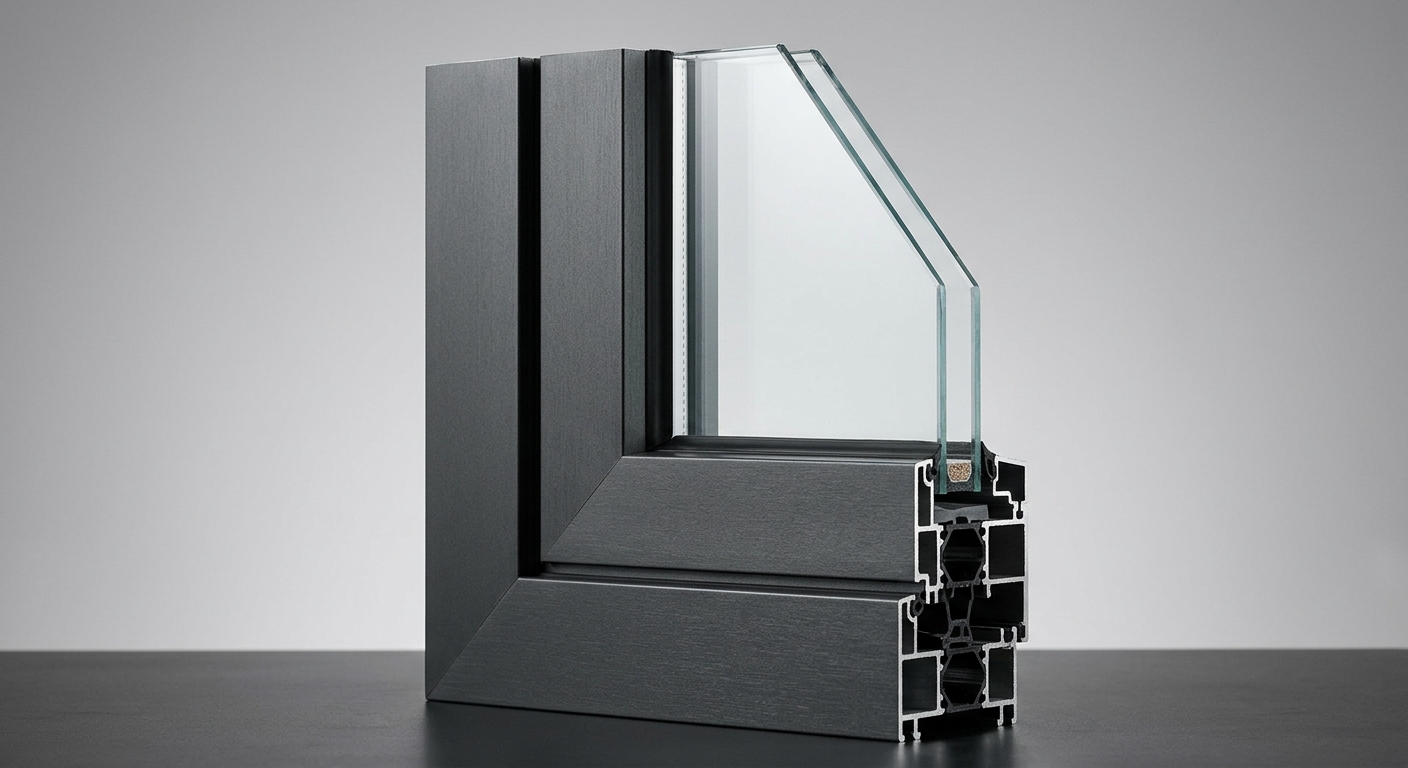
Air gap spacing in insulated glazing units (IGUs) introduces an additional acoustic discontinuity. A wider cavity (16 mm or greater, often filled with argon) disrupts sound wave propagation between panes. Asymmetric glazing configurations — pairing panes of different thicknesses, such as 6 mm + 12 mm air + 8.38 mm laminate — further break the resonance coupling that can reduce performance at specific frequencies.
Together, these three mechanisms enable well-configured soundproof aluminum glass to achieve 35–45 dB of noise reduction across the frequency spectrum relevant to urban road traffic.
Role of the Aluminum Frame in Acoustic Performance
The glazing unit alone cannot deliver optimal acoustic performance if the aluminum frame introduces structural weak points. Three frame-related factors are decisive:
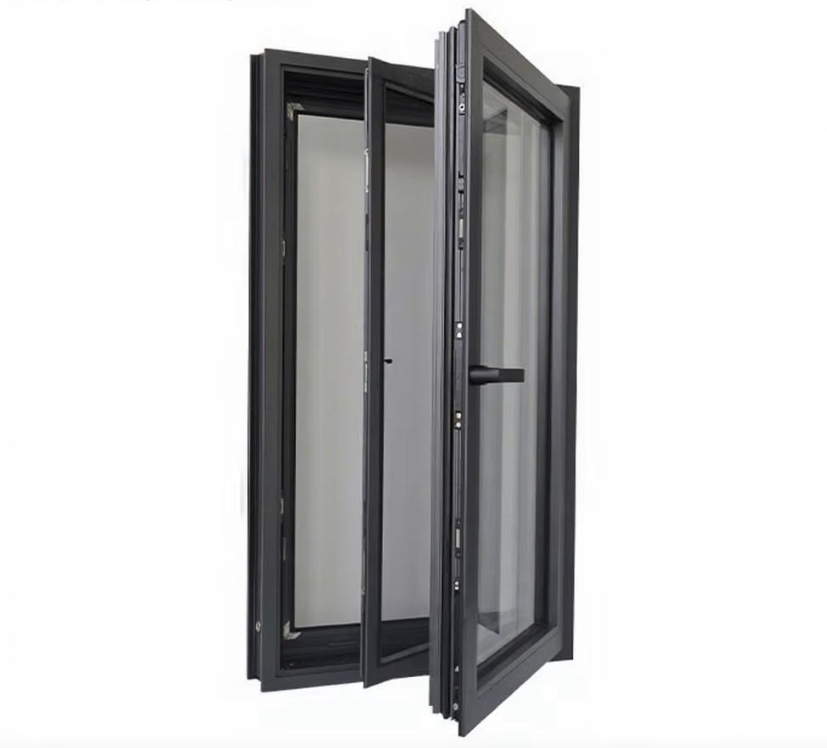
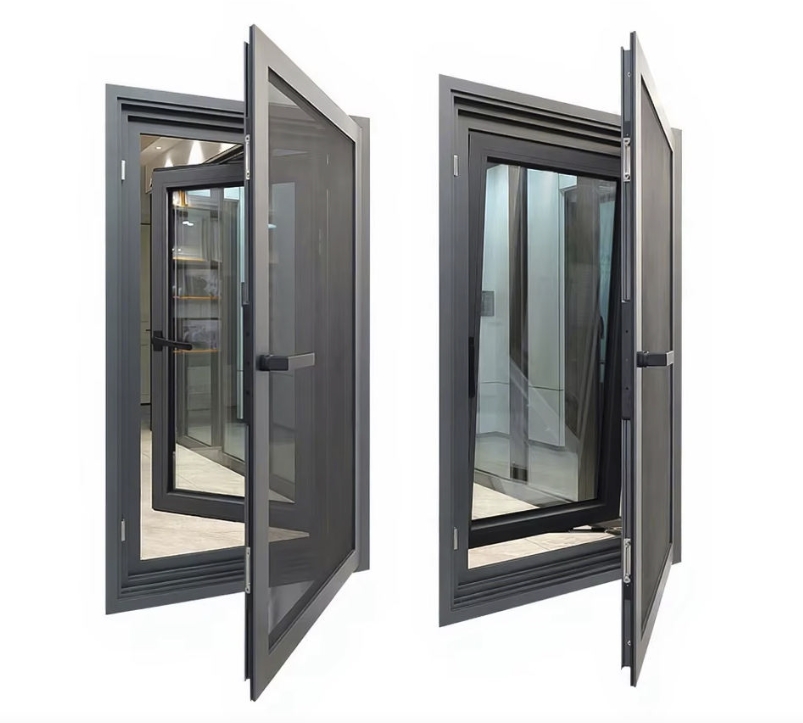
Perimeter sealing with dual or triple EPDM rubber gaskets prevents flanking noise — sound that bypasses the glass entirely by traveling through gaps between the frame and the wall opening. Even a 1 mm continuous gap can reduce effective acoustic performance by 10 dB or more.
Thermal break (断桥) profiles — aluminum sections separated by polyamide insulating strips — also serve an acoustic function. By interrupting the continuous aluminum path, they reduce the structural transmission of vibration from the outer frame face to the inner face, minimizing acoustic bridging.
Corner joint integrity is a frequently overlooked variable. Mechanically crimped or welded frame corners with injected sealant maintain the acoustic continuity of the frame perimeter. Poorly assembled corners create micro-gaps that become preferential sound transmission paths, undermining the entire system’s performance.
Key Specifications That Determine Noise Blocking Performance
STC and Rw Ratings — What the Numbers Mean for Buyers
Two primary rating systems quantify acoustic performance for procurement purposes:
- STC (Sound Transmission Class) is the North American standard (ASTM E413). It uses a single-number rating derived from laboratory measurements across 16 one-third-octave bands (125 Hz–4000 Hz). Higher STC values indicate better sound isolation.
- Rw (Weighted Sound Reduction Index) is the European equivalent (ISO 717-1), similarly expressed as a single number but calculated under EN ISO 10140 test conditions.
For street noise applications, the following thresholds provide practical guidance:
| Scenario | Exterior Noise Level | Recommended Minimum Rating |
|---|---|---|
| Suburban road (moderate traffic) | 55–65 dB(A) | STC/Rw 32–36 |
| Urban arterial road | 65–75 dB(A) | STC/Rw 38–42 |
| Highway or major boulevard | 75–80 dB(A) | STC/Rw 44–48 |
Buyers should request third-party laboratory test reports rather than relying solely on manufacturer-stated values, as field performance typically runs 3–5 dB below lab results due to installation variables.
Glazing Combinations — Single, Double, and Laminated Options
Configuration selection should align with the dominant noise frequency and project budget:
Single glazing (monolithic, 6–10 mm) provides minimal acoustic performance (Rw 25–30) and is unsuitable for street-facing applications in high-traffic environments.
Standard double-glazed IGU (4 mm + 12 mm air + 4 mm) improves thermal performance but delivers only Rw 30–33 due to symmetric resonance coupling at the coincidence dip frequency.
Laminated IGU incorporating PVB interlayer glass addresses the coincidence dip and achieves Rw 36–40, making it the entry-level specification for urban residential facades.
Asymmetric laminated IGU — the highest-performance configuration — pairs panes of different thicknesses with a PVB or SGP interlayer and a wider cavity (16–20 mm), achieving Rw 42–48+.
| Configuration | Glass Thickness Combination | Rw / STC Reference | Applicable Noise Level | Typical Application | Approximate Price Range |
|---|---|---|---|---|---|
| Single Glazing | 8 mm monolithic | Rw 28–30 | < 55 dB(A) | Low-traffic residential | $ (baseline) |
| Standard IGU | 4+12A+4 mm | Rw 30–33 | 55–65 dB(A) | Suburban facades | $$ |
| Laminated IGU | 6+12A+6.38 mm PVB | Rw 36–40 | 65–72 dB(A) | Urban apartments, offices | $$$ |
| Asymmetric Laminated IGU | 6+16A+8.38 mm SGP | Rw 42–48 | 72–80 dB(A) | Highway-adjacent, hotels | $$$$ |
Compliance Standards and Installation Quality Control
Relevant Acoustic Standards and Certifications
Procurement specifications should reference the following test standards and require corresponding documentation from suppliers:
- ISO 10140-2 / EN ISO 10140: Laboratory measurement of sound insulation of building elements — the European benchmark for Rw certification.
- ASTM E90: Standard method for laboratory measurement of airborne sound transmission loss — the North American equivalent for STC ratings.
- ISO 717-1: Defines the single-number rating calculation method (Rw) from multi-frequency test data.
- ASTM E413: Defines STC calculation methodology.
When evaluating suppliers, buyers should request: accredited laboratory test reports (not internal factory reports), product-specific test certificates (not generic glass type certificates), and documentation confirming that the tested configuration matches the specified product exactly — including glass thickness, interlayer type, cavity width, and frame system.
Why Installation Gaps Undermine Lab-Tested Performance
Laboratory acoustic ratings are measured under controlled conditions with perfectly sealed, rigid test apertures. Real-world installations introduce variables that consistently reduce field performance:
Perimeter leakage is the most common failure mode. If the window frame is not continuously sealed to the rough opening with acoustic-grade sealant (e.g., low-modulus silicone), sound flanks the glazing unit entirely. A 0.5% open area in an otherwise Rw 42 window can reduce effective performance to Rw 25.
Frame corner gaps from inadequate corner crimping or missing corner sealant create direct acoustic short circuits through the frame profile.
Insufficient compression of gaskets due to improper hardware adjustment reduces the contact pressure of perimeter seals, particularly at sash corners.
Mitigation measures include: specifying acoustic sealant at the frame-to-wall interface in the project specification, requiring pre-handover field testing per ASTM E966 (field measurement of airborne sound attenuation), and engaging installers with documented acoustic window installation experience.
Application Scenarios and Commercial Value for Buyers
Residential and Mixed-Use Projects Near High-Traffic Roads
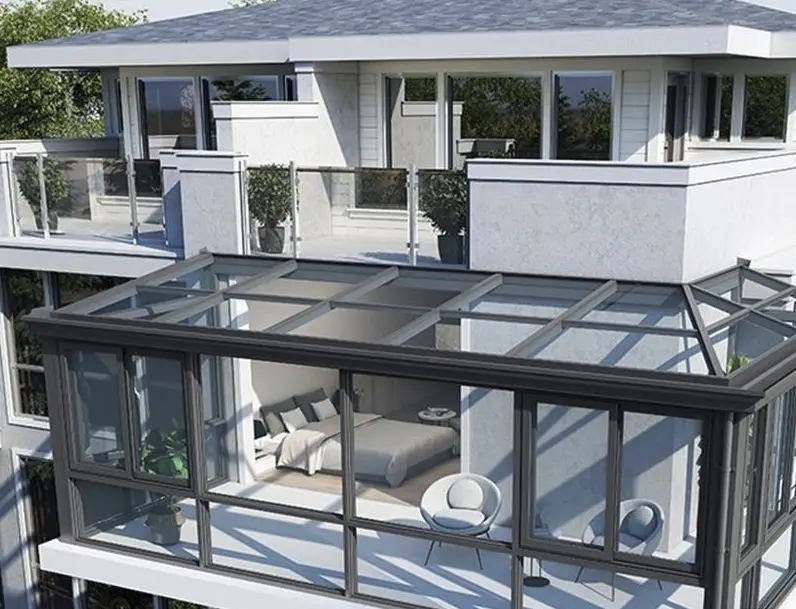
Street-facing residential and hospitality projects represent the primary market for high-performance soundproof aluminum glass systems. The commercial logic is straightforward: units with certified acoustic performance command measurable rental and sale premiums in urban markets, while reducing post-occupancy complaints and warranty claims.
For urban apartment towers on arterial roads, a minimum specification of asymmetric laminated IGU (Rw 40+) with thermally broken aluminum frames is increasingly standard. Hotel operators targeting 4–5 star classifications typically require Rw 42–45 for street-facing guestrooms to meet brand acoustic standards.
The ROI calculation for developers should account not only for material cost differentials but also for reduced HVAC loads (acoustic glazing typically provides superior thermal insulation), lower post-handover remediation costs, and compliance with increasingly stringent municipal noise ordinances in major urban markets.
Specifying Soundproof Aluminum Glass in B2B Procurement
For developers, general contractors, and facade subcontractors, locking in acoustic performance at the specification stage is critical. Key technical clauses to include in project specifications:
- Minimum Rw or STC value for each facade zone, differentiated by orientation and traffic exposure.
- Required test standard (ISO 10140 or ASTM E90) and accreditation body for laboratory reports.
- Frame system specification: thermally broken aluminum profile, minimum two-point EPDM gasket sealing, injected corner joints.
- Sealant specification: acoustic-grade perimeter sealant at frame-to-structure interface.
- Field verification: post-installation acoustic testing per ASTM E966 or ISO 16283-1 for a representative sample of units.
Supplier evaluation should assess: in-house or third-party acoustic testing capability, project references in comparable noise environments, and technical support capacity for specification development.
FAQ
Q1: What STC or Rw rating do I need to block typical street and road traffic noise effectively?
For urban arterial roads generating 65–75 dB(A) exterior noise, a minimum Rw 38–42 is recommended to achieve interior levels below 40 dB(A). Highway-adjacent facades should specify Rw 44–48. Always account for a 3–5 dB field performance deduction from the laboratory-certified value when setting specifications.
Q2: Does the aluminum frame itself reduce acoustic performance compared to uPVC or timber frames?
Aluminum frames with thermal breaks (断桥铝) perform comparably to uPVC frames when properly designed and sealed. The critical variables are gasket quality, corner joint integrity, and perimeter sealing — not the frame material per se. Poorly sealed aluminum frames will underperform well-sealed uPVC, and vice versa.
Q3: How can I verify that installed soundproof aluminum glass meets the manufacturer’s stated noise reduction figures?
Request third-party laboratory test reports specific to the exact product configuration. After installation, commission field acoustic measurements per ASTM E966 or ISO 16283-1 on a sample of completed units. Any gap exceeding 5 dB between specified and measured performance warrants investigation of installation quality before final acceptance.
Conclusion
Soundproof aluminum glass is a technically validated solution for road traffic noise control — but its real-world effectiveness depends on three equally important factors working together: the glazing configuration (asymmetric laminated IGU for high-noise environments), the aluminum frame system (thermally broken profiles with continuous EPDM sealing), and installation quality (acoustic sealant, correct hardware adjustment, and field verification testing).
For procurement decision-makers, the key takeaway is that specifying a certified Rw or STC value is necessary but not sufficient. The specification must also mandate the test standard, require accredited laboratory documentation, define installation quality requirements, and include post-installation field testing as an acceptance criterion.
Projects that integrate all three dimensions consistently achieve interior acoustic environments meeting WHO and local regulatory standards, delivering measurable value through occupant satisfaction, regulatory compliance, and long-term asset performance. For facades on busy roads, soundproof aluminum glass — properly specified and installed — is not just a comfort upgrade; it is a structural requirement for livable, marketable urban space.