
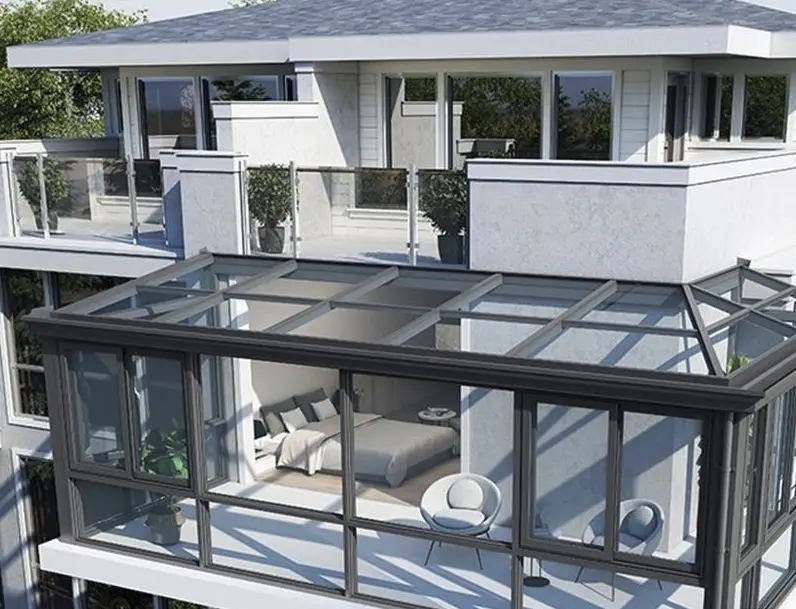

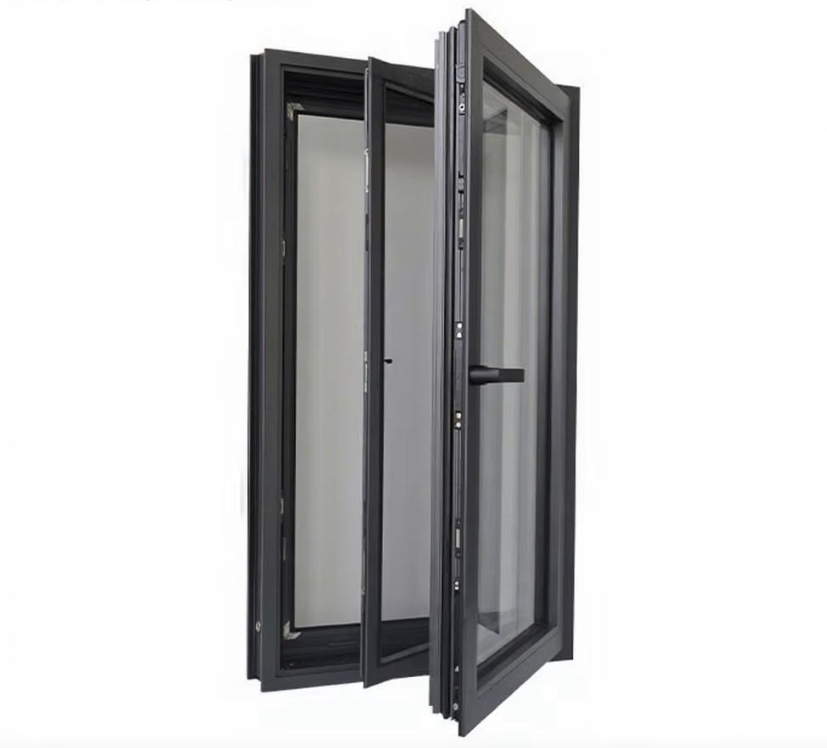
Glazing specification is one of the most consequential procurement decisions in aluminum glass sunroom projects. Select the wrong glazing type and you face condensation damage, energy code violations, occupant discomfort, and accelerated frame corrosion — all of which translate directly into warranty claims and reputational risk for B2B suppliers and developers. Select the right insulated glass unit (IGU) for your climate zone and you deliver a structure that performs across decades, meets international energy standards, and justifies its lifecycle cost.
This article provides a technical decision framework for architects, procurement managers, and commercial developers specifying aluminum glass sunrooms. It covers the structural differences between glazing types, how aluminum framing interacts with thermal performance, condensation thresholds by climate zone, relevant compliance standards, and the ROI calculus for upgrading to insulated glass — giving B2B buyers a complete specification reference in a single resource.
Understanding Glazing Options for Aluminum Glass Sunrooms
Single Glazing vs. Insulated Glass Units (IGUs) — What’s the Structural Difference?
Single-pane glazing consists of one layer of glass, typically 4–6 mm thick, set directly into the aluminum frame rebate. It offers minimal thermal resistance (U-values typically above 5.0 W/m²K) and is structurally the lightest option — relevant where aluminum profiles are sized for minimum load.
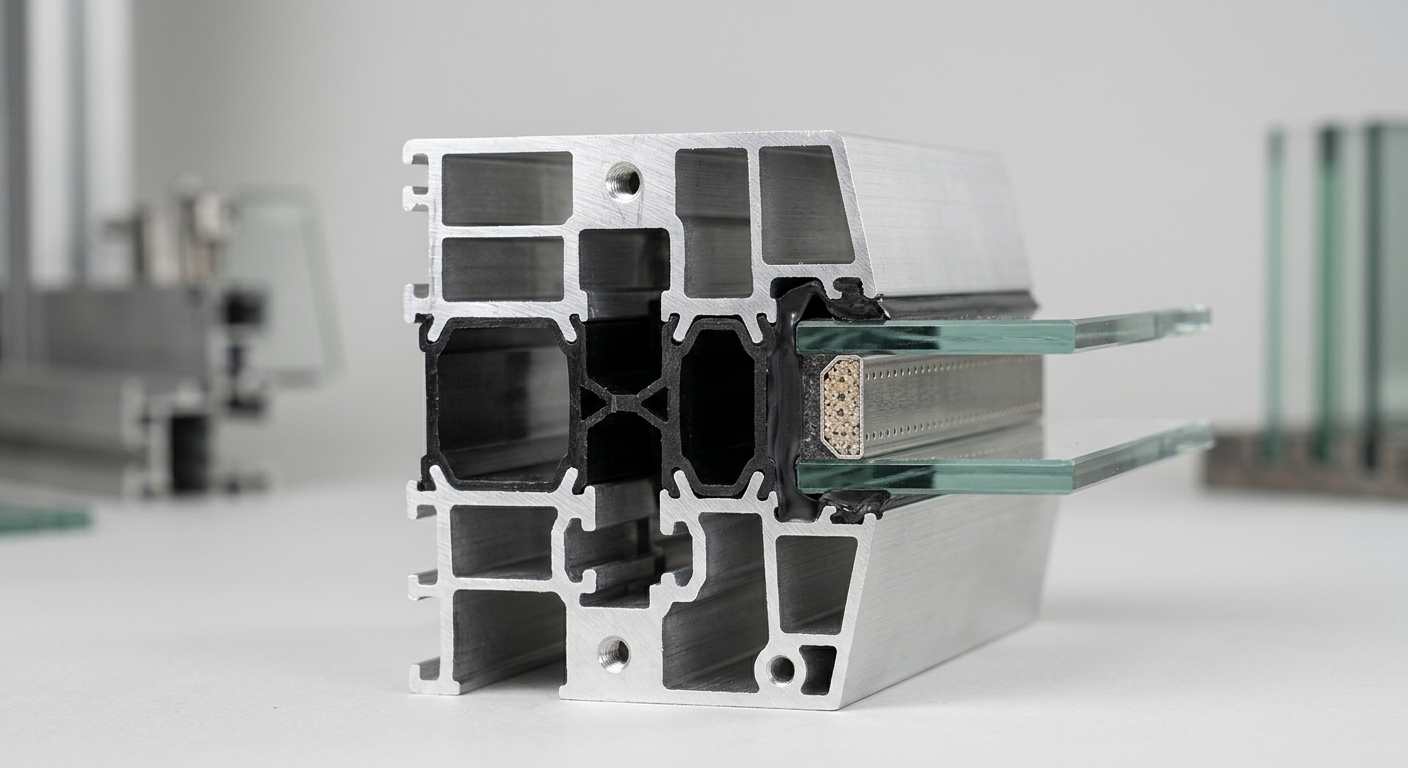
An Insulated Glass Unit (IGU) replaces that single pane with two or three glass lites separated by a hermetically sealed air or gas-filled cavity. The spacer bar — positioned at the glass perimeter — maintains cavity width (typically 12–16 mm for dual-pane units) and contains desiccant to absorb residual moisture within the sealed unit. The result is a composite assembly that dramatically reduces thermal conductance.
For aluminum glass sunroom systems, the frame rebate depth and sightline width must be engineered to accommodate IGU thickness. A standard dual-pane IGU runs 24–28 mm total, compared to 6 mm for single glazing. This means aluminum extrusion profiles must be specified accordingly at the design stage — a critical coordination point between glazing supplier and frame manufacturer.
Low-E Coatings, Gas Fills, and Spacer Technology
Three IGU variables directly control thermal performance:
- Low-E (low-emissivity) coatings: Microscopically thin metallic oxide layers applied to glass surfaces. Hard-coat Low-E (pyrolytic) suits temperate climates; soft-coat Low-E (sputter-coated) achieves lower emissivity values (ε ≤ 0.03) for cold climates. Coating position within the IGU (surface 2 or 3) determines whether it prioritizes heat retention or solar rejection.
- Gas fills: Argon (thermal conductivity ~67% of air) is the industry standard for cost-effective IGUs. Krypton (~40% of air) is used in narrower cavities or triple-pane units where space is constrained.
- Warm-edge spacer bars: Conventional aluminum spacers create a thermal bridge at the glass edge. Warm-edge alternatives — stainless steel, foam, or thermoplastic composites — reduce edge-of-glass heat loss and improve condensation resistance at the perimeter, which is particularly relevant in aluminum sunroom applications where frame-to-glass junctions are extensive.
| Glazing Type | U-Value (W/m²K) | SHGC Range | Condensation Resistance Factor | Typical Climate | Relative Cost Index |
|---|---|---|---|---|---|
| Single Pane | 5.0–5.8 | 0.80–0.86 | Low (CRF 20–35) | Tropical / Mild | 1.0× |
| Double IGU (Argon + Low-E) | 1.0–1.8 | 0.25–0.60 | Medium–High (CRF 45–65) | Temperate / Cold | 1.8–2.4× |
| Triple IGU (Krypton + Low-E) | 0.5–0.9 | 0.20–0.45 | Very High (CRF 65–80) | Severe Cold / Subarctic | 2.8–3.5× |
Thermal Performance & Condensation Control in Aluminum Sunroom Systems
How Aluminum Framing Affects Overall Thermal Efficiency
Aluminum’s thermal conductivity (≈160 W/m·K) is approximately 1,000 times higher than glass — making the frame the dominant thermal bridge in any aluminum glass sunroom system. Specifying a high-performance IGU while ignoring frame conductance is a common procurement error that undermines whole-system U-value.
The solution is the polyamide thermal break: a glass-fiber-reinforced nylon strip mechanically pressed or poured between the interior and exterior aluminum extrusion profiles. Effective thermal break widths range from 24 mm to 34 mm, reducing frame U-values from above 6.0 W/m²K (non-broken aluminum) to 1.4–2.0 W/m²K — a range compatible with IGU performance.
For whole-system U-value calculations (required under ASHRAE 90.1 and EN ISO 10077), specifiers must account for: center-of-glass U-value, edge-of-glass U-value (influenced by spacer type), and frame U-value weighted by area fraction. An aluminum sunroom with thermally broken frames and dual-pane Low-E IGUs can achieve a whole-system U-value of 1.6–2.2 W/m²K — meeting most temperate-climate energy codes.
Condensation Risk — When Does Insulated Glass Become Non-Negotiable?
Condensation forms on any surface whose temperature falls below the dew point of the surrounding air. In an aluminum glass sunroom, interior glass surface temperatures are a direct function of the glazing’s thermal resistance.
Condensation becomes structurally and operationally critical when:
- Interior relative humidity exceeds 50% (common in hospitality, pool enclosures, or humid climates)
- Exterior temperatures drop below 5°C for sustained periods
- The sunroom is used year-round as a conditioned or semi-conditioned space
Single glazing in a cold-climate aluminum sunroom will develop persistent surface condensation below approximately 15°C exterior temperature at standard interior conditions (20°C / 50% RH). This moisture migrates into aluminum frame joints, attacks sealant beds, and accelerates galvanic corrosion at fastener points. For any project in climate zones 4–8 (ASHRAE classification) or equivalent EU heating-dominated zones, insulated glass is not optional — it is a performance and durability prerequisite.
Compliance Standards & Climate-Based Specification Guidelines
Key Energy Codes and Glazing Standards Buyers Must Reference
B2B procurement specifications for aluminum glass sunrooms must align with applicable regulatory frameworks:
- ENERGY STAR (North America): Fenestration U-value requirements vary by climate zone; northern zone requires U ≤ 1.22 W/m²K for skylights/sunroom glazing.
- ASHRAE 90.1: Mandates whole-assembly U-value compliance; relevant for commercial projects in the US and internationally adopted markets.
- EN 673 / EN ISO 10077 (EU/UK): Defines U-value calculation methodology for glazing and framing; referenced in CE marking and building regulation compliance.
- BS 8213 / Approved Document L (UK): Sets maximum U-values for conservatories and sunrooms in domestic and commercial construction.
Suppliers exporting aluminum glass sunrooms to multiple markets should maintain IGU test certifications under both NFRC (North American) and CE/EN frameworks to serve international B2B clients without re-specification delays.
Matching Glazing Specification to Project Climate Zone
| Climate Zone | Exterior Winter Design Temp | Recommended IGU Type | Target U-Value | Target SHGC |
|---|---|---|---|---|
| Hot-Arid (Zone 1–2) | >10°C | Single or Low-SHGC Double | ≤3.0 | ≤0.25 |
| Temperate (Zone 3–4) | 0°C to 10°C | Double IGU + Low-E | ≤1.8 | 0.30–0.45 |
| Cold-Humid (Zone 5–6) | −10°C to 0°C | Double IGU + Argon + Warm-Edge | ≤1.4 | 0.35–0.50 |
| Severe Cold (Zone 7–8) | Below −10°C | Triple IGU + Krypton + Low-E | ≤0.9 | 0.40–0.55 |
In hot-arid climates, the priority shifts from heat retention to solar rejection — a low SHGC (≤0.25) limits cooling load, and a single-pane tinted or reflective glass may satisfy code while minimizing cost. In cold-humid zones, higher SHGC is desirable to capture passive solar gain, paired with a low U-value to retain that heat.
Commercial & Residential Application Scenarios
High-Volume B2B Use Cases — Hotels, Retail Extensions, and Multi-Unit Developments
Commercial aluminum glass sunroom procurement operates at a fundamentally different scale than residential supply. Key considerations for B2B buyers include:
- Glazing standardization: Specifying a single IGU configuration across all units in a hotel or mixed-use development reduces procurement complexity, simplifies glazing replacement logistics, and supports bulk pricing from IGU manufacturers.
- IGU certification requirements: Many commercial projects require third-party tested and certified IGU assemblies (NFRC, CE marked, or Kitemark). Suppliers must provide documented U-value and SHGC test data — not calculated estimates.
- Lead time coordination: IGU production lead times (typically 3–6 weeks for custom sizes) must be integrated into aluminum frame fabrication schedules. Misalignment is a common cause of project delays in large sunroom installations.
- Structural load: Triple-pane IGUs add approximately 8–12 kg/m² compared to single glazing. Aluminum frame sections and fixing details must be engineered accordingly, particularly for roof glazing in sunroom structures.
Cost vs. Performance Trade-Off — Calculating ROI on Insulated Glass Upgrades
The upfront cost premium for double IGU over single glazing typically ranges from 80–140% on a per-m² basis. However, the lifecycle calculation changes the equation significantly:
- HVAC energy savings: A properly specified insulated glass sunroom in a temperate climate reduces heating/cooling loads by 30–50% compared to single glazing, translating to measurable annual energy cost reductions.
- Payback period: For commercial applications with high occupancy hours, IGU payback periods of 4–7 years are commonly modeled. In cold climates with high heating costs, payback can compress to 3–5 years.
- Maintenance cost avoidance: Eliminating condensation-related damage (sealant failure, frame corrosion, mold remediation) represents a significant hidden cost avoided over a 20–25 year building lifecycle.
For B2B contracts with long-term maintenance obligations or energy performance guarantees, insulated glass is the only specification that supports contractual commitments.
FAQ Module
Q1: Is insulated glass mandatory for an aluminum glass sunroom in cold climates, or can single glazing meet code?
In most cold-climate jurisdictions (ASHRAE zones 5 and above, EU heating zones C/D), single glazing cannot meet mandatory U-value requirements for habitable or semi-conditioned sunroom spaces. Even where code technically permits single glazing for unheated structures, persistent condensation and thermal discomfort make it commercially unviable for any year-round application.
Q2: What U-Value should I specify for an aluminum sunroom IGU to prevent condensation in a high-humidity environment?
For interior conditions of 20°C / 60% RH, the interior glass surface temperature must remain above approximately 12°C to prevent condensation. This requires a center-of-glass U-value of ≤1.4 W/m²K in climates where exterior temperatures drop below 0°C. Specify warm-edge spacers to extend this protection to the glass perimeter.
Q3: Does upgrading to insulated glass significantly increase lead time or structural load requirements?
Lead time increases by 2–4 weeks for custom IGU fabrication versus stock single-pane glass. Structural load increases by 6–14 kg/m² depending on configuration. Both factors are manageable with early-stage coordination but become costly if addressed during construction. Specify IGU type and dimensions at the schematic design phase.
Conclusion
Glazing selection for an aluminum glass sunroom is a performance and compliance decision, not an aesthetic one. Single glazing remains appropriate only for mild climates and non-conditioned seasonal structures where energy code requirements are minimal and condensation risk is negligible. For any project in temperate, cold, or high-humidity conditions — and for all commercial applications where energy performance, occupant comfort, and long-term durability are contractual requirements — insulated glass is the correct specification.
B2B specifiers should align IGU type (double vs. triple pane), coating specification (Low-E surface position and emissivity), gas fill, and spacer technology to the project’s climate zone and applicable energy code. Pair that glazing specification with thermally broken aluminum framing to achieve a whole-system U-value that meets regulatory thresholds and supports lifecycle performance commitments. The upfront cost premium on insulated glass consistently delivers positive ROI through energy savings, condensation avoidance, and reduced maintenance liability over a 20+ year building life.