
Abstract
Year-round usability is the single most common objection procurement teams and end-buyers raise when specifying an aluminum glass sunroom. The concern is legitimate: an under-engineered glass enclosure can overheat in July and become an icebox in January, effectively reducing a significant capital investment to a three-season novelty.
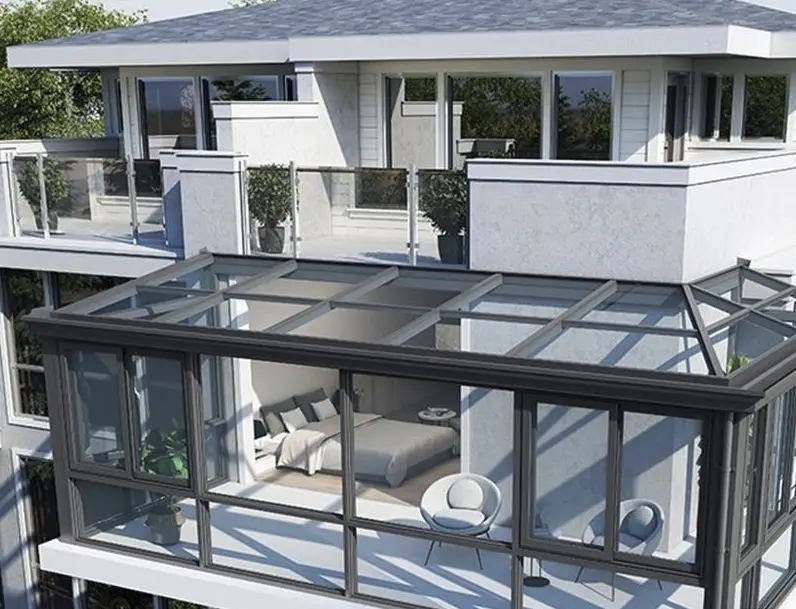
The good news is that modern sunroom engineering has largely solved this problem—provided buyers specify the right combination of four interdependent systems: thermal-break aluminum frames, Low-E insulated glass units (IGUs), active ventilation, and integrated shading. Each lever addresses a distinct mode of heat transfer. Together, they create a four season sunroom that maintains habitable temperatures across climate extremes without excessive HVAC load.
This article is written for specification engineers, commercial procurement teams, and residential project developers who need a technically grounded framework for evaluating competing products. We will define the key performance metrics, explain the engineering logic behind each system, and provide practical selection criteria. By the end, you will have a clear specification checklist to apply immediately to supplier datasheets and tender documents.
1. The Thermal Challenge: Why Standard Aluminum Sunrooms Fail in Extreme Seasons
1.1 Heat Transfer Mechanics in an All-Glass Enclosure
An aluminum glass sunroom exchanges heat with its environment through three simultaneous mechanisms. Conduction moves heat directly through solid materials—glass panes, aluminum extrusions, and fasteners. Convection transfers heat via air movement across interior and exterior surfaces. Solar radiation (solar gain) transmits shortwave energy through glazing and converts it to longwave heat inside the enclosure.
The critical vulnerability in a conventional aluminum sunroom is the frame itself. Standard aluminum extrusions have a thermal conductivity of approximately 160 W/m·K—roughly 1,000 times higher than still air. An unbroken aluminum profile running from the warm interior to the cold exterior acts as a thermal bridge: it bleeds heat outward in winter, conducts heat inward in summer, and creates cold surface condensation that degrades both comfort and air quality. In a structure where frames can represent 20–30% of the total envelope area, this is not a marginal issue.
Solar gain compounds the problem in summer. A south- or west-facing glass enclosure can accumulate radiant heat faster than any passive ventilation strategy can dissipate it—unless the glazing itself is engineered to manage solar transmittance.
1.2 The Four-Season Performance Benchmark
Three metrics define whether an aluminum glass sunroom qualifies as a true year-round sunroom:
- U-value (W/m²·K): Measures overall heat loss rate. For cold climates (ASHRAE Zone 5+), a whole-unit U-value ≤1.4 W/m²·K is the practical threshold for year-round comfort without excessive heating costs.
- Solar Heat Gain Coefficient (SHGC): Dimensionless value (0–1) representing the fraction of solar radiation admitted. Cooling-dominated climates require SHGC ≤0.25; heating-dominated climates benefit from SHGC 0.35–0.55 to capture passive solar gains.
- Air Infiltration Rate: Expressed as air changes per hour (ACH) or leakage at 75 Pa. High-performance sunroom assemblies should target ≤0.3 ACH under standard pressure differentials.
Specifying to these benchmarks—rather than relying on supplier marketing language—is the first practical step toward insulated glass sunroom for winter performance.
2. Frame Engineering: Thermal-Break Aluminum Profiles
2.1 How a Thermal-Break Profile Works
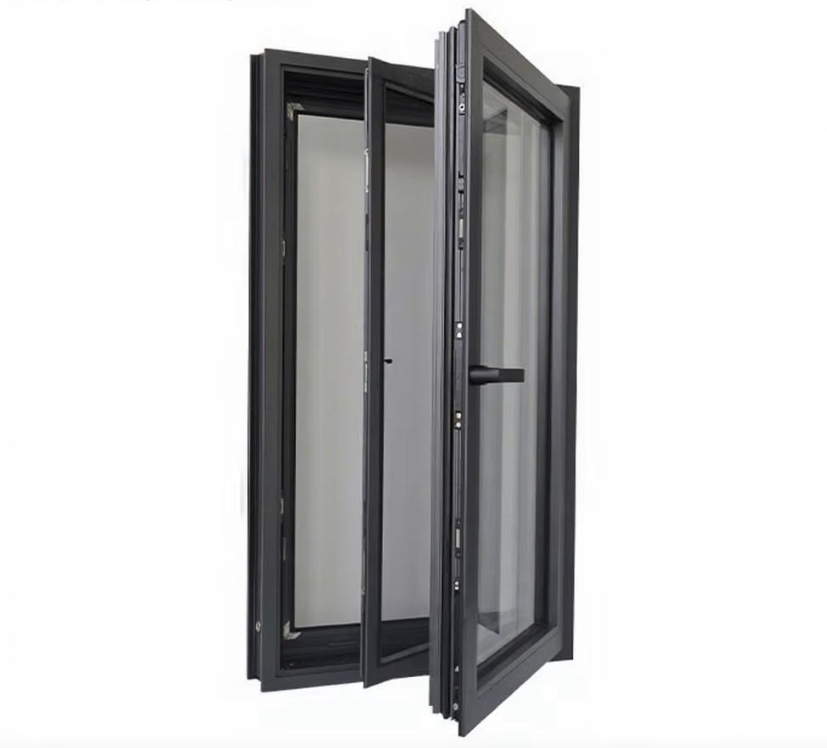
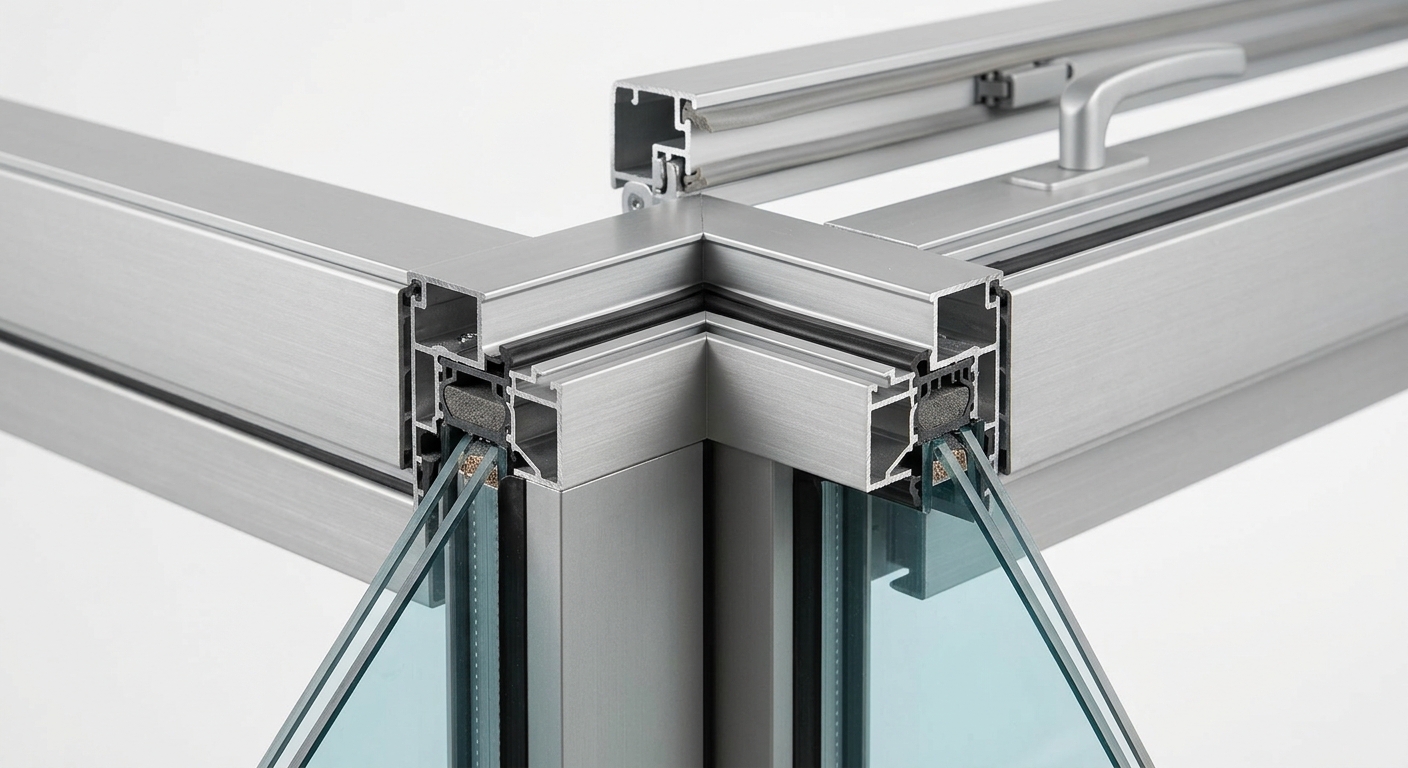
A thermal-break frame interrupts the conductive aluminum path by bonding two separate aluminum sections with a low-conductivity polyamide (PA66 GF25) strip. Polyamide’s thermal conductivity is approximately 0.3 W/m·K—over 500 times lower than aluminum—effectively creating a thermal barrier within the cross-section of the extrusion.
The result is a composite profile that retains aluminum’s structural rigidity and corrosion resistance while dramatically reducing thermal bridging. Frame conductivity drops from ~160 W/m·K for a monolithic extrusion to an effective system value that can achieve Uf ≤1.4 W/m²·K in well-designed profiles. This directly improves the whole-unit U-value and eliminates the cold-surface condensation that degrades interior comfort in winter.
One common concern is structural compromise. Modern thermally broken profiles are engineered with mechanical crimping and adhesive bonding between the aluminum shells and the polyamide insert, meeting EN 14024 structural performance requirements. The assembly does not sacrifice load-bearing capacity under wind or snow loads relevant to residential and light commercial applications.
2.2 Frame Specification Criteria for Procurement Teams
When evaluating suppliers, request third-party test reports rather than relying on nominal claims. Key parameters to verify:
| Profile Type | Thermal Conductivity (W/m·K) | Polyamide Width | Uf Value (W/m²·K) | Applicable Climate Zone |
|---|---|---|---|---|
| Standard Aluminum | ~160 | None | ~5.8–7.0 | Mild / temperate only |
| Basic Thermal Break | ~2.5 (system) | 12–18 mm | ~2.8–3.5 | Temperate |
| Mid-Performance Break | ~1.8 (system) | 20–24 mm | ~1.8–2.4 | Temperate to cold |
| High-Performance Break | ~1.2 (system) | ≥24 mm | ≤1.4 | Cold / severe cold |
Beyond thermal performance, specify:
- Wall thickness: Minimum 1.4 mm for structural members; 1.8 mm for load-bearing mullions.
- Surface finish: AAMA 2605 (North America) or Qualicoat Class II (Europe) for exterior powder coat durability—both require ≥10-year color retention under UV and weather exposure.
- Sealant compatibility: Confirm that the thermal break compound is compatible with structural silicone glazing systems if flush-glazed aesthetics are required.
3. Glazing Systems: Low-E Insulated Glass Units (IGU)
3.1 Low-E Coating Types and Their Seasonal Trade-offs
Low-emissivity coatings reduce the longwave radiant heat exchange between the glass surface and its environment. Two manufacturing processes produce meaningfully different performance profiles:
Hard-coat (pyrolytic) Low-E is applied during float glass production, producing a durable surface suitable for single-pane or outer-lite applications. It typically delivers moderate emissivity reduction (ε ≈ 0.15–0.20) and a higher SHGC, making it appropriate for heating-dominated climates where passive solar gain is beneficial.
Soft-coat (sputtered) Low-E is applied in a vacuum after glass production and achieves significantly lower emissivity (ε ≈ 0.02–0.05). It must be sealed within an IGU to protect the coating. Soft-coat configurations can be tuned to either high or low SHGC depending on the metallic layer stack, giving designers precise control for mixed or cooling-dominated climates.
Selection logic: In Scandinavia or Canada, specify passive high-SHGC soft-coat Low-E to harvest winter solar gain while still controlling summer overheating. In the Middle East or southern US, specify solar-control low-SHGC soft-coat to minimize cooling loads year-round.
3.2 IGU Configuration Options
The glass unit configuration determines the combined thermal and solar performance delivered to the frame:
- Double glazing (4-16-4 mm): Standard configuration with argon fill achieves center-of-glass U-value of ~1.1 W/m²·K with Low-E. Adequate for temperate climates.
- Triple glazing (4-12-4-12-4 mm): Adds a second air/gas cavity, achieving center-of-glass U-values of ~0.6–0.7 W/m²·K. Recommended for ASHRAE Zone 6+ or equivalent European climate zones.
- Warm-edge spacer bars: Replacing aluminum spacers with foam or stainless-steel warm-edge alternatives reduces edge-of-glass heat loss by 20–30% and prevents perimeter condensation.
- Gas fill: Argon (λ ≈ 0.017 W/m·K) is the cost-effective standard; krypton (λ ≈ 0.009 W/m·K) allows thinner cavities for triple-glazed units where frame depth is constrained.
For a compliant insulated glass sunroom for winter use in cold climates, target a whole-unit U-value ≤1.2 W/m²·K combining frame and glazing contributions.
4. Ventilation and Shading: Active Comfort Control
4.1 Ventilation Strategies for Summer Heat Management
Even with optimal Low-E glazing, solar gain in a glass-dominant enclosure can elevate interior temperatures above comfort thresholds on peak summer days. Ventilation is the primary active countermeasure.
Ridge vents and operable roof panels exploit the stack effect: hot air rises and exits at the apex while cooler air enters through lower-level openings. A well-designed ridge vent system can reduce peak interior temperatures by 8–12°C compared to a sealed enclosure. For automated control, motorized roof vents with rain sensors are standard in premium aluminum glass sunroom systems.
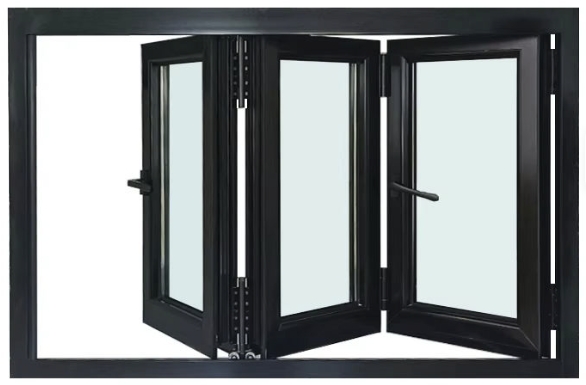
Cross-ventilation layout requires operable panels on opposing walls or roof faces. Procurement teams should verify that the frame system offers operable sash options—tilt-and-turn, sliding, or projected—at specified intervals. A minimum of 15% openable area relative to floor area is a practical benchmark for natural ventilation adequacy.
Mechanical assist (ceiling fans or low-profile HVAC cassettes) supplements natural ventilation in climates where ambient temperatures exceed interior targets even at night, or where site orientation limits natural airflow.
4.2 Integrated Shading Solutions
External shading is thermodynamically superior to internal shading because it intercepts solar radiation before it enters the glass cavity. A well-specified external blind or awning with a solar shading coefficient (Fc) of 0.15–0.20 can reduce solar gain by 80–85%, compared to 40–60% for an equivalent internal blind.
Motorized external roller blinds integrated into the aluminum frame system offer the best performance-to-convenience ratio. Specify wind-speed sensors to retract automatically above 30 km/h. For roof glazing, external retractable awnings or integrated louvered pergola elements provide shading without obstructing views when retracted.
Internal cellular or pleated blinds remain a viable secondary option where external systems are impractical. Their primary value is privacy and diffused light management rather than peak heat reduction.
Preguntas frecuentes
1. What minimum U-value should I specify for an aluminum glass sunroom intended for year-round use in a cold climate?
For climates with heating degree days above 3,000 (ASHRAE Zone 5 and colder), specify a whole-unit U-value ≤1.2 W/m²·K for the glazed panels and ≤1.4 W/m²·K for the complete assembly including frames. Request NFRC-certified or EN 10077-rated test reports—not calculated nominal values—from suppliers.
2. Can an existing three-season aluminum sunroom be retrofitted with thermal-break frames and Low-E glass to achieve four-season performance?
Full frame replacement is technically possible but rarely cost-effective. A more practical retrofit path is replacing single-pane or clear double-glazed units with Low-E IGUs in the existing frame openings, adding warm-edge spacers, and installing external motorized shading. This typically delivers 40–60% improvement in thermal performance without structural demolition. Full four-season certification requires new thermally broken frames.
3. How do I compare competing sunroom suppliers on thermal performance when their datasheets use different rating standards (EN / NFRC / GB)?
Request that all suppliers provide center-of-glass U-value and whole-unit U-value as these are comparable across standards. For SHGC, EN uses the g-value (equivalent). Conversion: SHGC ≈ g-value ± 0.01. Insist on third-party laboratory test certificates rather than manufacturer calculations, and confirm the test specimen size matches your intended configuration.
Conclusión
A properly engineered aluminum glass sunroom achieves genuine year-round comfort through the coordinated application of four systems. In priority order for procurement specification:
- Thermal-break frames (polyamide ≥24 mm, Uf ≤1.4 W/m²·K) eliminate structural thermal bridging—the root cause of most cold-climate failures.
- Low-E IGUs (double or triple, argon/krypton fill, warm-edge spacers) control both heat loss and solar gain according to climate zone.
- Ventilation design (ridge vents, operable panels, ≥15% openable area) manages peak summer temperatures without mechanical cooling dependency.
- External shading (motorized blinds, Fc ≤0.20) intercepts solar gain before it enters the envelope, reducing HVAC loads in all seasons.
No single lever is sufficient alone. A high-performance IGU in a thermally bridged frame still underperforms. External shading without adequate ventilation still allows heat accumulation. The specification value lies in the integrated system.
For procurement teams moving from evaluation to tender, we recommend requesting full-system U-value test reports, climate-zone-specific SHGC recommendations, and factory references in comparable geographic conditions. Technical consultation and product sampling are available to support specification development—contact our engineering team to begin the process.