

Abstract
Specifying an entrance door for a coastal hotel, waterfront commercial building, or beachfront residence involves far more than selecting a profile and finish. The critical question procurement managers and project specifiers must answer is whether the door system will maintain structural integrity and weather-tight performance under sustained rain infiltration, cyclic wind pressure, and the relentless chemical aggression of salt-laden air.
This article examines the engineering principles that make a high-performance aluminum entrance door capable of meeting these demands. It covers material science advantages, seal and coating systems, applicable compliance standards, and the sourcing criteria that separate a reliable supplier from a low-cost risk. By the end, procurement teams will have a technical framework to evaluate competing products against real environmental performance data—not just catalogue specifications.
1: Why Aluminum Entrance Doors Are Built for Harsh Outdoor Conditions
1.1: The Material Advantage of Aluminum in Weatherproofing
Aluminum’s suitability for exterior door applications begins at the molecular level. When exposed to oxygen, aluminum instantly forms a stable aluminum oxide layer on its surface—a self-healing barrier that prevents deeper oxidation. Unlike steel, which corrodes progressively once its protective coating is breached, aluminum’s passive oxide layer regenerates when scratched, providing a fundamental level of corrosion resistance before any surface treatment is applied.
Beyond corrosion behavior, aluminum offers a high strength-to-weight ratio that allows engineers to design door frames with sufficient structural mass to resist wind-induced deflection without adding prohibitive weight to hinges and hardware. A typical extruded aluminum door profile delivers tensile strength in the range of 160–310 MPa depending on alloy selection (6063-T5 and 6061-T6 being the most common for architectural applications), enabling narrow sightlines without sacrificing rigidity.
Critically for weatherproofing, aluminum exhibits excellent dimensional stability under thermal cycling. Where timber swells and contracts seasonally—compromising gasket contact—aluminum maintains consistent frame geometry across a temperature range of −30°C to +80°C, ensuring that seals remain in continuous compression contact with the door leaf throughout the year.
1.2: How Frame Construction Affects Weather Resistance
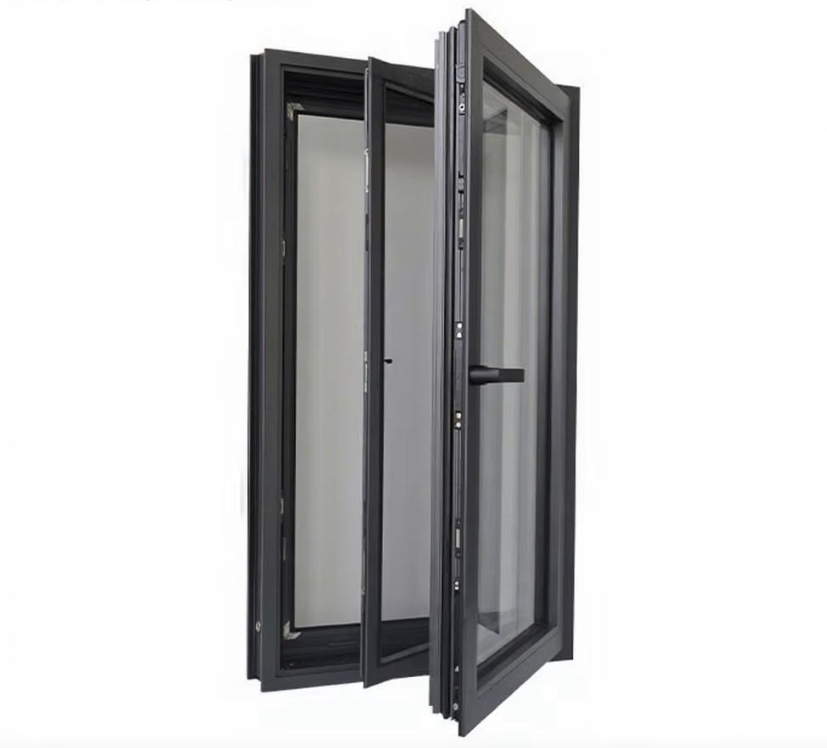
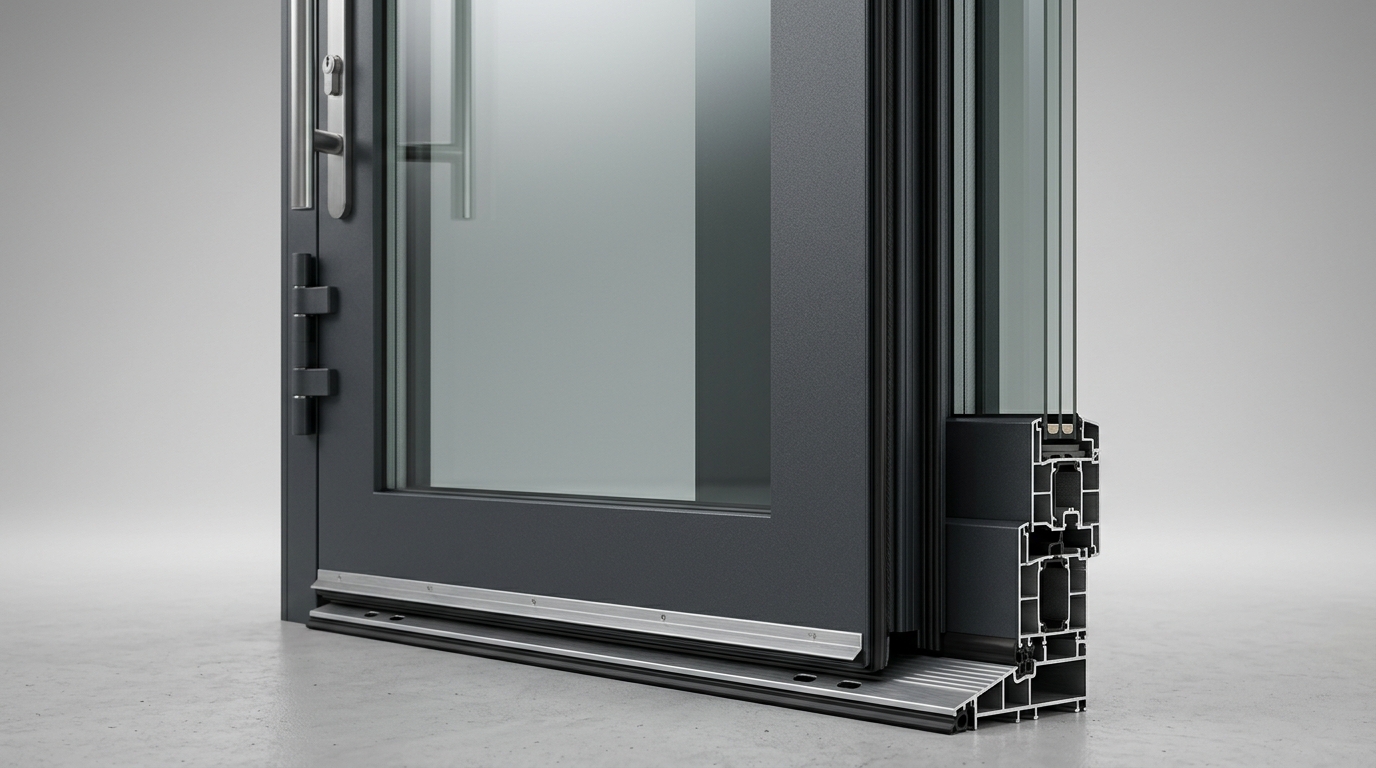
Frame engineering translates material properties into system performance. Modern weatherproof aluminum door profiles use multi-chamber extrusion designs that divide the frame cross-section into discrete air and drainage cavities. These chambers interrupt the direct path for water penetration and allow any moisture that enters the rebate zone to drain through engineered weep holes rather than accumulate against interior seals.
Thermal break construction—where a structural polyamide bar or polyurethane pour separates the inner and outer aluminum shells—serves a dual function. It reduces heat transfer (improving energy performance), but it also prevents condensation from forming on the interior frame surface, which would otherwise accelerate corrosion of fasteners and degrade gasket adhesion over time.
Wall thickness tolerances in the extrusion matter significantly. A minimum profile wall thickness of 1.8 mm is a widely accepted industry floor; coastal and high-wind applications should specify 2.0 mm or greater to ensure the frame resists racking under sustained pressure loads without permanent deformation.
2: Core Weatherproofing Systems — Seals, Coatings, and Hardware
2.1: Waterproof Seal Engineering and Gasket Performance
The seal system is the first and most consequential line of defense against water infiltration. High-performance aluminum door waterproof seal configurations typically deploy EPDM (ethylene propylene diene monomer) or TPE (thermoplastic elastomer) gaskets in a dual-seal arrangement: a compression seal at the door stop and a wiper seal at the outer weather face.
EPDM is preferred for coastal applications because of its outstanding resistance to UV degradation, ozone, and salt water—maintaining elastic recovery after compression for 15–20 years under normal service conditions. TPE gaskets offer comparable performance with easier recyclability and consistent shore hardness across temperature extremes.
Geometry matters as much as material. A bulb-type compression gasket with a hollow cross-section delivers higher deflection under low clamping force, ensuring consistent seal contact even when the door leaf is not pulled tightly against the stop. This is particularly relevant at the sill, where wind-driven rain exerts the highest hydrostatic pressure.
Multi-point locking systems directly contribute to seal integrity by distributing clamping force uniformly across the full perimeter of the door leaf—top, sides, and bottom. A single-point deadbolt concentrates closure force at one location, allowing the door to bow under negative wind pressure and break gasket contact at corners. Specifying a five-point or seven-point locking system is standard practice for doors rated above DP 40 (approximately 1,915 Pa).
2.2: Corrosion-Resistant Surface Treatments for Coastal Environments
Surface treatment selection is the most consequential specification decision for a corrosion-resistant aluminum entrance door in a marine environment. The three primary options are powder coating, anodizing, and PVDF (polyvinylidene fluoride) liquid coating, each with distinct performance profiles.
Powder coating to AAMA 2604 standard requires a minimum 10-year chalk and fade resistance and a dry film thickness of 60–80 microns. For coastal zones within 1 km of the ocean, AAMA 2605 is the appropriate specification—requiring 70% gloss retention after 10 years of Florida exposure testing and salt-spray resistance exceeding 4,000 hours per ASTM B117.
Anodizing to a Class 1 specification (minimum 18-micron oxide layer) creates a harder, more abrasion-resistant surface than powder coat, but the anodic layer is susceptible to alkali attack from concrete runoff and cleaning agents if not properly sealed post-anodizing.
PVDF coatings offer the highest UV and chemical resistance and are specified for the most aggressive marine environments, including offshore platforms and beachfront high-rises with direct salt spray exposure.
📊 Performance Parameter Comparison Table
| Parameter | Standard Grade | Coastal Grade | Marine/High-Wind Grade |
|---|---|---|---|
| Surface Treatment | Powder Coat (AAMA 2604) | Powder Coat (AAMA 2605) | PVDF / Anodized Class 1 |
| Salt Spray Resistance (hrs, ASTM B117) | 1,000–2,000 | 3,000–4,000 | 4,000+ |
| Water Penetration Rating (ASTM E331) | 137 Pa (2.86 psf) | 300 Pa (6.24 psf) | 500+ Pa |
| Wind Load Design Pressure | DP 20–30 | DP 40–50 | DP 60+ |
| Frame Wall Thickness (mm) | 1.8 | 2.0 | 2.0–2.5 |
| Applicable Climate Zone | Standard / Inland | Coastal / High-Humidity | Marine / Hurricane Zone |
3: Performance Standards and Compliance Benchmarks
3.1: Key Industry Standards Procurement Teams Must Verify
Procurement teams sourcing an aluminum door for coastal climate applications should require test reports against the following standards—not self-declared compliance, but third-party laboratory documentation:
- ASTM E283: Air infiltration testing at 75 Pa differential pressure. Acceptable leakage rates for commercial entrance doors are typically ≤0.3 L/s·m² of frame area.
- ASTM E331 / AAMA 501.1: Water penetration resistance under static and dynamic pressure. Coastal specifications should require no water infiltration at a minimum static test pressure of 300 Pa.
- AAMA 2604 / 2605: Coating durability standards. Require the specific certificate number and test date from the coating applicator.
- NOA / Miami-Dade Product Approval: For hurricane-zone installations, this approval confirms the door assembly (frame, glazing, and hardware as a system) has passed large-missile impact testing and cyclic wind pressure protocols.
Do not accept a manufacturer’s claim that their product “meets” a standard without a traceable test report from an accredited laboratory (e.g., Intertek, SGS, or an AAMA-approved facility).
3.2: Wind Load and Structural Ratings Explained
Design Pressure (DP) rating is the single most important structural specification for a weatherproof aluminum door in a wind-exposed location. DP is expressed in pounds per square foot (psf) or Pascals and represents the positive (inward) and negative (outward suction) pressure the door assembly has been tested to withstand without structural failure or water infiltration.
Under ASCE 7 and IBC requirements, coastal buildings must calculate site-specific wind loads based on basic wind speed maps, building height, exposure category, and topographic factors. A beachfront building in a 160 km/h (100 mph) wind zone at 10 meters height in Exposure Category D will generate component and cladding pressures that routinely exceed DP 50—requiring doors rated accordingly.
Positive and negative load testing are both required because wind creates suction on the leeward face of a building that can pull a door outward from its frame. Specifiers must confirm that DP ratings cover both conditions and that the glazing system within the door panel carries an equivalent structural rating.
4: Application Scenarios and Commercial Sourcing Considerations
4.1: High-Risk Environment Use Cases
The engineering capabilities described above translate directly into real-world application suitability:
- Beachfront residential: Primary concern is chronic salt-air corrosion of hardware and frame finishes. AAMA 2605 powder coat or PVDF finish, stainless-steel or marine-grade hardware, and EPDM perimeter seals are minimum specifications.
- Waterfront commercial facades: High pedestrian traffic combined with coastal exposure demands heavy-duty multi-point locking, reinforced frame corners, and regular seal inspection protocols.
- High-rise coastal towers: Wind-induced pressure at elevation amplifies both positive and negative load demands. Doors at floors above 10 meters in Exposure Category C or D should be specified to DP 50 or higher, with impact-rated glazing where local codes require it.
- Humid tropical climates: Persistent high humidity accelerates galvanic corrosion at dissimilar metal contact points. All fasteners and hardware should be isolated from the aluminum frame with neoprene or nylon isolators, and drainage weep holes must be kept clear of debris.
4.2: What Specifiers and Buyers Should Evaluate Before Purchasing
Before committing to a supplier, procurement teams should request and evaluate the following:
- Third-party test reports: Dated, laboratory-issued documentation for ASTM E283, E331, and applicable AAMA coating standards.
- Sample seal cross-sections: Physical gasket samples confirming EPDM compound specification and shore hardness (typically 55–65 Shore A for compression seals).
- Marine-grade finish lead times: PVDF and AAMA 2605 coatings require specialized application facilities; confirm production lead time before project scheduling.
- Customization capability: Verify the supplier can accommodate non-standard panel sizes without compromising the structural integrity of the frame extrusion.
- Supplier certification credentials: ISO 9001 quality management certification and, where applicable, CE marking or local building authority approvals.
FAQ
Q1: What salt-spray test rating should I require for an aluminum entrance door installed within 500 meters of the ocean?
Specify a minimum of 3,000 hours per ASTM B117 for powder-coated finishes, corresponding to AAMA 2605 compliance. For installations within 100 meters of the high-tide line with direct spray exposure, require 4,000+ hours and consider PVDF coating or Class 1 anodizing as the primary finish. Hardware should be rated to the same threshold using marine-grade stainless steel (316 grade) or PVD-coated brass.
Q2: How do I verify that a manufacturer’s waterproof seal will maintain performance after 10+ years of thermal cycling?
Request ASTM C1472 or equivalent long-term weathering data for the gasket compound. Reputable EPDM suppliers provide compression set test results showing residual recovery after 1,000+ hours at elevated temperature. Additionally, ask for field reference projects in comparable climates that are at least 8–10 years old, and request photographic or inspection records of the seal condition.
Q3: Is a standard aluminum entrance door sufficient for hurricane-prone coastal zones, or is impact-rated glazing mandatory?
In jurisdictions covered by the Florida Building Code, Miami-Dade County ordinances, or equivalent hurricane-zone regulations, impact-rated glazing within the door panel is mandatory—not optional. A structurally rated frame alone is insufficient if the glazing can be breached by wind-borne debris. Require a complete NOA (Notice of Acceptance) or equivalent product approval that covers the door assembly as a tested system, including frame, glazing, glazing compound, and hardware.
Conclusion
A properly engineered aluminum entrance door is not merely weather-resistant—it is purpose-built for the environmental conditions that would degrade inferior materials within a few years. The combination of aluminum’s self-passivating oxide layer, multi-chamber extrusion profiles, EPDM compression seal systems, and AAMA 2605-compliant coatings creates a door assembly capable of performing reliably across decades of rain, wind, and coastal salt-air exposure.
For procurement managers and project specifiers, the key discipline is demanding verified performance data rather than accepting specification claims at face value. Prioritize third-party test documentation, confirm compliance standards are met at the assembly level (not just component level), and engage suppliers who can demonstrate coastal project references and transparent certification credentials. When these criteria are applied rigorously, an aluminum entrance door represents one of the most durable and cost-effective long-term investments available for any building envelope in a challenging outdoor environment.