

Abstract
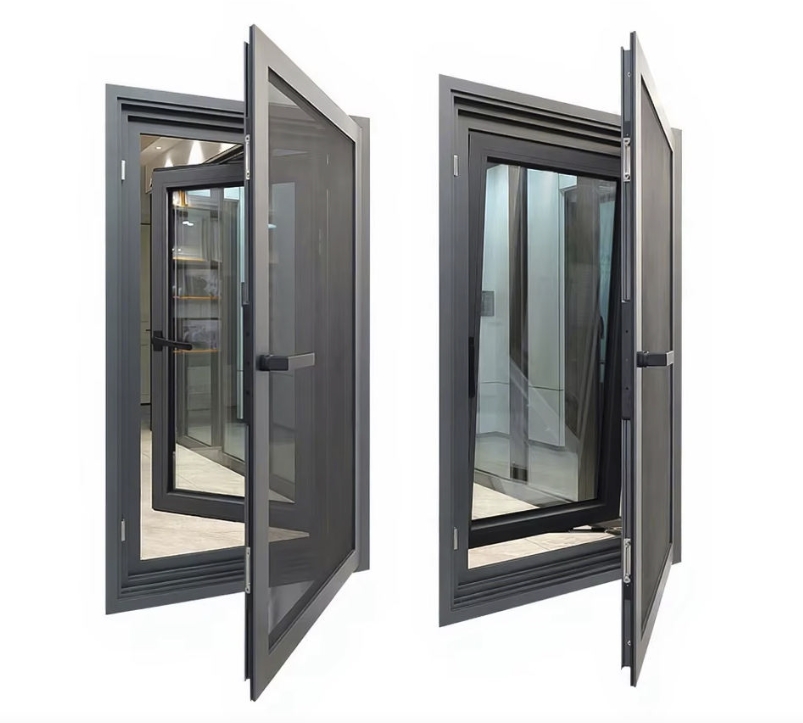
Coastal properties face an unrelenting threat from hurricanes, tropical storms, and extreme wind events. Standard windows — regardless of frame material — simply cannot withstand the combined forces of windborne debris, cyclic pressure loading, and structural racking that accompany a major storm. Custom hurricane resistant casement windows address this vulnerability through a convergence of laminated impact glass, heavy-wall reinforced aluminum frames, and multi-point locking hardware engineered to certified performance thresholds.
This article examines the core engineering principles behind impact-rated casement windows, the compliance standards that govern their use in high-velocity hurricane zones (HVHZ), and the practical application scenarios where custom sizing and specification deliver the greatest value. For B2B buyers — including property developers, commercial contractors, and procurement managers — we also address total cost of ownership, order workflow, and supplier qualification. Whether you are specifying fenestration for a beachfront residential development or a large-scale hospitality project in a hurricane-prone region, the following sections provide the technical and commercial intelligence needed to make confident procurement decisions.
Engineering Behind Hurricane Resistant Casement Windows
Impact Glass Construction & Laminate Technology
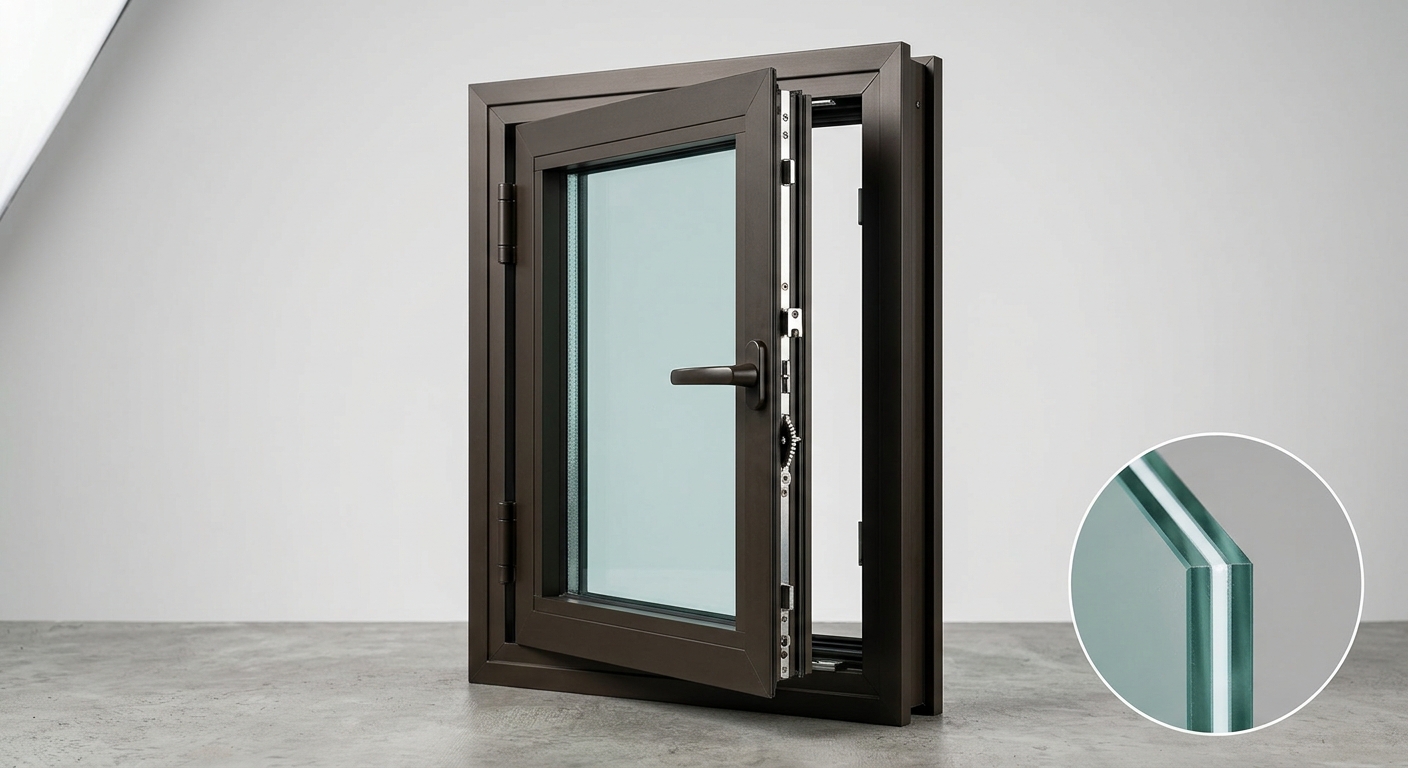
The defining characteristic of any genuine hurricane resistant casement window is its glazing system. Standard insulated glass units fail under missile impact and cyclic pressure because the glass shatters and the interlayer offers no meaningful structural resistance. Impact glass eliminates this failure mode through a bonded laminate construction.
Two primary interlayer materials are used in the industry:
- PVB (Polyvinyl Butyral): The baseline standard for impact glazing, PVB interlayers bond to both glass lites under heat and pressure, holding fragments in place after breakage. PVB performs reliably across standard DP50–DP55 applications.
- SGP (SentryGlas® Plus): A structural ionoplast interlayer five times stiffer than PVB, SGP is specified for high-load coastal applications requiring DP60–DP70+ ratings. Its superior post-breakage rigidity maintains the window’s weather barrier integrity even after a large missile strike.
Glass thickness configurations for hurricane-rated casement windows typically range from 7/16″ to 9/16″ overall unit thickness, with individual lite thicknesses selected based on the design pressure requirement and opening size. For coastal applications, Low-E coatings are applied to the inner lite surfaces to improve solar heat gain control without compromising impact performance — a critical dual benefit in warm-climate hurricane zones.
The missile impact test (ASTM E1996 large missile, a 9-lb 2×4 lumber projectile at 50 ft/s) validates that the laminate system prevents penetration. Post-impact, the window must continue to resist cyclic wind pressure cycling — confirming that impact glass is not merely about debris resistance but sustained structural performance throughout the storm event.
Reinforced Aluminum Frame & Heavy-Duty Hinge Systems
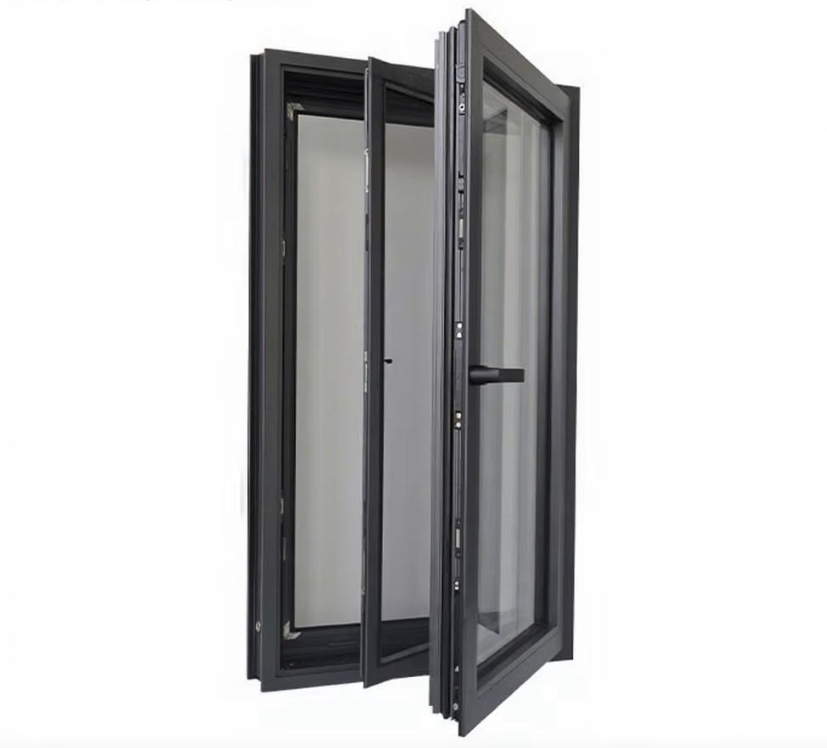
The frame is the structural backbone of the window system. In hurricane-rated casement windows, standard aluminum extrusions are replaced with heavy-wall alloy profiles — typically 6063-T5 or 6061-T6 aluminum — with wall thicknesses of 2.5 mm to 3.5 mm or greater depending on the DP rating and opening dimension.
Key frame engineering features include:
- Thermal break profiles: Polyamide thermal barriers inserted between the inner and outer frame sections reduce condensation risk and improve energy performance in coastal climates where humidity is a persistent concern.
- Multi-point locking mechanisms: Unlike single-point latches on standard casements, hurricane-rated units employ three to five locking points distributed along the sash perimeter. This distributes wind load across the full frame rather than concentrating stress at a single latch point.
- Heavy-duty hinge load ratings: Casement hinges must carry both the static weight of the sash and the dynamic loads imposed by wind pressure differentials. Certified hurricane casement hinges are rated to withstand sash weights exceeding 150 lbs and lateral wind loads consistent with DP70 performance levels.
- Corner key and frame joinery: Mechanically fastened and sealant-injected corner assemblies prevent frame racking — a common failure mode in lower-grade aluminum windows under cyclic loading.
Salt-air corrosion resistance is addressed through anodized or PVDF powder-coated finishes, both of which provide long-term protection in marine environments without compromising structural integrity.
Custom Hurricane Resistant Casement Window — Core Performance Specifications
| Parameter | Standard Casement | Hurricane Resistant Casement | Custom Hurricane Resistant Casement |
|---|---|---|---|
| Glass Type | Single/Double Pane | Laminated Impact Glass | SGP/PVB Laminated + Low-E |
| Frame Material | uPVC / Standard Al | Reinforced Aluminum | Heavy-Wall Reinforced Al Alloy |
| Design Pressure (DP) Rating | DP25–DP35 | DP50–DP55 | DP50–DP70+ |
| Impact Resistance Standard | N/A | ASTM E1886 | ASTM E1886 / Miami-Dade NOA |
| Hinge Load Capacity | Standard | Heavy-Duty | Multi-Point Heavy-Duty |
| Customization Scope | Limited | Moderate | Full (size, finish, glazing, hardware) |
Compliance Standards & Certification Requirements
Key Impact Window Testing Protocols
Hurricane resistant casement windows sold in the United States must navigate a layered compliance framework. The foundational test sequence is:
- ASTM E1886: The procedural standard governing the test apparatus and methodology for impact and cyclic pressure testing.
- ASTM E1996: Specifies the missile type (large missile Zone D: 9-lb 2×4 at 50 ft/s), impact locations, and pass/fail criteria. This is the critical performance standard for HVHZ applications.
- Miami-Dade Notice of Acceptance (NOA): The most stringent product approval in the U.S., issued following third-party testing at an accredited laboratory. An NOA confirms that a specific window product — in specific sizes and configurations — has passed both missile impact and cyclic wind pressure tests. Buyers should request the NOA document number and verify it against the Miami-Dade product approval database.
- Florida Building Code (FBC): Mandates impact-rated fenestration in designated wind-borne debris regions. FBC approval is often contingent on holding a valid NOA or equivalent product evaluation report.
- AAMA/WDMA ratings: AAMA 450 and AAMA 506 provide performance grading for hurricane-resistant products, complementing the ASTM test protocols with air infiltration, water resistance, and structural load classifications.
Regional Code Compliance for Coastal Zones
Wind zone designation under ASCE 7 determines the minimum DP rating required for a given installation. Coastal counties in Florida, Texas, Louisiana, the Carolinas, and Hawaii are frequently mapped in Wind Zone D (basic wind speed ≥ 130 mph), requiring DP50 or higher for most residential and commercial applications.
High-Velocity Hurricane Zone (HVHZ) — encompassing Miami-Dade and Broward counties in Florida — imposes the most demanding requirements globally. Custom windows specified for HVHZ must carry Miami-Dade NOA approval for the exact configuration being installed; field modifications that deviate from the NOA-tested assembly can void the approval and trigger AHJ (Authority Having Jurisdiction) rejection.
For commercial projects spanning multiple jurisdictions, procurement teams should confirm local AHJ requirements early in the specification process to avoid costly product substitutions during construction.
Application Scenarios & Coastal Property Use Cases
Residential Coastal Homes & High-Rise Facades
Single-family beachfront properties represent the most common installation context for custom hurricane resistant casement windows. The casement configuration — with its full perimeter seal when closed — outperforms sliding windows in both air infiltration and water resistance, making it the preferred choice for architects designing high-performance coastal homes.
Custom sizing is essential in residential coastal applications because non-standard rough opening dimensions are common in renovation projects and bespoke new construction. Custom impact casement windows can be fabricated in widths up to 48″ and heights up to 72″ per sash, with multi-lite configurations accommodating larger wall openings through structural mullion systems.
Aesthetic customization — including RAL powder coat colors, bronze anodize finishes, and simulated divided lite grilles — allows impact windows to meet the design language of luxury coastal architecture without visual compromise. Salt-air durability is maintained through marine-grade finish specifications tested to ASTM B117 salt spray standards.
Commercial & Hospitality Projects in Hurricane-Prone Regions
Hotels, resorts, and mixed-use commercial developments in hurricane-prone regions require large-format impact casement windows that meet both life-safety codes and guest experience expectations. Floor-to-ceiling casement configurations with SGP laminated glass and thermally broken frames deliver panoramic views while maintaining DP65+ performance ratings required in many coastal commercial zones.
For bulk procurement, commercial project teams should engage suppliers during the design development phase to align window specifications with available NOA-approved configurations, minimizing custom engineering costs. Lead time planning is critical: large-format custom impact casement windows typically require 10–16 weeks from approved shop drawings to delivery, and project schedules must account for this fabrication window.
Commercial Value & Procurement Considerations
Total Cost of Ownership vs. Standard Windows
The upfront cost premium of custom hurricane resistant casement windows — typically 2× to 3× the cost of standard aluminum casements — is offset by measurable long-term financial benefits:
- Insurance premium reduction: Many coastal property insurers offer 15–25% premium discounts for homes and buildings with fully impact-rated fenestration, particularly in Florida where wind mitigation credits are codified under state insurance regulations.
- Post-storm repair cost avoidance: A single hurricane event causing window failure can result in interior water damage costs exceeding $50,000 for a mid-size residential property. Impact windows that maintain their weather barrier integrity eliminate this exposure.
- Energy efficiency gains: Low-E SGP laminated units with thermally broken frames achieve U-values of 0.30 or lower and SHGC ratings optimized for warm climates, reducing HVAC loads and qualifying for energy efficiency incentive programs.
- Property value uplift: Impact-rated fenestration is a recognized value driver in coastal real estate markets, with appraisers and buyers factoring storm protection upgrades into property valuations.
Custom Order Process & Lead Time Expectations
The procurement workflow for custom hurricane resistant casement windows follows a structured sequence:
- Specification submission: Provide rough opening dimensions, DP rating requirements, applicable NOA or FBC approval references, finish specifications, and hardware selections.
- Shop drawing approval: Factory-generated drawings confirm fabrication details and must be approved by the project architect or engineer before production begins.
- Fabrication timeline: Standard custom lead times range from 8–12 weeks for residential orders and 12–16 weeks for large commercial quantities.
- MOQ considerations: Most B2B suppliers set MOQs at 10–20 units for custom residential configurations and negotiate project-specific terms for commercial volumes exceeding 100 units.
- Quality inspection: Pre-shipment inspection should verify frame dimensions, glass interlayer type, hardware function, and finish quality against the approved shop drawings.
- Shipping logistics: Oversized impact window units require specialized crating and LTL or flatbed freight arrangements; buyers should confirm packaging standards and damage liability terms with the supplier prior to order placement.
FAQ
1. What DP rating should custom hurricane casement windows meet for HVHZ coastal installations?
For High-Velocity Hurricane Zone installations (Miami-Dade and Broward counties), the minimum DP rating is typically DP50, but most commercial and large residential projects specify DP60–DP70+ to accommodate larger opening sizes and higher-floor wind pressure exposure. The required DP rating is determined by the project’s structural engineer based on ASCE 7 wind load calculations and building height.
2. How do I verify that a supplier’s hurricane resistant casement windows carry a valid Miami-Dade NOA or FBC product approval?
Request the NOA document number directly from the supplier and cross-reference it at the Miami-Dade County Product Control Division online database (miamidade.gov/building). Confirm that the NOA covers the specific window dimensions, frame profile, glass configuration, and hardware specified for your project. An expired or size-restricted NOA does not constitute valid approval for your installation.
3. What is the typical lead time and minimum order quantity for fully custom impact casement windows on a commercial project?
Commercial custom orders generally require 12–16 weeks from approved shop drawings to factory delivery. MOQs vary by supplier but typically start at 20–50 units for fully custom configurations. For large hospitality or multi-family projects, suppliers may offer project-specific pricing tiers at 100+ unit volumes. Early engagement with the supplier during design development is strongly recommended to avoid schedule delays.
Conclusion
Custom hurricane resistant casement windows represent a technically sophisticated and commercially justified investment for any coastal property exposed to extreme storm risk. By combining SGP or PVB laminated impact glass, heavy-wall reinforced aluminum alloy frames, multi-point locking systems, and heavy-duty hinge hardware — all validated through ASTM E1886/E1996 testing and Miami-Dade NOA certification — these windows deliver a level of storm protection that standard fenestration cannot approach.
For B2B buyers, the procurement decision extends beyond unit cost. Insurance savings, post-storm damage avoidance, energy performance gains, and long-term asset value make custom impact casement windows a defensible capital investment with measurable ROI. The key procurement takeaways: engage suppliers early to align specifications with certified configurations, verify NOA validity for every product and size combination, plan for 10–16 week fabrication lead times on commercial volumes, and confirm that all custom configurations comply with local AHJ requirements before finalizing orders.