

Introduction
Aluminum entrance doors are widely marketed for their ability to resist rain, salt spray, and humidity. However, weatherproofing should not come at the expense of security—protecting your property from intruders is non-negotiable.
A high-performance waterproof aluminum entrance door naturally provides the foundation for excellent security. The same material properties required to fight wet environments—high structural rigidity and corrosion resistance—also prevent bending, warping, and forced entry.
But security is not an automatic byproduct of waterproofing; it must be engineered. When sourcing a waterproof aluminum entrance door, you must look beyond cosmetic weather seals and evaluate the internal reinforcements, locking mechanisms, and structural frame anchoring that transform a weather barrier into a genuine security barrier.
What Actually Makes a Waterproof Aluminum Entrance Door Secure?
Security in an aluminum door is not a single feature. It is a combination of material choice, frame construction, and the hardware that ties everything together. Let us break down each element.
Material Strength and Reinforcement
Aluminum alloy, when specified correctly, offers an impressive strength‑to‑weight ratio. It is not as heavy as steel, but modern doors use reinforced frames that prevent bowing, bending, or deflection under pressure. Some manufacturers incorporate aluminum box‑section reinforcing that runs the full perimeter of the door, creating a continuous security ring. This makes it extremely difficult to force the door open by warping the frame—a common attack method on weaker doors. A genuinely secure waterproof aluminum entrance door will always include such reinforcement, not just a thin extrusion.
Frame Anchoring and Structural Integrity
The frame itself matters as much as the door leaf. A sturdy frame with secure anchoring to the building structure resists prying and levering. Look for frames that attach with long, heavy‑duty screws penetrating deep into the studs or concrete. Surface‑mounted frames or those using short fasteners are a glaring vulnerability. When you choose a waterproof aluminum entrance door, verify that the frame is designed for your specific wall type—wood stud, steel stud, or masonry—and that the installation instructions specify proper anchoring.
Hinge Security: The Overlooked Weak Point
Hinge‑side security is often ignored, but it is one of the first things an intruder will test. High‑quality doors use reinforced hinges with non‑removable pins or set screws that lock the pin in place. Some also feature hinge‑side security bolts that engage when the door is closed, preventing the door from being levered open from that side. A truly secure waterproof aluminum entrance door will have these details clearly specified in its hardware list.
How Does the Locking System Make or Break Security?
You can have the toughest aluminum door on the market, but a weak lock renders it useless. Let us look at what matters.
Multi‑Point Locking Is Non‑Negotiable
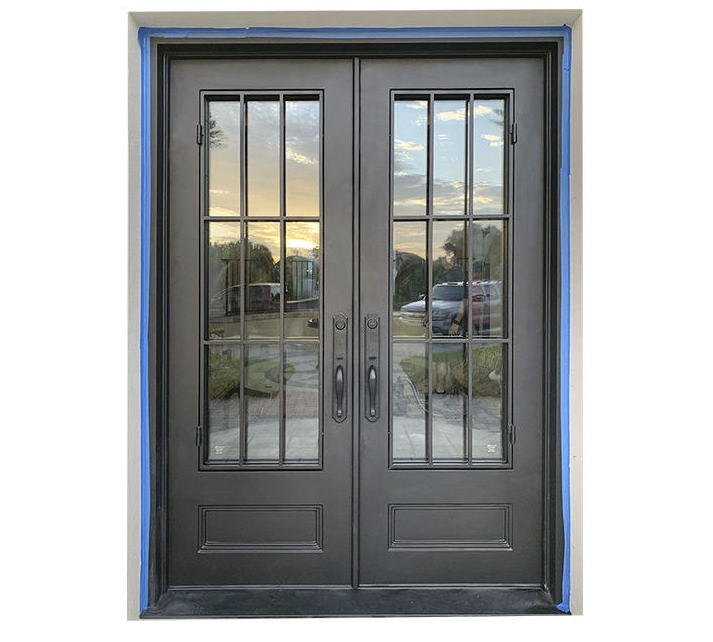
Unlike a single deadbolt that engages at one point, multi‑point systems lock the door at multiple positions along the frame—typically three, five, or even eight points. When you turn the key or lift the handle, bolts slide into the frame at the top, bottom, and sides. This distributes the force of a break‑in attempt across the entire door, making forced entry significantly harder. Multi‑point locks are particularly effective on aluminum because the material’s dimensional stability ensures that bolts align perfectly with strike plates year after year. Wood or uPVC doors warp over time and throw the mechanism out of alignment. Your waterproof aluminum entrance door will not.
Certified Locking Mechanisms
For commercial or high‑security residential use, some doors are available with locks certified to resistance classes such as RC 2, RC 3, or RC 4 under European standards. An RC 3 rating, for example, means the door can withstand sustained attacks using crowbars, screwdrivers, and other common tools. These certifications come from standardized testing that simulates real‑world methods. If your waterproof aluminum entrance door carries such a rating, you have documented proof of its security performance—not just marketing claims.
Hardware Brand Reputation
The product page for the outdoor waterproof metal main horizontal door mentions “Germany brand / Chinese top brand” hardware. That matters. Established manufacturers invest in rigorous testing and quality control that budget brands skip. When evaluating a waterproof aluminum entrance door, always ask for the hardware brand and check whether they offer published test data on cycle life, corrosion resistance, and forced‑entry resistance.
Aluminum vs. Steel: Which Offers Better Security?
This comparison comes up in almost every serious discussion. Steel doors have a reputation for brute strength, but aluminum holds its own—especially when you factor in long‑term durability. The table below summarizes the key differences, and we will dig deeper into each point afterward.
| Aspect | Aluminum Door | Steel Door |
|---|---|---|
| Corrosion resistance | Excellent; naturally forms a protective oxide layer | Poor; requires coatings and regular maintenance |
| Strength‑to‑weight ratio | High, lighter, but structurally robust with engineering | Very high; heavy and dense |
| Long‑term durability in coastal/humid climates | Maintains integrity for decades | Prone to rust if the coating is compromised |
| Multi‑point lock compatibility | Excellent; stable dimensions keep alignment | Good, but weight can strain hinges over time |
| Installation and handling | Easier, lower labor cost | Heavy, requires reinforced framing |
| Available security certifications | Up to RC 4 and higher | Up to the highest ratings (often RC 5+) |
Steel offers ultimate impact resistance, but that advantage erodes as soon as the protective coating is scratched—rust sets in, weakening the door over time. A waterproof aluminum entrance door, on the other hand, will not rust. Its strength remains consistent even in salt‑laden air or high humidity. For most residential and commercial applications, a properly engineered aluminum door provides more than enough security, and it does so without the maintenance headache. The choice often comes down to whether you need the absolute maximum brute-force resistance (steel) or a balanced solution that handles weather and moderate‑to‑high security over the long haul (aluminum).
Does Double‑Layer Glass Compromise Security?
Glass panels look beautiful and let in natural light, but they also raise concerns. Let us separate fact from fear.
Tempered vs. Laminated Glass
If your waterproof aluminum entrance door includes glass, the type of glass is everything. Tempered glass is heat‑treated to be four to five times stronger than ordinary annealed glass. When it breaks, it shatters into small, blunt pieces—but more importantly, it is much harder to break in the first place. Laminated glass goes further: it consists of two or more layers bonded with a tough PVB interlayer. Even if the glass cracks, the interlayer holds the pieces together, creating a barrier that is extremely difficult to penetrate quickly. This buys valuable time and often deters intruders altogether.
Double‑Layer Construction
The product page specifies “double‑layer glass,” which improves insulation and soundproofing, but it does not automatically guarantee safety glass. For a secure, waterproof aluminum entrance door, you should explicitly ask whether that double layer is tempered or laminated. If the supplier cannot confirm, consider that a red flag.
Glass Placement and Framing
Even with safety glass, the way the glass is framed matters. Glazing beads and gaskets should be designed to prevent prying the glass out from the outside. Some doors use internal glazing (glass installed from the interior side) so an intruder cannot remove the glass panel without first opening the door. This is a subtle but important detail for any waterproof aluminum entrance door with glazing.
How Does Waterproofing Actually Preserve Security Over Time?
Here is where the waterproofing and security conversations intersect in a way that many buyers overlook.
Corrosion Undermines Everything
A door that is not properly waterproofed will degrade. Water intrusion leads to corrosion, swelling of surrounding materials, and eventual loss of structural integrity. A compromised frame or warped door leaf is no longer a reliable security barrier. Aluminum’s natural corrosion resistance gives it a significant advantage—it forms a protective oxide layer that prevents further oxidation. This means that a well‑maintained waterproof aluminum entrance door retains its strength for decades, even in coastal or humid environments.
Surface Finishes Add Protection
The product page lists powder coating, anodizing, electrophoresis, and fluorocarbon painting as finish options. These do more than look good—they provide an extra layer of defense against moisture, UV radiation, and physical wear. A high‑quality finish on your waterproof aluminum entrance door ensures that the metal underneath stays pristine, keeping hinges aligned, locks functioning smoothly, and the frame rigid.
Long‑Term Alignment of Locking Mechanisms
As mentioned earlier, dimensional stability is a huge plus for aluminum. Wood and uPVC expand and contract with humidity and temperature changes, throwing locks out of alignment. A waterproof aluminum entrance door does not warp, so your multi‑point lock will engage perfectly every time, year after year. That consistency is a direct security benefit that you only appreciate after a few seasons of weather extremes.
What Should You Look for in a Secure Waterproof Aluminum Entrance Door?
Now that we have covered the essentials, here is a practical checklist to guide your purchase.
-
Alloy and reinforcement: Verify that the door uses a structural aluminum alloy (e.g., 6061 or 6063) and ask about internal reinforcing. Box‑section or full‑perimeter security rings are excellent signs.
-
Locking system: Insist on multi‑point locking with at least three points. Ask for the certification class (RC 2 or higher preferred) and request documentation.
-
Glass specification: If glazed, confirm that the glass is tempered or laminated—not just standard float glass. Ask about internal glazing for added security.
-
Hardware brand: Demand reputable brands (e.g., German or top Chinese) and check whether they provide independent test reports.
-
Hinge design: Ensure hinges have non‑removable pins or set screws. Ask about hinge‑side security bolts.
-
Frame anchoring: Confirm that the frame will be installed with long, heavy‑duty screws anchored into the building structure. Get installation details in writing.
-
Surface treatment: Choose powder coating, anodizing, or fluorocarbon painting for maximum corrosion resistance and durability.
-
Weather and security certifications: Look for ASTM E330 for structural performance and EN 1627 for burglar resistance if applicable. Combine both to get a truly robust waterproof aluminum entrance door.
Conclusion
An entrance door must fulfill two primary functions: sealing out the elements and preventing forced entry. A high-performance waterproof aluminum entrance door achieves both, provided you look past the cosmetic exterior. Premium aluminum delivers the dimensional stability and corrosion resistance needed for long-term protection, but true security depends entirely on internal reinforcement, multi-point locks, safety glass engineering, and robust hinge design.
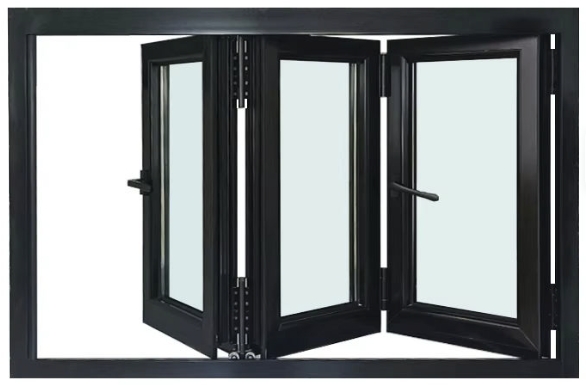
The outdoor waterproof metal main horizontal door from Tayon Windows satisfies these technical benchmarks through its structural profiles, double-layer glass, premium hardware, and durable finishes. Securing your property requires verifying these manufacturing specifications rather than assuming a weather seal equals a structural defense.
Secure Your Entrance Without Compromising Weather Protection
Your entryway is the primary defense against harsh climates and unauthorized access. A properly engineered waterproof aluminum entrance door eliminates the compromise between climate resilience and physical security.
Contact us to discuss your project requirements. Our team provides verified technical options for multi-point locking systems, impact-resistant safety glass, and durable architectural finishes.
Request a quote and secure your written material specifications to ensure complete confidence in your entrance.