


Abstract
Most procurement teams evaluate an aluminum glass solar bathroom on two criteria: unit price and delivery schedule. Both matter, but neither predicts whether the enclosure will perform at year three or generate warranty disputes at year one.
Suppliers competing on price have strong incentives to omit inconvenient specifications—glass tempering standards, alloy wall thickness, thermal break construction, and the certification tier that actually satisfies your target import market. The result is that buyers sign purchase orders based on incomplete data, then absorb the correction costs downstream.
This guide works through the four technical domains that determine real-world performance in a solar bathroom enclosure: glass selection parameters, aluminum frame quality indicators, insulation and thermal compliance, and supplier evaluation checkpoints. Each section surfaces the questions that standard product catalogs do not answer. Whether you are sourcing for a hospitality development, a residential builder program, or a distribution portfolio, the specifications covered here are the ones worth negotiating before—not after—a container ships.
1: The Hidden Variables in Glass Selection
1.1: Why Glass Thickness Is a Non-Negotiable Specification
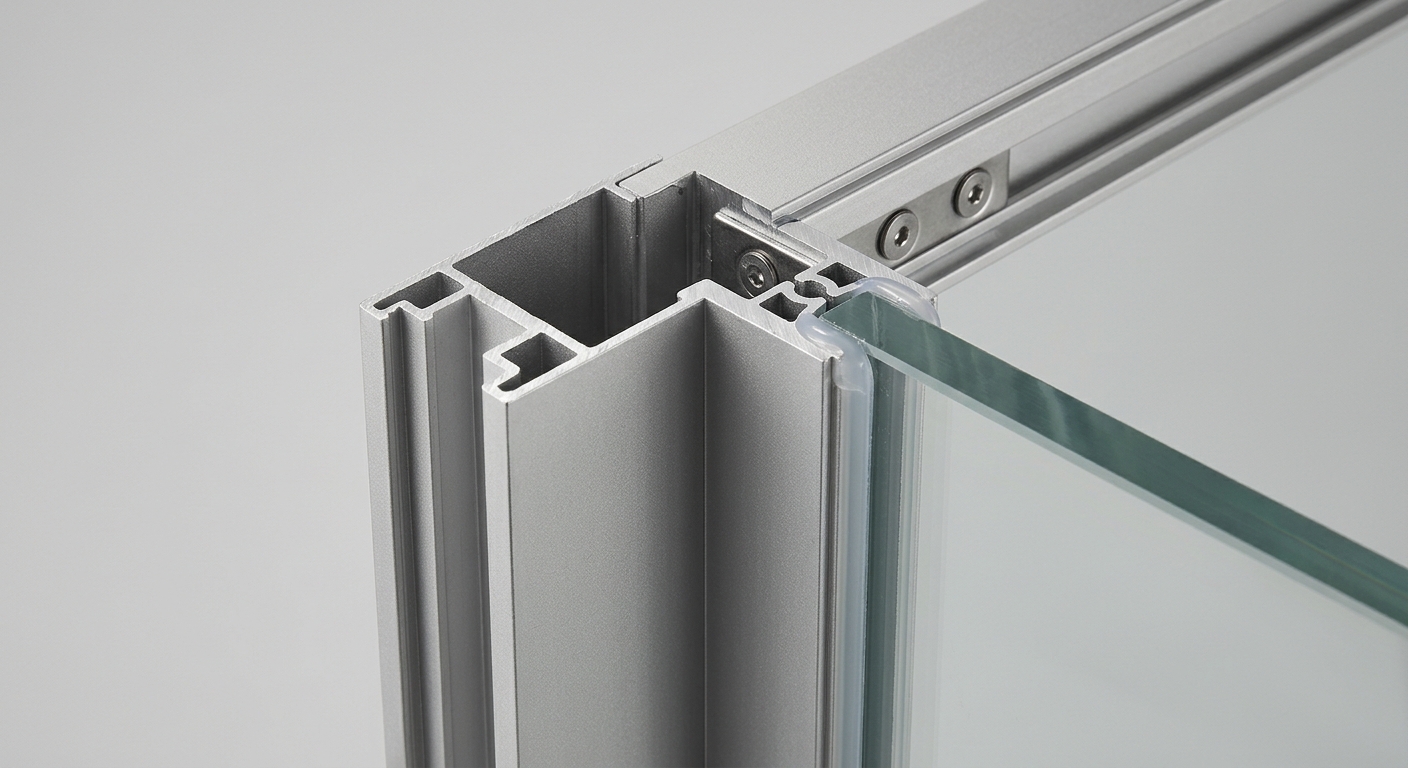
Glass thickness is the single most commonly misrepresented specification in aluminum glass solar bathroom procurement. Suppliers frequently list “tempered glass” as a feature without disclosing the thickness, because the cost differential between 6mm and 8mm tempered glass is meaningful at volume, and buyers rarely challenge the omission.
The structural case for minimum thresholds is straightforward. A 6mm tempered pane is adequate for interior partitions with low wind-load exposure, but it falls short of the deflection limits required for exterior solar bathroom enclosures in climates with wind speeds above 120 km/h. At 8mm, the same panel carries roughly 40% greater load resistance and provides a measurable improvement in acoustic attenuation—a relevant factor in hospitality and multi-unit residential applications.
From a safety certification perspective, most EU and Australian building codes require safety glazing compliance (EN 12150 and AS/NZS 2208 respectively) for any glazed enclosure accessible to building occupants. Both standards can be met with 6mm tempered glass in controlled conditions, but 8mm provides the margin that survives real installation tolerances and frame flex over time.
Thermal performance adds a third dimension. Thicker glass alone does not improve U-value significantly, but it is the prerequisite substrate for effective low-E coatings and laminated constructions that do.
1.2: Solar Transmittance vs. Privacy—What the Spec Sheet Omits
Solar Heat Gain Coefficient (SHGC) and Visible Light Transmittance (VLT) are the two glass performance metrics most relevant to a solar bathroom enclosure—and the two most consistently absent from supplier spec sheets.
SHGC measures what fraction of incident solar radiation passes through the glass as heat. A standard clear tempered pane carries an SHGC of approximately 0.86, meaning 86% of solar energy enters the space. For a solar bathroom designed to capture passive heat, that figure is a feature. For a bathroom in a high-solar-gain climate where overheating is a risk, it is a liability. Low-E coatings can reduce SHGC to 0.25–0.40 without proportionally reducing visible light, but the coating grade must be specified—not assumed.
Privacy glass (acid-etched or sandblasted) reduces VLT to 30–50%, which affects perceived brightness and the effectiveness of passive solar heating. Buyers specifying privacy glass for solar bathrooms should request both the VLT and SHGC values to confirm the trade-off aligns with the project’s climate and energy design intent.
| Glass Type | Thickness (mm) | Solar Transmittance (%) | U-Value (W/m²K) | Safety Standard | Typical Application |
|---|---|---|---|---|---|
| Clear Tempered | 6 | 86 | 5.8 | EN 12150 / AS 2208 | Interior partitions, low-load exterior |
| Clear Tempered | 8 | 85 | 5.7 | EN 12150 / AS 2208 | Exterior solar enclosures, commercial |
| Low-E Coated Tempered | 8 | 38–55 | 1.8–2.4 | EN 12150 | High-performance solar bathrooms |
| Laminated Tempered | 8+8 | 75 | 3.2 | EN ISO 12543 | High-security or overhead glazing |
| Privacy (Acid-Etched) | 6–8 | 30–50 | 5.5–5.7 | EN 12150 | Residential privacy applications |
2: Aluminum Frame Quality — Grading Beyond Surface Finish
2.1: Alloy Grade and Wall Thickness — The Numbers Suppliers Avoid Quoting
Anodized aluminum looks identical regardless of whether it is extruded from 6063-T5 or 6061-T6 alloy, and suppliers exploit that visual equivalence. The difference in mechanical performance is not cosmetic. 6063-T5 offers a tensile strength of approximately 185 MPa—adequate for standard residential framing with moderate span lengths. 6061-T6 reaches 276 MPa, making it the appropriate specification for large-format solar bathroom enclosures, elevated installations, or projects in high-wind-load zones.
Wall thickness is the second suppressed variable. A 1.2mm wall profile will pass a visual inspection and survive short-term handling, but under cyclic thermal expansion and contraction—which solar bathroom frames experience daily—thin walls fatigue at corner joints and glazing channels within three to five years. Specifying a minimum 1.8mm wall thickness for primary load-bearing members is the standard that separates commercial-grade from residential-grade product.
Anodizing depth directly determines corrosion resistance. The AA25 standard (25 microns) is the minimum for coastal and high-humidity environments. Many suppliers default to AA15 (15 microns) without disclosure. Request the anodizing certificate, not just the finish description.
2.2: Joint Construction and Sealing Methods
Corner joint precision is where fabrication quality diverges most visibly between supplier tiers. A mitered corner with a 0.5mm gap tolerance and mechanical fastening performs differently over a decade than a corner held by sealant alone. For aluminum glass solar bathroom enclosures exposed to daily thermal cycling and moisture, the joint construction is a primary weatherproofing failure point.
Silicone sealant grade matters as much as application technique. Neutral-cure silicone (ISO 11600 Class F25 or higher) is the correct specification for glass-to-frame interfaces. Acetoxy-cure silicone—cheaper and more commonly used by lower-tier suppliers—releases acetic acid during curing, which accelerates corrosion of aluminum surfaces and degrades adhesion within two to three years in humid environments. Ask suppliers to specify the sealant standard by ISO classification, not by brand name alone.
3: Insulation and Thermal Performance Standards
3.1: Insulation Type Classification and Real-World R-Value Gaps
Three insulation approaches appear in aluminum glass solar bathroom construction: polyurethane foam injection, thermal break strip insertion, and air gap design. Their marketed R-values frequently overstate real-world performance because supplier testing occurs under laboratory conditions that do not replicate installed behavior.
Polyurethane foam injection into hollow frame sections delivers the highest volumetric insulation value but is difficult to verify post-production. Thermal break strips—typically polyamide 66 with glass fiber reinforcement—are the industry-standard solution for thermally broken aluminum frames and are the only method that genuinely interrupts the conductive aluminum bridge between interior and exterior surfaces. Air gap designs depend entirely on installation precision; field gaps introduce convective losses that eliminate theoretical performance gains.
For solar bathrooms in climates with winter heating requirements, a thermally broken frame combined with a low-E double-glazed unit is the minimum configuration that achieves a whole-unit U-value below 2.0 W/m²K—the threshold required for meaningful energy performance in most temperate markets.
3.2: Compliance Certifications That Actually Matter for Import Markets
Certification requirements vary by destination market, and suppliers often present a certificate collection without clarifying which are mandatory versus voluntary.
| Market | Required Standard | Glass Min. Spec | Frame Thermal Break Required | Certification Body |
|---|---|---|---|---|
| European Union | CE Marking + EN 14351-1 | EN 12150 tempered | Yes (for energy-rated products) | Notified Body (EU) |
| United States | NFRC 100/200 for energy claims | ANSI Z97.1 | Required for ENERGY STAR | NFRC-accredited lab |
| Australia / NZ | NCC Section J compliance | AS/NZS 2208 | Required in climate zones 6–8 | JAS-ANZ accredited |
| General Export | ISO 10077 (thermal performance) | ISO 12150 | Recommended | ISO-accredited lab |
CE marking for fenestration products under EN 14351-1 is mandatory for EU market entry—not optional. NFRC ratings are required only when energy performance claims are made in the US market, but they are the only credible verification mechanism for U-value and SHGC claims. Buyers importing into Australia must confirm NCC compliance by climate zone, as thermal break requirements vary significantly across the eight zones.
4: Supplier Evaluation and Commercial Risk Checkpoints
4.1: Factory Audit Red Flags Specific to Solar Bathroom Enclosures
Three production indicators reliably predict output consistency in aluminum glass solar bathroom manufacturing. First, glass tempering furnace certification: a furnace operating without current calibration records cannot guarantee consistent surface compression values, which means tempered glass from that line may not meet EN 12150 or AS 2208 fragmentation requirements—even if it carries a certification label.
Second, aluminum extrusion die age. Dies beyond 400,000 press cycles produce profiles with dimensional drift that accumulates in glazing channel tolerances. Suppliers rarely volunteer die maintenance records; request them as part of any factory qualification process.
Third, production line segregation between standard aluminum joinery and solar bathroom enclosures. Facilities that run both product types on shared lines without documented process controls introduce contamination risks in sealant application and glazing channel preparation. A dedicated solar bathroom production line—or documented segregation protocols—is the standard worth requiring.
4.2: Total Cost of Ownership vs. Unit Price
A 12% unit price advantage from a lower-tier supplier is frequently consumed within 18 months by three cost categories that do not appear on the initial quotation.
Installation labor variance is the first. Frames with dimensional inconsistency require field adjustment, which adds 15–25% to installation labor on commercial projects. Warranty claim rates are the second. Industry data from glazing contractors consistently shows that under-specified solar bathroom enclosures generate warranty callbacks at three to four times the rate of properly specified products—primarily for sealant failure and frame deflection. Replacement part lead times are the third. A supplier without local stock of extrusion profiles and hardware will extend a warranty repair from days to weeks, creating liability exposure in hospitality and commercial lease contexts.
Total cost of ownership analysis over a five-year horizon routinely reverses the apparent economics of the lowest-price offer. Build the TCO model before the purchase order, not after the first warranty season.
Preguntas frecuentes
1. What is the minimum glass thickness acceptable for an aluminum glass solar bathroom used in a commercial hospitality project?
For commercial hospitality applications, 8mm tempered glass is the practical minimum for exterior-facing panels. Projects in high-wind-load zones or with panel dimensions exceeding 1500mm in either axis should specify 10mm or consult a structural glazing engineer. EN 12150 and AS/NZS 2208 compliance must be verified by certification, not supplier declaration.
2. How do I verify that an aluminum frame supplier’s anodizing depth meets long-term coastal environment requirements?
Request the anodizing test certificate issued by an accredited third-party laboratory, specifying AA25 (25-micron) depth per ISO 7599. Visual inspection and supplier self-declaration are insufficient. For critical coastal projects, specify salt spray testing per ISO 9227 with a minimum 1000-hour pass requirement.
3. Which compliance certifications should I require before importing aluminum glass solar bathrooms into the European market?
CE marking under EN 14351-1 is mandatory for all exterior glazed enclosures sold in the EU. Additionally, require EN 12150 certification for tempered glass components and ISO 10077 thermal performance testing if energy performance is claimed. A Declaration of Performance (DoP) issued by the manufacturer is a legal requirement under the EU Construction Products Regulation.
Conclusión
Selecting an aluminum glass solar bathroom supplier is a technical procurement decision, not a catalog comparison exercise. The four pillars that determine long-term performance—glass thickness and coating specification, aluminum alloy grade and frame construction quality, thermal break design and insulation integrity, and verifiable compliance certification—are consistently under-disclosed in standard supplier communications.
Buyers who build these specifications into their RFQ documentation, require third-party certification evidence, and conduct factory audits against the indicators outlined here will contract with suppliers who can actually deliver what they quote. Those who rely on catalog descriptions and price comparisons alone will encounter the correction costs that under-specified enclosures reliably generate. The specification work done before a purchase order is signed is the most cost-effective quality investment available in this product category.