
Abstract
Noise pollution is an increasingly critical design parameter in urban residential, hospitality, healthcare, and commercial construction. Aluminum double-glazed casement windows have emerged as a high-performance solution—but acoustic outcomes are not automatic. They depend on a precise combination of glazing configuration, frame engineering, seal integrity, and installation execution. This guide is written for architects, specification engineers, and commercial procurement teams who need to move beyond marketing claims and evaluate acoustic performance on technical merit.
The sections below break down the physics of sound attenuation through double glazing, the frame and hardware variables that affect real-world performance, the compliance standards that govern procurement, and the application-specific criteria that should drive supplier selection. Whether you are sourcing windows for a hotel adjacent to a rail corridor or a hospital in a dense urban district, the specifications covered here will give your procurement team a defensible, performance-based framework.
How Aluminum Double Glazed Casement Windows Attenuate Sound
The Physics of Sound Transmission Through Double Glazing
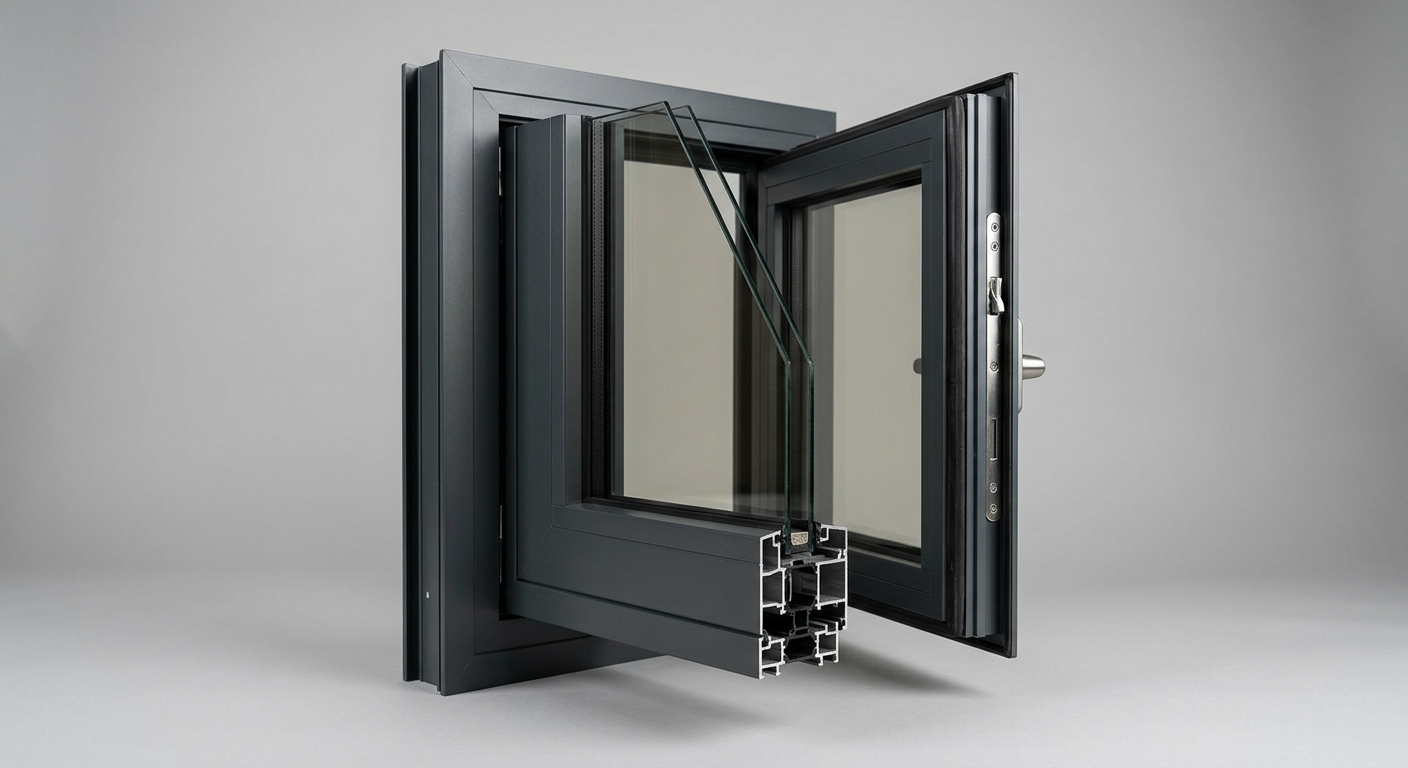
Sound attenuation in a double-glazed unit operates on the mass-air-mass principle: two rigid glass panes separated by an air or gas cavity create a system where each layer absorbs and reflects acoustic energy. When a sound wave strikes the outer pane, energy is partially reflected, partially absorbed by the glass mass, and partially transmitted into the cavity. The cavity then decouples the two panes, reducing sympathetic vibration transmission to the inner pane.
Performance is quantified using two primary metrics:
- STC (Sound Transmission Class) — the North American standard (ASTM E413), expressed as a single-number rating. A standard residential window typically achieves STC 26–28; acoustic-grade units can reach STC 38–42.
- Rw (Weighted Sound Reduction Index) — the European equivalent under EN ISO 717-1, numerically comparable to STC but derived from a different test weighting curve.
A critical nuance for procurement teams: both STC and Rw are frequency-averaged ratings. Low-frequency noise (traffic rumble, rail vibration, 63–250 Hz range) is consistently harder to attenuate than mid- and high-frequency noise. Specifying a window by STC alone without reviewing the full transmission loss curve can lead to underperformance in transit-adjacent projects.
Role of Glass Configuration in Noise Reduction
The standard symmetric configuration—6 mm glass / 12 mm air gap / 6 mm glass—provides a baseline Rw of approximately 30–32 dB. Performance improvements come from three modifications:
Asymmetric glass thickness (e.g., 6 mm outer / 12 mm cavity / 8 mm inner): Mismatched pane masses shift the coincidence dip—the frequency at which glass resonates and transmits sound most readily—preventing both panes from resonating at the same frequency simultaneously. This can improve Rw by 2–4 dB without increasing unit cost significantly.
Gas fill substitution: Replacing air with argon (thermal conductivity: 0.016 W/m·K) or krypton reduces convective coupling between panes and modestly improves mid-frequency attenuation. The acoustic benefit is secondary to thermal gain, but in a combined performance specification, argon fill is a cost-effective upgrade.
Laminated glass panes: A laminated unit (e.g., 6.38 mm = 3 mm / 0.38 mm PVB / 3 mm) incorporates a polyvinyl butyral interlayer that provides viscoelastic damping. This is the most effective single upgrade for low-frequency attenuation, typically adding 3–6 dB Rw over standard float glass of equivalent thickness.
Frame, Seal, and Hardware Specifications That Affect Acoustic Performance
Aluminum Frame Design and Thermal Break Integration
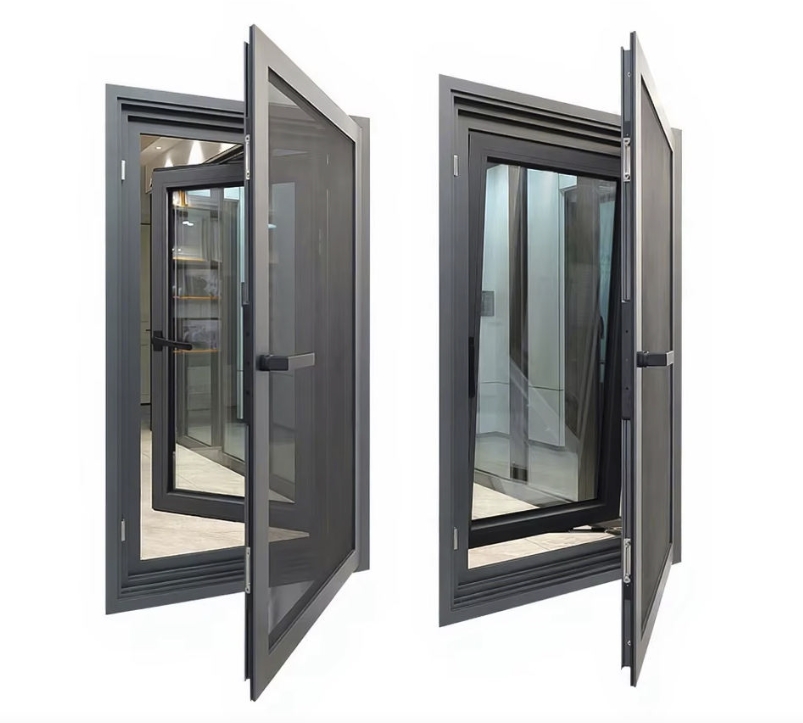
The aluminum frame is often treated as a secondary variable in acoustic specifications, but it accounts for a measurable share of total unit performance. Key considerations:
- Multi-chamber profile geometry: Frames with three or more internal chambers interrupt sound flanking paths through the aluminum extrusion. Single-chamber profiles allow airborne and structure-borne noise to bypass the glazed unit entirely.
- Thermal break continuity: Polyamide thermal break inserts (minimum 24 mm width per EN 14024) that run continuously around the frame perimeter serve a dual function—they reduce thermal bridging and interrupt the direct metallic sound path between the outer and inner frame sections.
- Frame-to-glass edge seal: The glazing bead and edge seal compound (typically silicone or butyl) must maintain full contact around the glass perimeter. Any gap or hardened sealant creates a flanking path that degrades in-situ performance relative to laboratory ratings.
Compression Seals, Gaskets, and Casement Hardware
For casement windows specifically, the sash-to-frame seal under compression is the most variable performance factor between products. Specify:
- EPDM gaskets, dual-durometer grade: A combination of a softer inner seal (Shore A 50–55) and a firmer outer seal (Shore A 65–70) achieves both compression compliance and long-term recovery. Single-durometer gaskets degrade faster and lose compression set within 5–7 years in temperature-cycling climates.
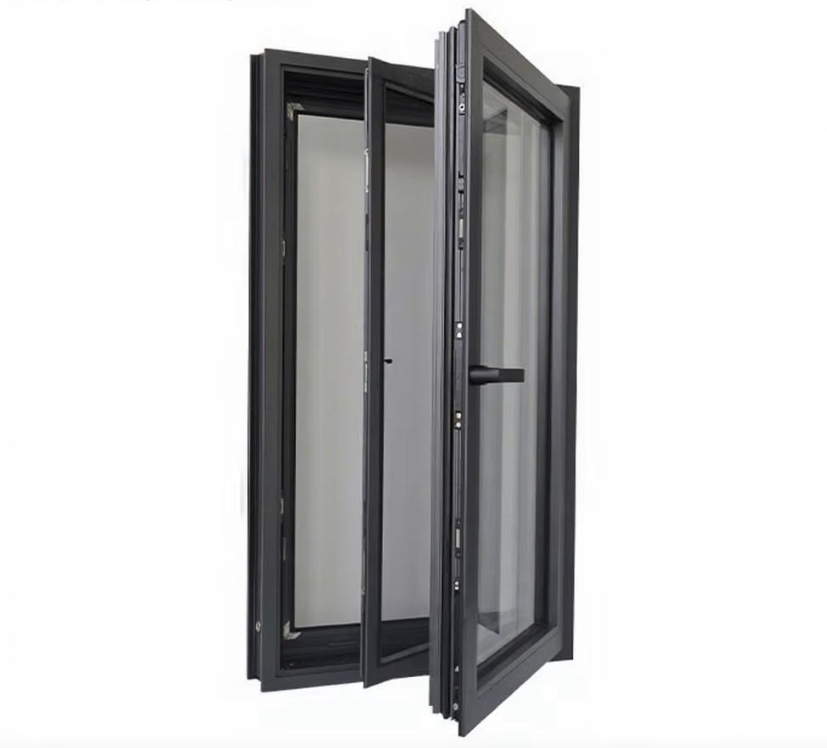
- Multi-point locking hardware: A casement sash locked only at the handle creates uneven compression around the perimeter. Multi-point locking systems (minimum 3-point, preferably 5-point for sashes over 1200 mm height) distribute clamping force evenly, maintaining gasket compression at corners and sill junctions where leakage is most common.
- Perimeter air leakage rating: Per ASTM E283 or EN 12207, specify Class 3 or Class 4 air permeability. Air leakage and acoustic leakage are directly correlated—a window that passes air will pass sound at the same pathways.
📊 Acoustic Performance Comparison by Glazing Configuration
| Glass Configuration | Total Unit Thickness | Gas Fill | STC Rating | Rw Rating (dB) | Recommended Application |
|---|---|---|---|---|---|
| Standard 6/12/6 | 24 mm | Air | 28–30 | 30–32 | Low-traffic suburban residential |
| Asymmetric 6/12/8 | 26 mm | Air | 32–34 | 32–34 | Urban residential, light commercial |
| Asymmetric 6/16/8 | 30 mm | Argon | 34–36 | 34–36 | Offices, mid-density urban |
| Laminated 6.38/16/6.38 | 28.76 mm | Argon | 37–39 | 37–40 | Hospitality, healthcare, transit corridors |
| Laminated 8.38/16/6.38 | 30.76 mm | Argon | 40–42 | 40–43 | High-noise urban, airport adjacency |
Compliance Standards and Performance Benchmarks
International Acoustic Standards for Windows
Three standards govern acoustic testing and rating for commercial window procurement:
- ISO 10140-2: Laboratory measurement of sound insulation of building elements. This is the test method standard; it defines the controlled conditions under which Rw ratings are generated.
- ASTM E90 / E413: The North American equivalent for laboratory transmission loss testing and STC calculation. Required for projects under US and Canadian building codes.
- EN ISO 717-1: Specifies the rating procedure for Rw and the spectrum adaptation terms C and Ctr. The Ctr term applies a correction for low-frequency traffic noise—for urban projects, always request Rw + Ctr, not Rw alone.
Regional building codes set minimum thresholds that vary significantly. EU member states typically require Rw ≥ 30 dB for residential facades in moderate noise zones, rising to Rw ≥ 40 dB in areas exceeding 65 dB(A) external noise levels. In the US, HUD guidelines recommend STC ≥ 35 for residential units in noise-exposed locations.
Certifications and Third-Party Testing Requirements
For B2B procurement, the following documentation should be mandatory in supplier qualification:
- CE marking with Declaration of Performance (DoP): Required for window products sold into EU construction projects; the DoP must include the declared Rw value tested per EN ISO 10140.
- NFRC labeling: For North American projects, NFRC certification provides independently verified STC ratings alongside thermal performance data.
- Full test report, not summary data sheet: Request the complete transmission loss curve (1/3 octave band data from 100 Hz to 3150 Hz) from an accredited laboratory. This allows your acoustic consultant to verify performance at the specific frequencies relevant to your site noise profile.
Application Scenarios and Commercial Procurement Considerations
High-Noise Environments — Specification Priorities
| Application | Typical External Noise Level | Minimum Rw Specification | Priority Configuration |
|---|---|---|---|
| Urban residential (arterial road) | 65–70 dB(A) | Rw 35–38 dB | Asymmetric laminated, argon fill |
| Hotel (city center) | 68–75 dB(A) | Rw 38–42 dB | Laminated 8.38/16/6.38, 5-point lock |
| Healthcare (hospital ward) | 60–68 dB(A) | Rw 35–40 dB | Laminated, EPDM dual-durometer seal |
| Office (transit corridor) | 70–78 dB(A) | Rw 40–45 dB | Triple glazed or high-mass laminated |
For healthcare and hospitality, specify Rw + Ctr ≥ 38 dB as a combined criterion to account for low-frequency mechanical noise from HVAC systems and street traffic simultaneously.
Evaluating Supplier Capability for Acoustic-Grade Windows
When qualifying suppliers for acoustic-grade aluminum double glazed casement windows, assess the following:
- In-house or accredited third-party test capacity: Suppliers who test only to internal standards cannot provide the documentation required for compliance submissions. Require ISO/IEC 17025-accredited test reports.
- Glazing customization capability: Confirm the supplier can produce asymmetric and laminated configurations within their standard production run, not only as special orders with extended lead times.
- Profile extrusion control: Multi-chamber thermal break profiles require tighter extrusion tolerances. Request dimensional compliance data for the specific profile series specified.
- MOQ and project supply logistics: For large commercial projects (500+ units), verify the supplier’s capacity to maintain consistent glazing batch specifications across multiple production runs. Acoustic performance can vary between batches if glass sourcing is not controlled.
FAQ
Q1: What minimum STC or Rw rating should I specify for a casement window in a high-traffic urban building?
For facades exposed to arterial road or rail noise exceeding 65 dB(A), specify a minimum of Rw 38 dB (with Ctr correction: Rw + Ctr ≥ 33 dB). For transit-adjacent projects above 70 dB(A), target Rw 42–45 dB using laminated asymmetric glazing with argon fill.
Q2: Does the aluminum frame itself compromise the acoustic performance of double glazed units?
It can, if under-specified. Single-chamber profiles without thermal breaks create direct metallic flanking paths. Properly engineered multi-chamber frames with continuous polyamide thermal breaks reduce this effect substantially. The frame contribution to total unit acoustic performance is typically 15–25% of the overall transmission loss pathway.
Q3: How does installation quality affect the final in-field sound insulation versus lab-tested ratings?
Field performance consistently underperforms laboratory ratings by 3–8 dB Rw due to perimeter sealing gaps, incorrect glazing bead installation, and frame-to-wall junction leakage. Requiring site acoustic testing per ISO 16283-3 after installation is the only reliable method to verify that specified performance has been achieved in practice.
Kesimpulan
Aluminum double glazed casement windows can deliver meaningful noise reduction—but only when glazing configuration, frame engineering, seal specification, and installation quality are treated as an integrated system rather than independent variables. A laminated asymmetric unit with argon fill and a multi-chamber thermally broken frame can achieve Rw 40–43 dB under laboratory conditions; the same unit installed with inadequate perimeter sealing may deliver only Rw 34–36 dB in the field.
For B2B procurement teams, the actionable takeaways are clear: specify Rw + Ctr (not Rw alone) as the acoustic performance criterion, require ISO/IEC 17025-accredited test documentation, mandate multi-point locking hardware and dual-durometer EPDM gaskets, and build site verification testing into the project handover protocol. Suppliers who can deliver on all four dimensions—verified glazing performance, engineered frame systems, documented compliance, and project-scale production consistency—are the partners that reduce acoustic risk on noise-sensitive developments.