

Abstract
Double-glazed casement windows are specified for their superior thermal performance, strong ventilation capacity, and clean sightlines. Yet the moment a casement sash opens, it creates a direct pathway for insects — a practical problem that affects occupant comfort, hygiene compliance, and in certain sectors, regulatory standing.
This article addresses a question procurement teams and architects increasingly face: should insect screens be treated as an optional accessory or a standard component of a double-glazed casement window system? The answer depends on climate, building use, and how ventilation is managed across the building envelope.
For B2B buyers — developers, façade contractors, hospitality groups, and healthcare facility managers — the decision to integrate insect screens at the specification stage rather than retrofit them later has measurable implications for cost, lead time, and system performance. This article covers the ventilation mechanics that make screens necessary, the screen typologies compatible with casement systems, technical compliance considerations, and actionable procurement guidance for sourcing screened casement window packages at scale.
The Ventilation Case for Casement Windows — and Why Insects Become a Factor
How Double-Glazed Casement Windows Deliver Airflow
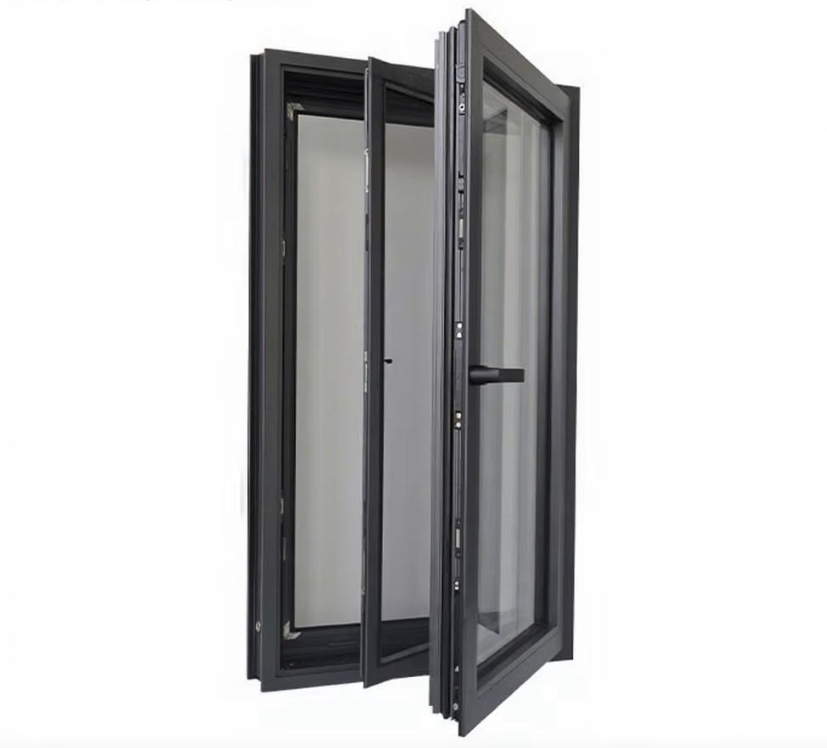
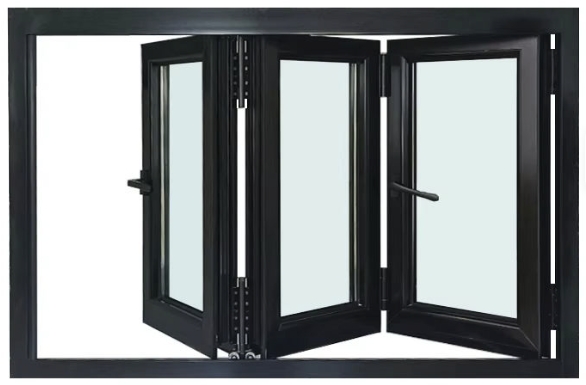
Casement windows operate on a side-hung mechanism, swinging outward (or inward) on vertical hinges. This design exposes the full frame opening to airflow — unlike sliding windows, which block 50% of the aperture at any position, or tilt-and-turn configurations that limit opening angle for security reasons. The result is a ventilation efficiency advantage that makes casement windows the preferred choice for passive cooling strategies, cross-ventilation layouts, and naturally ventilated building designs.
In double-glazed casement systems, the insulated glass unit contributes to thermal separation between inside and outside environments, but the opening sash itself is unrestricted. When fully open, a standard 600mm × 1200mm casement sash delivers a free-air area approaching 0.72m² — significantly higher than a comparable top-hung or tilt-only configuration. For buildings targeting natural ventilation credits under BREEAM, LEED, or local green building codes, this airflow capacity is a design asset.
When Open Ventilation Creates an Insect Ingress Risk
The same openness that makes casement windows effective for ventilation creates an unfiltered entry point for insects. The severity of this risk depends on three variables: geographic climate zone, seasonal insect pressure, and building use category.
In tropical and subtropical climates — Southeast Asia, the Middle East, coastal Australia, southern Europe — mosquito and fly activity is year-round and concentrated around residential and hospitality buildings near water or vegetation. In temperate climates, the risk is seasonal but intense during spring and summer months when windows are most frequently opened for cooling.
Building use amplifies the specification requirement. Healthcare facilities must maintain insect exclusion as part of infection control protocols. Hospitality properties — hotels, resorts, serviced apartments — face guest comfort expectations that make insect ingress commercially damaging. Food service environments may face regulatory requirements for insect exclusion at all openings. In each of these contexts, specifying double-glazed casement windows without insect screens creates a functional gap that will require correction post-installation, typically at higher cost.
Insect Screen Options Compatible with Double-Glazed Casement Windows
Integrated vs. Retractable vs. Fixed Frame Screens
Three screen typologies are available for casement window applications, each with distinct structural and operational characteristics.
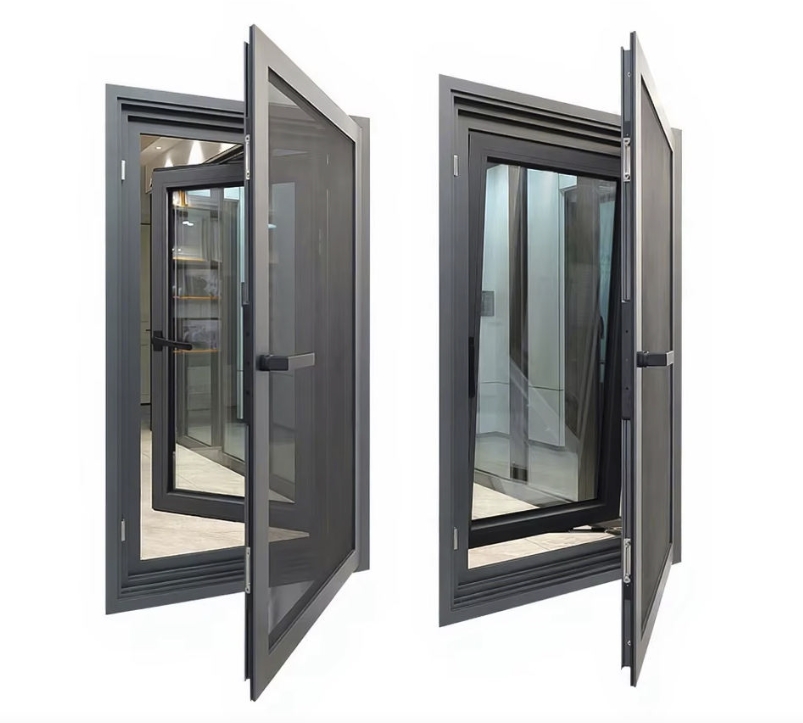
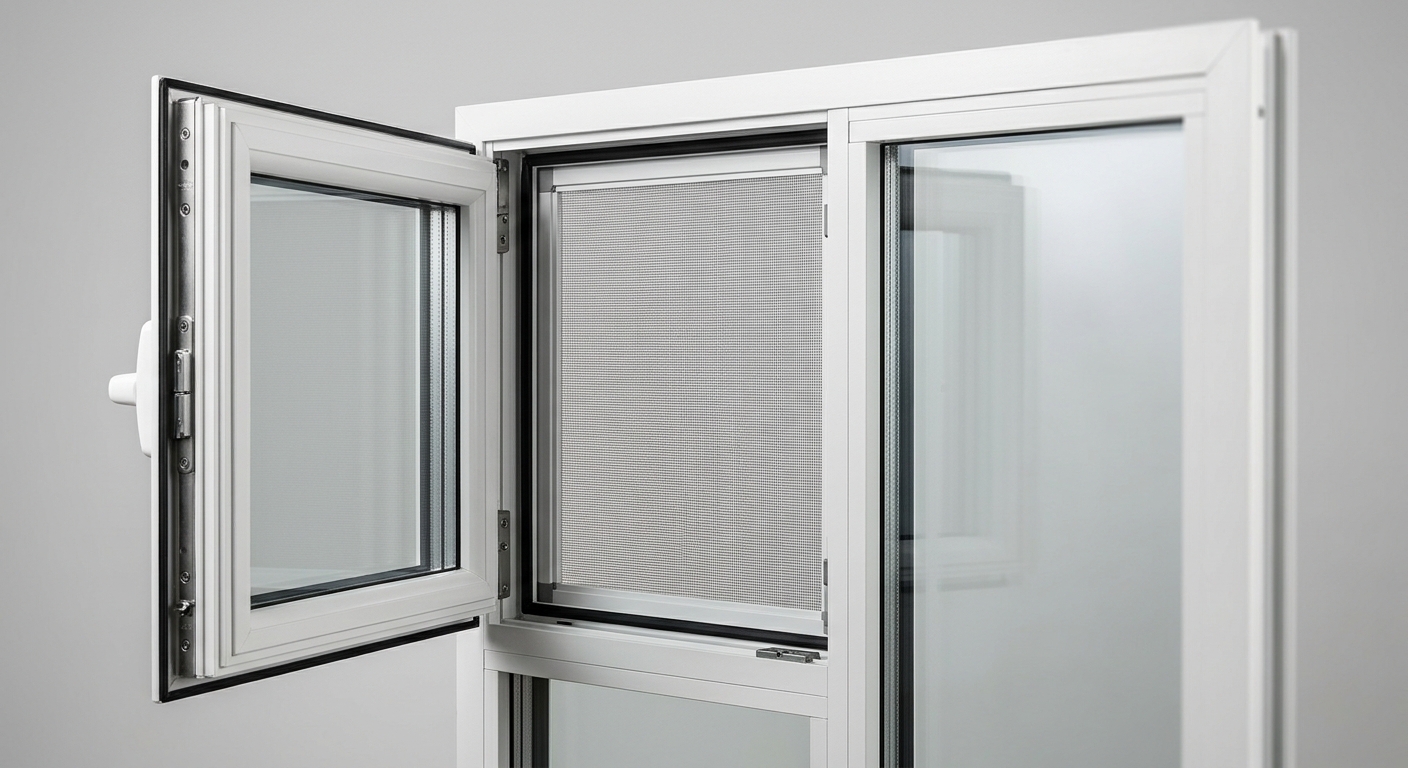
Integrated screens are factory-fitted within the window frame system, sharing the same profile extrusion or rebate channel. They offer the cleanest aesthetic, the tightest tolerances, and the most reliable weather sealing. For outward-opening casements, integrated screens are mounted on the interior face of the frame, allowing the sash to open freely without screen interference. This typology is the preferred specification for premium residential and hospitality projects.
Retractable screens use a spring-loaded cassette mechanism that retracts the mesh when not in use. They suit outward-opening casements well because the screen can be deployed or stowed without obstructing the opening sash. Retractable screens preserve sightlines when not in use and are popular in high-end residential applications. The trade-off is a higher unit cost and a mechanical component that requires periodic maintenance.
Fixed frame screens are independently framed mesh panels that attach to the window frame via clips, magnets, or channel tracks. They are the most cost-effective option and easiest to retrofit but offer less precise sealing and can be dislodged in high-wind conditions. They are best suited to low-rise residential applications where aesthetics and airtightness are secondary concerns.
Screen Mesh Specifications and Material Selection
Mesh selection affects insect exclusion performance, airflow restriction, durability, and maintenance requirements.
- Fiberglass mesh (18×16 aperture, 0.28mm wire) is the standard residential specification — lightweight, corrosion-resistant, and UV-stable for 10–15 years in most climates. It restricts airflow by approximately 30–35% compared to an unscreened opening.
- Aluminum mesh offers greater structural rigidity and is suitable for larger openings where mesh tension is a concern. It is compatible with aluminum casement frame systems and accepts powder-coat finishes for colour matching.
- Stainless steel mesh (304 or 316 grade) is specified for coastal environments, healthcare, and food service applications where corrosion resistance and cleanability are priorities. 316-grade mesh withstands salt spray and chlorine exposure and is appropriate for marine-adjacent or pool-area installations.
| Screen Type | Compatible Opening Direction | Mesh Material Options | Maintenance Requirement | Typical Lead Time (B2B) | Relative Cost Index |
|---|---|---|---|---|---|
| Integrated | Inward / Outward | Fiberglass, Aluminum, SS | Low | 4–8 weeks | ●●●○○ |
| Retractable | Outward (preferred) | Fiberglass, Aluminum | Medium | 3–6 weeks | ●●●●○ |
| Fixed Frame | Inward / Outward | Fiberglass, Aluminum, SS | Low–Medium | 2–4 weeks | ●●○○○ |
Technical and Compliance Considerations for Specifying Screened Casement Systems
Impact on Thermal Performance and U-Value Ratings
A common concern among specifiers is whether adding an insect screen to a double-glazed casement window affects its certified thermal performance or U-value rating. The answer is nuanced. The insulated glass unit (IGU) and frame thermal values are unchanged by the screen — the U-value certification issued under EN 14351-1 (Europe), NFRC 100 (North America), or AS 2047 (Australia) remains valid because it reflects the window assembly’s closed-sash performance.
However, for green building documentation — particularly where ventilation rates and thermal comfort modelling are submitted — the screen’s airflow restriction coefficient (typically 0.65–0.70 for standard fiberglass mesh) should be factored into natural ventilation calculations. BREEAM and LEED assessors may request this data when reviewing passive ventilation strategies. Suppliers who can provide mesh airflow resistance data (Pa·s/m) alongside window performance certificates simplify the documentation process for project teams.
Hardware, Frame Compatibility, and Installation Standards
Screen integration requires frame rebates or attachment channels that must be designed into the casement profile at the manufacturing stage. Retrofitting screens to frames without pre-designed rebates is possible but results in reduced sealing performance and potential hinge load issues if the screen adds weight to the sash.
Key hardware considerations include:
- Hinge load tolerance: Integrated screen frames add 1.5–4kg to the sash assembly. Hinge specifications must accommodate combined sash and screen weight within BS 6375-2 or AAMA 101 operational load limits.
- Frame-to-screen sealing: Brush pile or EPDM gasket seals at the screen perimeter prevent insect bypass at the frame junction — a common failure point in lower-specification fixed-frame screen installations.
- Finish compatibility: Screen frames should be powder-coated or anodized to match the parent window frame finish, specified by RAL colour code or anodizing class (AA25 for coastal environments).
Procurement and Specification Guidance for B2B Buyers
How to Specify Insect Screens in a Window System RFQ
When issuing an RFQ for double-glazed casement windows with integrated insect screens, buyers should define the following parameters explicitly to avoid supply delays and substitution disputes:
- Screen typology: Integrated / retractable / fixed frame
- Mesh material and aperture: e.g., 18×16 fiberglass or 304 SS, 1.2mm aperture
- Frame finish and colour match: RAL code, anodizing class
- Operability requirement: One-hand operation, child-safe locking, tool-free removal for cleaning
- Warranty terms: Separate warranty for screen mechanism vs. window system (minimum 2 years for mechanical components, 5 years for mesh integrity)
- Test certification: Request mesh airflow resistance data and frame compatibility test reports
Common specification gaps that cause delays include omitting the opening direction (inward vs. outward determines screen mounting position), failing to specify frame colour for the screen separately from the window frame, and not defining MOQ for replacement mesh panels — critical for large residential or hospitality projects with ongoing maintenance requirements.
Evaluating Suppliers: Quality Signals and Lead Time Factors
For project-based procurement at volume, supplier evaluation should prioritise:
- Factory certification: ISO 9001 quality management and product-specific certifications (EN 13561 for external blinds and screens, or equivalent)
- Sample protocol: Request pre-production samples with mesh tension test and frame seal integrity check before committing to full production
- MOQ flexibility: Suppliers offering mixed-SKU orders (combining screen types or mesh materials within a single production run) reduce inventory risk on multi-unit projects
- After-sales support: Availability of replacement cassettes, mesh rolls, and seal components for the product lifecycle — a critical factor for hospitality and healthcare clients managing 10–20 year asset cycles
FAQ
1. Do double-glazed casement windows come with insect screens as standard, or are they always an add-on?
In most markets, insect screens are an optional add-on rather than a standard inclusion, though this varies by region. In Australia and parts of Southeast Asia, screens are commonly included as standard in residential casement packages due to regulatory or market expectations. In European and North American markets, screens are typically specified separately. For B2B procurement, always confirm screen inclusion explicitly in the product schedule — do not assume it is included unless stated in the technical specification.
2. Will adding a fly screen to a casement window void its thermal performance warranty or affect its energy rating?
No — adding an insect screen does not affect the window’s certified U-value or energy rating, as these are measured with the sash closed. The screen has no contact with the IGU and does not alter the frame’s thermal break performance. However, if your project submits natural ventilation calculations for green building certification, the screen’s airflow restriction factor should be documented separately.
3. What is the most durable insect screen mesh type for coastal or high-humidity environments?
316-grade stainless steel mesh is the recommended specification for coastal, marine, and high-humidity environments. It offers superior resistance to salt spray corrosion and chlorine exposure compared to fiberglass or standard aluminum mesh. For extreme marine exposure (within 500m of the ocean), combine 316 SS mesh with an AA25 anodized or marine-grade powder-coated screen frame for a fully corrosion-resistant assembly.
Kesimpulan
Insect screens are not a cosmetic accessory for double-glazed casement windows — they are a functional component that completes the ventilation system in any climate or building type where insect ingress is a realistic concern. For procurement teams, the key decision is whether to specify screens at the design stage (integrated or retractable, factory-fitted) or manage them as a retrofit — a choice that consistently favours early specification on cost, performance, and installation quality grounds.
When sourcing screened casement window systems at scale, prioritise suppliers who can provide mesh performance data alongside window certifications, offer frame-matched screen finishes, and support the full product lifecycle with replacement components. Specifying the right screen typology, mesh material, and frame compatibility upfront eliminates the most common causes of supply delay and post-installation remediation.
For technical consultation on double-glazed casement window systems with integrated insect screen options, contact our specification team to discuss project requirements, sample requests, and volume pricing.