Abstract
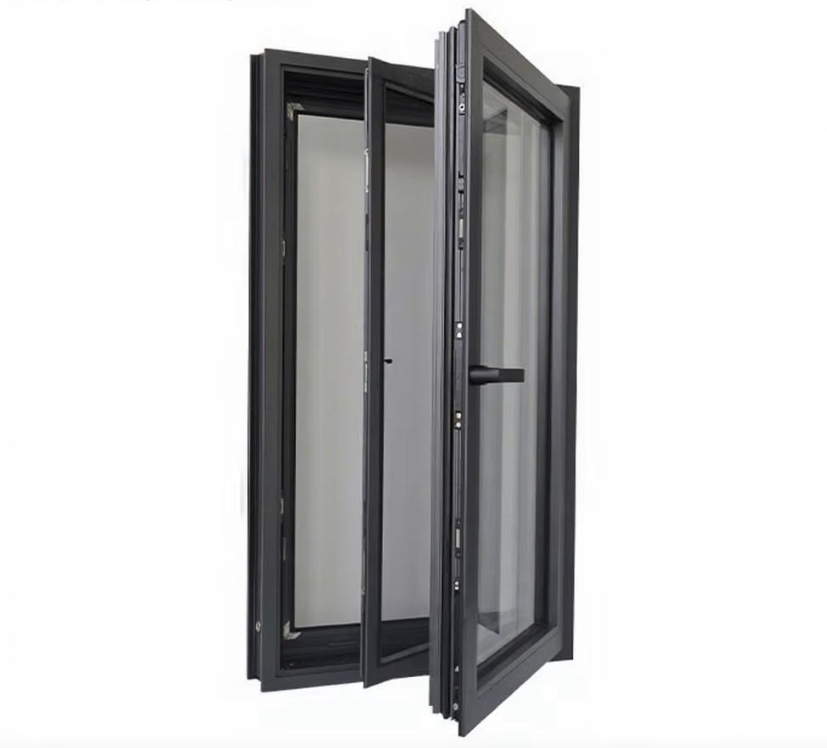
Hurricane resistant casement windows are engineered to withstand extreme wind loads and high-velocity impact forces—but their structural design creates a cascade of secondary performance advantages that standard glazing systems simply cannot replicate. The same laminated glass construction that stops windborne debris also attenuates sound. The same airtight compression seal that prevents pressure infiltration also eliminates acoustic leakage. The same Low-E coatings that manage solar heat gain also block damaging UV radiation.
For procurement professionals, architects, and project specifiers, evaluating hurricane resistant casement windows solely through the lens of storm compliance means leaving significant value on the table. This article provides a technically grounded, multi-dimensional assessment of acoustic insulation, UV protection, energy efficiency, and security performance—giving decision-makers the full picture needed to justify specification and procurement investment across coastal residential, multi-family, and commercial projects.
1: Why Hurricane Resistant Casement Windows Naturally Reduce Noise
1.1: The Acoustic Science Behind Impact-Rated Glazing
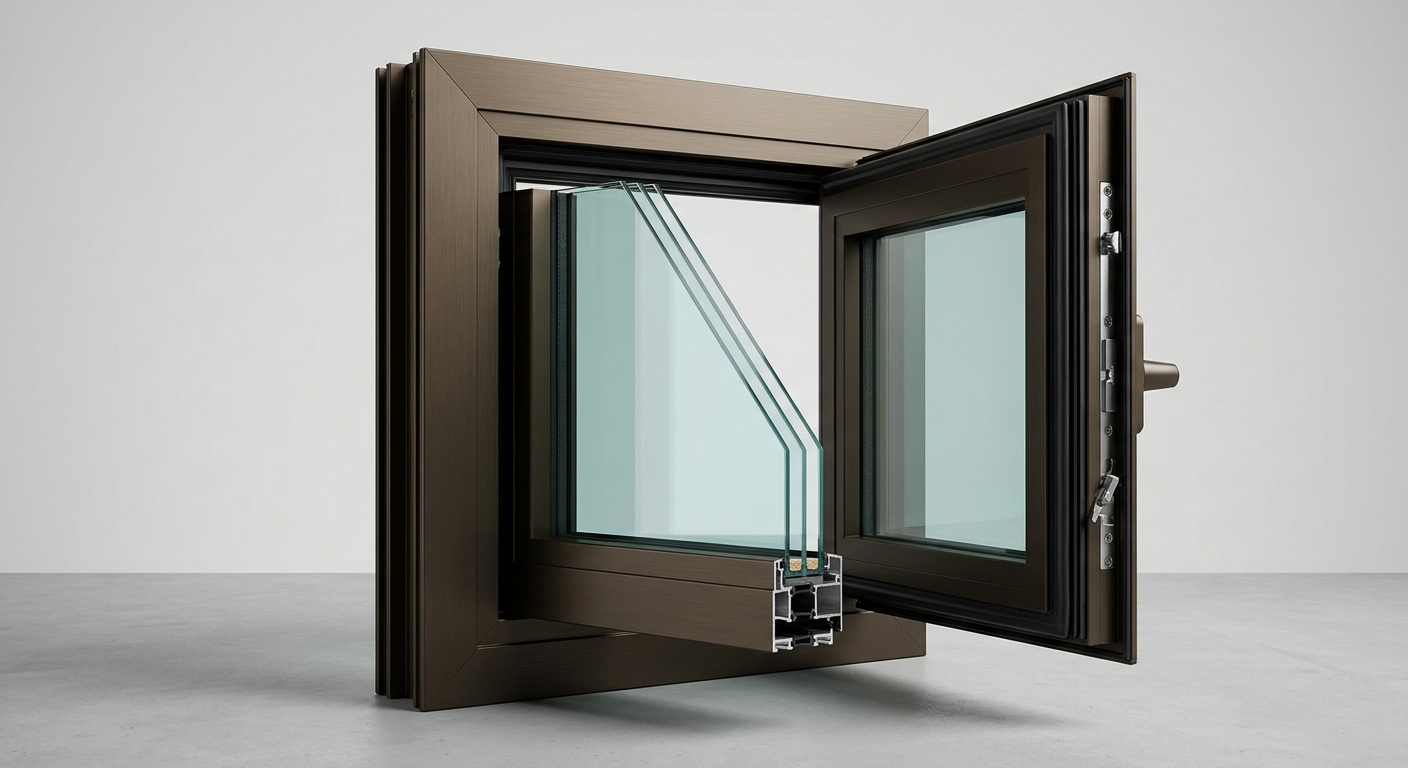
The noise reduction performance of hurricane resistant casement windows is not incidental—it is a direct consequence of their mandatory glazing construction. Impact-rated windows require laminated glass: two or more glass panes bonded by an interlayer of either polyvinyl butyral (PVB) or the stiffer sentry glass plus (SGP). This interlayer acts as a viscoelastic damping layer, absorbing and dissipating sound wave energy rather than transmitting it through the glass assembly.
Sound Transmission Class (STC) is the standard metric for rating airborne sound attenuation. A typical single-pane residential window achieves an STC of 26–28. A standard insulated glass unit (IGU) without lamination reaches approximately STC 30–32. By contrast, a hurricane-rated laminated IGU—combining two laminated lites with an air or argon-filled cavity—routinely achieves STC ratings of 38 to 45, with premium configurations reaching STC 48+.
The physics are straightforward: mass increases transmission loss, and the interlayer disrupts the coincidence effect—the frequency range at which glass becomes acoustically transparent. SGP interlayers, being stiffer than PVB, shift this coincidence dip to a less critical frequency range, providing more consistent broadband noise reduction. For projects near airports, highways, or coastlines where wind-driven ambient noise is constant, this acoustic performance is a procurement differentiator of genuine consequence.
1.2: Casement Frame Compression Seal vs. Sliding Window Gaps
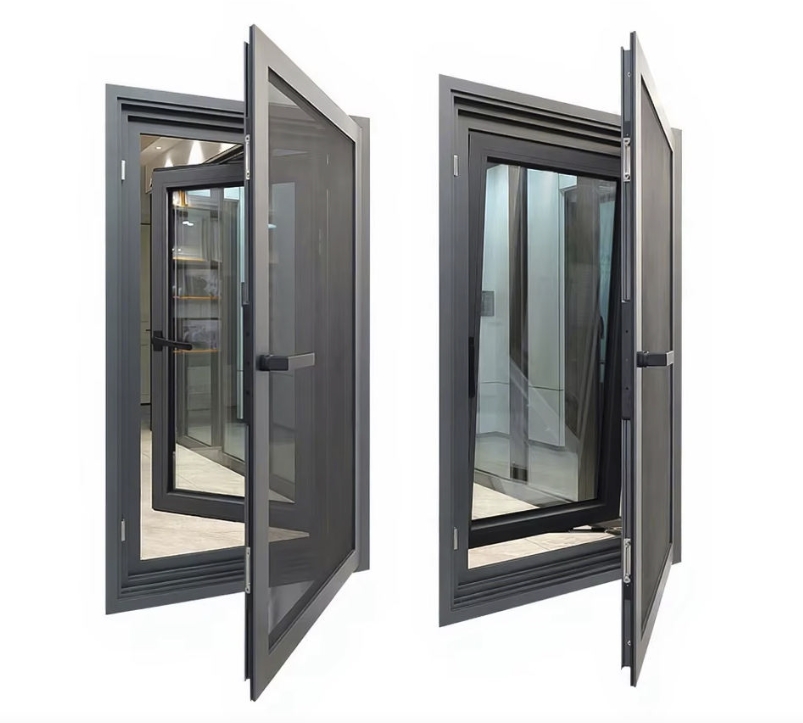
Beyond glazing, the operational mechanics of casement windows deliver an acoustic advantage that sliding or double-hung window types structurally cannot match. When a casement sash closes, it presses against a continuous perimeter gasket under the mechanical force of the locking hardware—creating a compression seal around the entire sash perimeter.
Sliding windows, by design, require a gap between the sash and frame track to allow lateral movement. This gap—however small—creates a direct air pathway that sound readily exploits. Compression seals eliminate this pathway entirely. In hurricane-rated casement systems, multi-point locking hardware applies consistent clamping pressure at multiple points along the sash, ensuring the gasket compresses uniformly. The result is an acoustic boundary with no weak points. For specifiers working on noise-sensitive occupancies—hotel rooms, healthcare facilities, or urban residential towers—this mechanical advantage is worth quantifying in the specification brief.
2: Beyond Noise — The Full Spectrum of Hidden Benefits
2.1: UV Rejection and Solar Heat Control
Hurricane resistant casement windows are routinely specified with Low-Emissivity (Low-E) coatings, and for coastal and sun-belt climates, this pairing delivers measurable interior protection. Low-E coatings are microscopically thin metallic oxide layers applied to one or more glass surfaces within an IGU. Their primary function is to reflect long-wave infrared radiation—reducing heat transfer—but they also block a substantial portion of ultraviolet radiation.
A high-performance Low-E coating on a laminated IGU can block 95–99% of UV-A and UV-B radiation, the wavelengths responsible for fading fabrics, flooring, artwork, and furniture. For commercial interiors with significant furnishing investment, or hospitality projects where interior aesthetics are a brand asset, this UV rejection represents a tangible lifecycle cost saving.
From a thermal standpoint, Solar Heat Gain Coefficient (SHGC) values for hurricane-rated Low-E IGUs typically range from 0.19 to 0.35, depending on coating specification and climate zone requirements. Lower SHGC values reduce cooling loads in hot climates, directly reducing HVAC energy consumption. For LEED-targeted or ENERGY STAR-compliant projects, specifying hurricane windows with appropriate Low-E configurations satisfies multiple performance criteria simultaneously.
2.2: Energy Efficiency and Security Performance
Energy Performance: The U-factor measures the rate of non-solar heat transfer through a window assembly. Standard aluminum-framed single-pane windows carry U-factors of 1.0 or higher. Hurricane-rated casement windows with thermally broken aluminum frames and Low-E laminated IGUs achieve U-factors in the 0.28–0.35 range—meeting or exceeding ENERGY STAR Most Efficient thresholds for most U.S. climate zones. The compression seal that aids acoustic performance also eliminates infiltration, further reducing heating and cooling energy demand.
Security: The same laminated glass construction that resists windborne debris also resists forced entry. PVB and SGP interlayers prevent the glass from shattering into penetrable openings—an attacker cannot simply break the glass and reach through. Combined with multi-point locking systems and heavy-gauge aluminum frames, hurricane resistant casement windows meet or exceed ANSI/DASMA forced-entry resistance standards. For insurance underwriters in hurricane zones, this combination of impact and security performance often qualifies the installation for premium discounts.
Performance Comparison Table
| Performance Dimension | Standard Aluminum Casement | Hurricane Casement (Base) | Hurricane Casement (High-Performance) |
|---|---|---|---|
| STC Rating | 26–28 | 35–38 | 42–48 |
| Wind Load (DP Rating, psf) | ±20–30 | ±45–55 | ±65–90+ |
| U-Factor | 0.55–1.0 | 0.35–0.45 | 0.25–0.34 |
| SHGC | 0.55–0.70 | 0.30–0.45 | 0.19–0.29 |
| UV Blockage (%) | 25–40% | 85–92% | 95–99% |
| Certifications | — | IMPACT / DP Rating | NOA / FBC / ENERGY STAR |
3: Key Technical Specifications and Compliance Standards
3.1: Impact Ratings, Test Protocols, and Certifications
Specifiers must navigate several overlapping certification frameworks when procuring hurricane resistant casement windows. The foundational test protocols are ASTM E1886 (test method for performance of exterior windows under the influence of windborne debris) and ASTM E1996 (specification for performance of exterior windows, curtain walls, doors, and impact protective systems). These tests involve large and small missile impact at defined velocities, followed by cyclic pressure loading.
Miami-Dade County Notice of Acceptance (NOA) is the most rigorous third-party certification available in the U.S. market, required for construction in Miami-Dade and Broward counties and widely accepted as a benchmark nationally. The Florida Building Code (FBC) references these standards and mandates impact-rated products in High-Velocity Hurricane Zones (HVHZ).
Design Pressure (DP) rating expresses the structural load capacity in pounds per square foot (psf) at both positive and negative pressure. For high-rise or exposed coastal applications, specifiers should target DP ratings of ±65 psf or higher. Always verify that the rated assembly—frame, glazing, and hardware together—carries the certification, not just the glass unit in isolation.
3.2: Frame Material and Glazing Configuration Options
Frame Materials: Thermally broken aluminum remains the dominant choice for commercial hurricane casement applications, offering high strength-to-weight ratio, corrosion resistance, and design flexibility. For residential and mid-rise multi-family projects, uPVC (unplasticized polyvinyl chloride) frames offer superior thermal performance and lower lifecycle maintenance costs, though they carry lower structural ratings at equivalent section depths. For coastal environments with high salt-air exposure, marine-grade aluminum alloys with PVDF or powder-coat finishes outperform standard anodized profiles over a 20–30 year service life.
Glazing Configurations: The base configuration for impact compliance is a single laminated lite (e.g., 6mm + 0.76mm PVB + 6mm). For combined acoustic, thermal, and impact performance, the preferred specification is a laminated IGU: an outer laminated lite, a 12–16mm argon-filled cavity, and an inner laminated or heat-strengthened lite with Low-E coating on surface #2 or #3. This configuration maximizes all performance dimensions simultaneously without requiring separate product categories.
4: Application Scenarios and Procurement Considerations
4.1: Coastal Residential, Multi-Family, and Commercial Use Cases
Hurricane resistant casement windows serve distinct specification triggers across project types:
- Coastal residential: Primary driver is code compliance in hurricane zones, with acoustic and UV benefits as secondary value drivers for end-user satisfaction and property value.
- Urban high-rise residential and multi-family: Noise reduction from traffic and urban ambient noise is often the primary occupant comfort driver; hurricane rating provides insurance and structural value.
- Hospitality and healthcare: UV protection and acoustic privacy are critical operational requirements; hurricane compliance may be mandated by local code or insurance requirements.
- Commercial facades in HVHZ: Curtain wall and punched opening specifications must demonstrate NOA-certified assemblies; energy code compliance (ASHRAE 90.1) drives Low-E and U-factor selection.
Geography determines the minimum compliance threshold, but the full performance specification should be driven by occupant use, asset class, and total cost objectives.
4.2: Total Cost of Ownership vs. Standard Window Systems
The upfront cost premium for hurricane resistant casement windows over standard aluminum casements typically ranges from 40–80%, depending on glazing configuration and frame specification. However, a lifecycle cost analysis consistently narrows this gap:
- Insurance premium reductions in Florida and Gulf Coast states can reach 25–45% of wind coverage premiums for fully impact-rated envelopes.
- Energy savings from Low-E IGU configurations reduce annual HVAC costs by an estimated 10–20% in cooling-dominated climates, yielding a 7–12 year payback on the energy premium alone.
- Maintenance differentials favor aluminum hurricane systems over wood or standard vinyl, particularly in salt-air environments where repainting and seal replacement cycles are costly.
- Replacement avoidance eliminates the post-storm window replacement costs—both direct material costs and project disruption—that standard glazing systems incur during hurricane events.
For B2B procurement teams evaluating capital expenditure, framing hurricane window specification as a risk mitigation and energy infrastructure investment—rather than a code compliance cost—consistently produces stronger internal approval outcomes.
FAQ
1. Do hurricane resistant casement windows meet building code requirements for noise-sensitive commercial projects?
Hurricane resistant casement windows with laminated IGU construction and STC ratings of 38–45 meet or exceed the acoustic performance requirements of most commercial building codes for noise-sensitive occupancies, including OSHA workplace noise guidelines and IBC occupancy separation requirements. However, specifiers should verify project-specific STC minimums with the acoustic consultant, as requirements vary by occupancy type and local jurisdiction.
2. What STC rating should I specify for hurricane windows in high-traffic urban or coastal environments?
For urban environments adjacent to major roadways or rail corridors, a minimum STC of 40 is recommended for residential occupancies. Coastal environments with persistent wind-driven ambient noise typically require STC 38–42. High-performance laminated IGU configurations with SGP interlayers and wider air cavities can achieve STC 45–48 for critical applications such as recording studios, healthcare, or premium hospitality.
3. Can hurricane resistant casement windows be retrofitted into existing frames, and does retrofitting affect acoustic or impact performance?
Retrofit installation is possible in many cases using existing rough openings, but the certified performance of a hurricane window system is specific to its tested assembly—including the frame anchoring to the surrounding wall structure. Retrofitting into non-certified sub-frames or using non-rated installation methods voids impact certification and may compromise both acoustic and structural performance. Full frame replacement with certified anchoring is the recommended approach for projects requiring NOA or FBC compliance.
Kesimpulan
Hurricane resistant casement windows represent a convergence of structural, acoustic, thermal, and security performance that no single-purpose glazing system can replicate. The laminated glass construction mandated for impact compliance simultaneously delivers STC ratings of 38–48, UV blockage exceeding 95%, U-factors below 0.35, and forced-entry resistance—all within a single product specification.
For procurement teams and project specifiers, the strategic insight is this: the premium paid for hurricane compliance is not a single-benefit cost. It is an investment in a multi-performance envelope system that reduces insurance exposure, lowers energy costs, protects interior assets from UV degradation, and enhances occupant security and comfort. Across coastal residential, multi-family, and commercial applications, understanding and communicating this full benefit profile is what transforms a code-compliance line item into a demonstrable asset value driver.