

Abstract
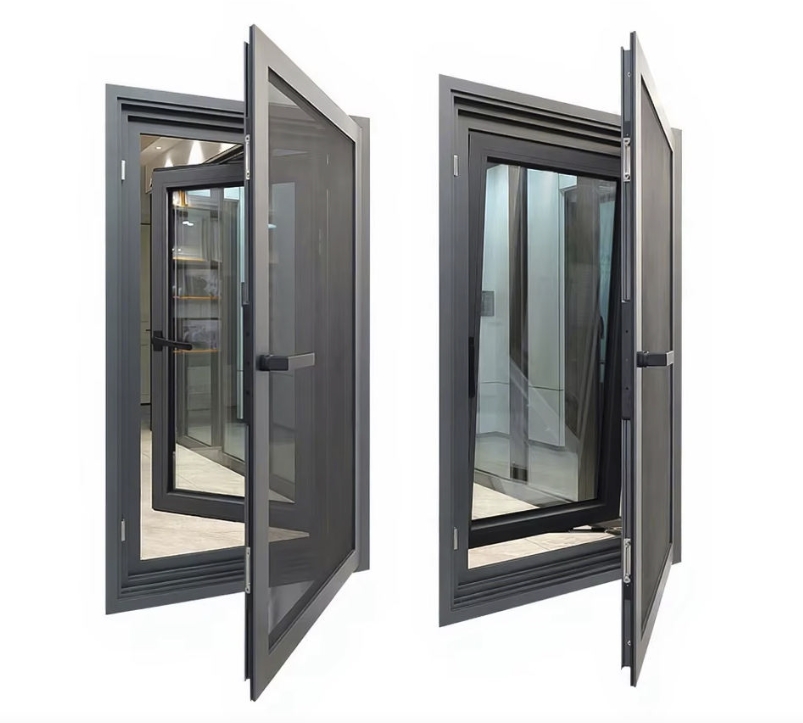
For procurement managers and building specifiers, selecting an exterior entry door system is a decision with long-term structural and operational consequences. An aluminum glass entry door must perform reliably under wind pressure, driven rain, thermal cycling, and UV degradation—conditions that expose every weakness in frame design, glazing specification, and sealing execution. This article provides a technical and commercial framework for evaluating weather resistance in aluminum glass entry doors, covering the three core performance pillars: frame engineering and surface treatment, glazing system selection, and sealing integrity. Decision-makers will find actionable specification benchmarks and procurement criteria to match door systems to climate-specific demands across commercial, hospitality, healthcare, and institutional applications.
1. What Makes an Aluminum Glass Entry Door Weather Resistant
1.1 Aluminum Frame Engineering and Structural Integrity
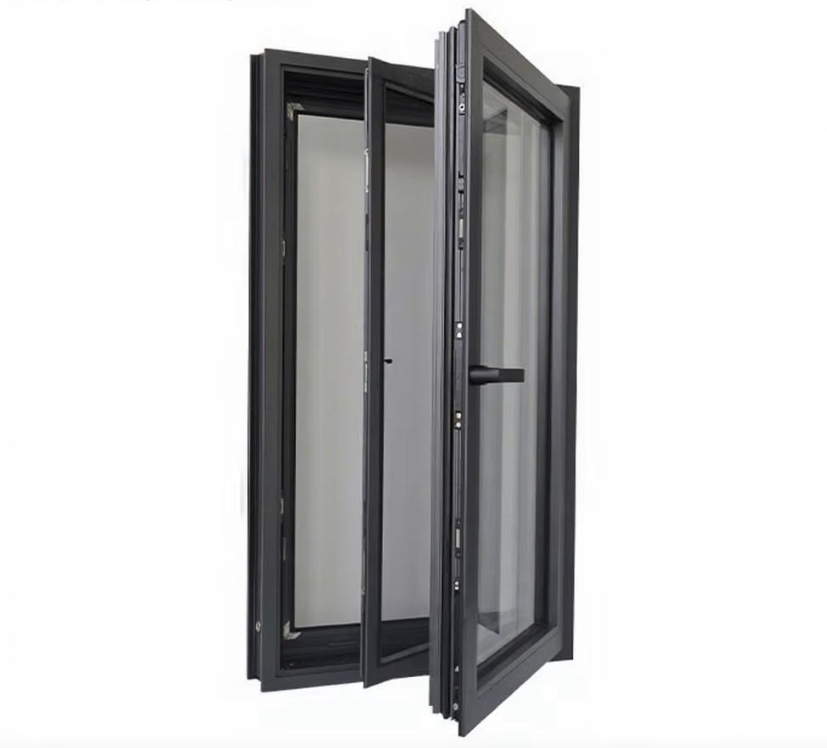
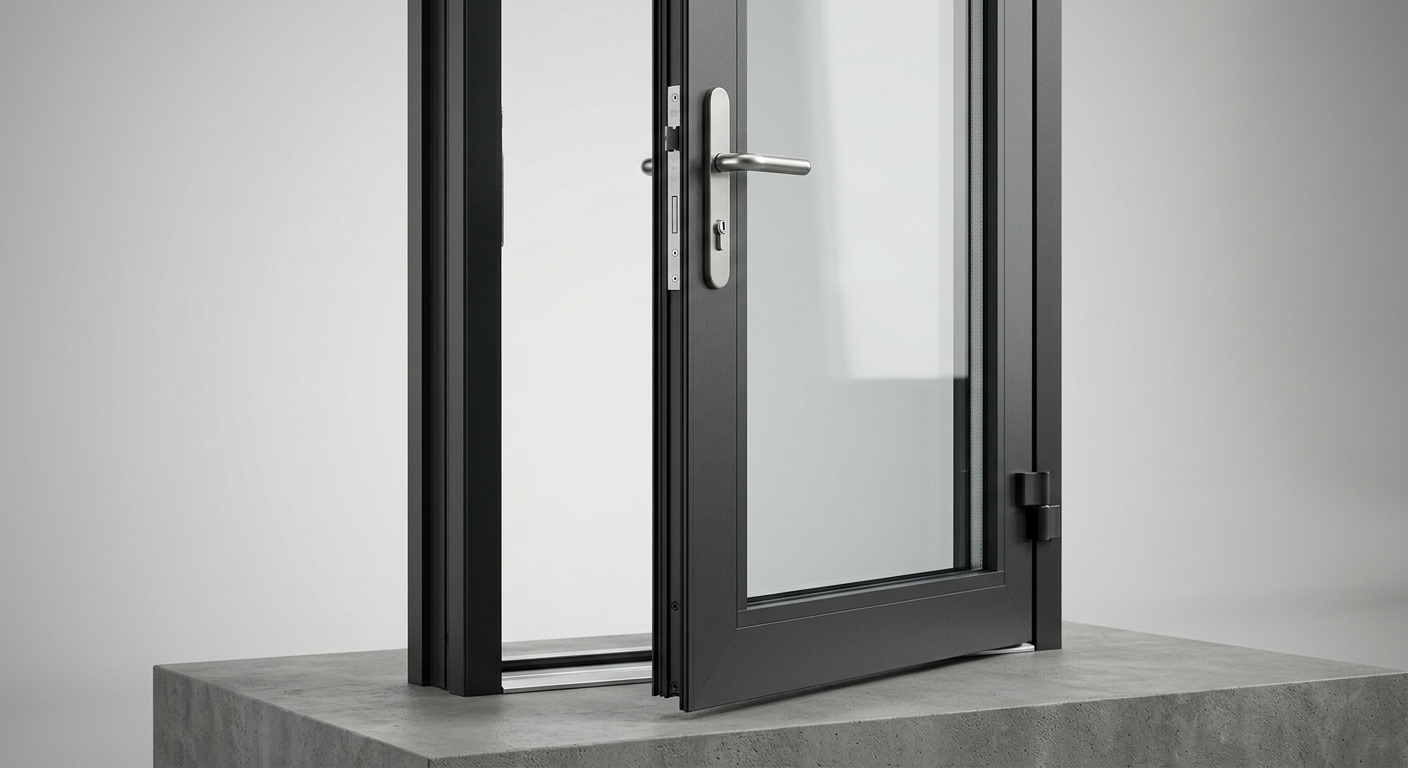
The structural backbone of any weather-resistant aluminum glass entry door is its extruded aluminum profile. High-performance commercial doors use thermally broken aluminum frames—a construction method that inserts a low-conductivity polyamide bar between the interior and exterior aluminum sections. This thermal break eliminates the direct metal-to-metal conduction path, reducing heat transfer and preventing condensation formation on interior frame surfaces during cold weather.
Wall thickness is a critical procurement specification that is frequently overlooked. Commercial-grade aluminum profiles for exterior entry doors typically require a minimum wall thickness of 1.8 mm to 2.5 mm, with heavy-duty applications demanding profiles up to 3.0 mm. Undersized profiles flex under wind pressure, compromising both glazing retention and seal compression.
Wind pressure resistance is quantified under ASTM E330, the standard test method for structural performance of exterior windows, doors, and curtain walls under uniform static air pressure. For mid-rise commercial buildings in exposed locations, specifiers should require doors rated to withstand at least ±2,400 Pa (50 psf). Coastal high-rise applications may demand ratings exceeding ±3,600 Pa (75 psf). Requesting third-party ASTM E330 test reports—not just manufacturer declarations—is essential during supplier qualification.
1.2 Surface Treatment and Corrosion Resistance
Aluminum’s natural oxide layer provides baseline corrosion resistance, but exterior entry doors in coastal, industrial, or high-humidity environments require engineered surface protection. Two primary treatments are relevant for commercial procurement:
- Anodizing: Electrochemical oxidation builds a dense, integrated aluminum oxide layer typically 15–25 microns thick for architectural applications. Anodized surfaces resist salt spray, UV fading, and abrasion without peeling. Class 25 anodizing (25-micron minimum) is the recommended specification for marine or coastal environments.
- Powder Coating: A thermally cured polymer coating applied electrostatically delivers impact resistance and a broad color palette. For corrosive environments, a chromate conversion primer + PVDF topcoat system provides the highest durability, resisting salt spray for over 3,000 hours per ASTM B117.
For coastal installations within 1.5 km of the shoreline, specifying marine-grade anodizing or a two-coat powder system is not optional—it is a lifecycle cost decision.
2. Glazing Systems and Thermal Performance Under Extreme Conditions
2.1 Double Glazing vs. Single Glazing for Exterior Entrances
Single glazing has no place in a weather-resistant exterior entry door specification for commercial buildings. The thermal and acoustic performance gap between single and double glazing is substantial and directly affects occupant comfort, energy compliance, and condensation risk.
An insulating glass unit (IGU)—commonly called double glazing—consists of two glass panes separated by a spacer bar and sealed gas cavity, typically filled with argon or krypton. The U-value (thermal transmittance) comparison is decisive:
- Single glazing (6 mm): U-value ≈ 5.8 W/m²K
- Double glazing (6/12/6 argon): U-value ≈ 2.6–2.8 W/m²K
- Double glazing with Low-E coating: U-value ≈ 1.4–1.8 W/m²K
Low-emissivity (Low-E) coatings—metallic oxide layers applied to the inner glass surface—reflect long-wave infrared radiation, reducing solar heat gain in warm climates or heat loss in cold climates. Specifying the correct Low-E type (hard coat vs. soft coat, solar control vs. passive) depends on the climate zone and building orientation.
Warm-edge spacer bars (foam or hybrid materials) replace traditional aluminum spacers at the IGU perimeter, reducing thermal bridging at the glass edge and further suppressing condensation risk.
2.2 Impact Resistance and Safety Glazing Standards
Exterior entry doors must use safety glazing. The two primary options are tempered glass and laminated glass, each suited to different risk profiles:
- Tempered glass: Heat-treated to approximately 4× the strength of annealed glass. When broken, it fractures into small, relatively harmless granules. Complies with ANSI Z97.1 (US) and EN 12600 (EU) Class 1C or 2C.
- Laminated glass: Two or more glass panes bonded with a polyvinyl butyral (PVB) interlayer. Resists penetration after breakage—critical for hurricane zones, high-security entrances, and locations requiring forced-entry resistance. Laminated IGUs combine both impact resistance and thermal insulation.
| Glass Type | Thickness Spec | U-Value (W/m²K) | Wind Pressure Rating | Climate Zone | Compliance Standard |
|---|---|---|---|---|---|
| Single Tempered | 6–10 mm | ~5.8 | Low–Medium | Mild, interior | ANSI Z97.1 |
| Double IGU (Argon) | 6/12/6 mm | 2.6–2.8 | Medium–High | Mixed, continental | EN 1279 / ASTM E2190 |
| Double IGU + Low-E | 6/14/6 mm | 1.4–1.8 | Medium–High | Cold, northern | EN 673 / NFRC 100 |
| Laminated IGU | 6.38/12/6 mm | 1.6–2.0 | High–Very High | Coastal, hurricane | ANSI Z97.1 / EN 12600 |
3. Sealing Systems and Water/Air Infiltration Control
3.1 Multi-Point Sealing and Weatherstrip Design
A door frame and glazing system can meet every structural specification and still fail in service if the sealing system is inadequate. Weather resistance at the operational joint—where the door leaf meets the frame—depends on weatherstrip material, profile geometry, and compression consistency across the full door perimeter.
EPDM (ethylene propylene diene monomer) rubber is the industry standard for exterior door weatherstripping. It maintains elasticity across a temperature range of –40°C to +120°C, resists UV degradation, ozone, and moisture absorption, and retains its compression set performance over millions of open/close cycles. Inferior TPE or PVC substitutes degrade significantly faster under UV and thermal cycling.
High-performance aluminum glass entry doors use a three-seal perimeter system: a primary compression seal at the door stop, a secondary wiper seal at the frame rebate, and a pile or blade seal at the door bottom. This redundant architecture ensures that even if one seal is temporarily deformed by traffic or temperature change, infiltration is blocked at the next barrier.
Multi-point locking mechanisms contribute directly to air and water tightness. A single-point lock applies clamping force at one location; a multi-point lock (typically 3–5 locking points) distributes compression evenly across the full door height, ensuring consistent seal contact regardless of minor frame deflection or door warping.
3.2 Performance Testing Standards for Water and Air Resistance
Procurement teams should require supplier-provided third-party test reports for two key ASTM standards:
- ASTM E283 – Air Infiltration: Measures air leakage through the door assembly at a standard pressure differential of 75 Pa (1.57 psf). A high-performance commercial door should achieve ≤0.3 L/s·m² of leakage at this pressure. Doors meeting this threshold significantly reduce HVAC loads and comply with ASHRAE 90.1 envelope requirements.
- ASTM E331 – Water Penetration Resistance: Applies water at 204 L/m²·h while maintaining a pressure differential of 137 Pa (2.86 psf). No water infiltration should occur at the test pressure. For coastal or monsoon-zone applications, specifiers may require testing at the elevated pressure of 299 Pa (6.24 psf) per AAMA 501.1.
European procurement may reference EN 12207 (air permeability, Class 4 maximum), EN 12208 (water tightness, Class 9A for exposed locations), and EN 12210 (wind resistance, Class 5).
4. Application Scenarios and Commercial Procurement Considerations
4.1 High-Demand Use Cases: Coastal, High-Altitude, and High-Traffic Entrances
The selection logic for a weather-resistant aluminum glass entry door shifts based on the dominant environmental stressor:
- Coastal environments: Prioritize marine-grade anodizing or PVDF powder coating, laminated IGU glazing, and Class 4/9A air and water ratings. Salt-laden air accelerates corrosion on any unprotected metal surface—hardware, hinges, and threshold plates must also be specified in stainless steel or marine-grade alloys.
- High-altitude and cold climates: Thermal break depth (≥24 mm recommended) and Low-E double glazing are non-negotiable. Door hardware must function at sub-zero temperatures without lubricant failure.
- High-traffic commercial entrances (hotels, hospitals, retail): Cycle-tested door closers rated to 500,000+ cycles, reinforced hinge pockets, and bottom seals with replaceable inserts reduce maintenance frequency and total downtime.
Typical high-specification applications include hotel lobbies (aesthetic + performance balance), hospital main entrances (hygiene, pressurization control), and commercial complex atriums (large-format glazing with structural wind resistance).
4.2 Total Cost of Ownership and Long-Term Maintenance Value
Aluminum glass entry doors deliver a compelling total cost of ownership (TCO) advantage over steel and uPVC alternatives in commercial applications:
| Factor | Aluminum Glass Door | 鋼製ドア | uPVC Door |
|---|---|---|---|
| 耐腐食性 | Excellent (anodized/coated) | Requires repainting | Moderate (UV degradation) |
| Structural lifespan | 30–50 years | 15–25 years (with maintenance) | 15–20 years |
| Thermal performance | High (thermally broken) | Low (conductive) | Moderate |
| Recyclability | 100% recyclable | Recyclable | Limited |
| Maintenance cycle | 5–10 years (inspect seals) | 2–3 years (paint/anti-rust) | 3–5 years (seal replacement) |
The aluminum frame itself requires minimal intervention beyond periodic cleaning and seal inspection. EPDM weatherstrips typically carry a 10-year replacement interval under normal commercial use. The primary long-term cost variables are glazing seal integrity (IGU argon gas retention) and hardware lubrication—both manageable within standard facility maintenance programs.
FAQ
Q1: What wind load rating should I require for an aluminum glass entry door in a coastal commercial building?
For coastal mid-rise buildings, specify a minimum wind pressure resistance of ±3,000 Pa (62.5 psf) per ASTM E330. In hurricane-designated zones (e.g., Florida Building Code, Miami-Dade NOA), doors must meet impact + cyclic wind pressure testing per ASTM E1886/E1996. Always request the actual test report, not a product data sheet claim.
Q2: How do I verify that a supplier’s door meets ASTM or EN weather resistance standards before purchase?
Request original third-party laboratory test reports—not internal test summaries—issued by accredited bodies (e.g., Intertek, SGS, TÜV). Verify that the tested configuration (frame profile, glazing type, hardware) matches the specification you are ordering. Certificates for a different product model do not transfer.
Q3: Does double glazing in an aluminum entry door significantly increase lead time or procurement cost?
Double glazing (IGU) typically adds 15–25% to the glazing material cost versus single pane but represents a smaller percentage of total door system cost. Standard IGU configurations (6/12/6 argon, Low-E) are widely stocked; specialty laminates or triple glazing may add 2–4 weeks to lead time. The energy savings and reduced HVAC sizing costs typically recover the premium within 3–5 years in commercial buildings.
結論
A well-specified aluminum glass entry door is fully capable of resisting harsh weather—but only when frame engineering, glazing selection, and sealing execution are treated as an integrated system rather than independent components. Thermally broken aluminum profiles with verified wall thickness provide the structural foundation. Double glazing with Low-E coatings and appropriate safety glass specifications address thermal performance and impact risk. EPDM multi-point sealing systems, validated against ASTM E283 and E331 (or EN 12207/12208), close the performance loop against air and water infiltration.
For procurement decision-makers, the key discipline is demanding third-party test documentation that matches the exact product configuration being purchased, specifying surface treatments appropriate to the installation environment, and evaluating total cost of ownership rather than unit price alone. An aluminum glass entry door specified correctly for its climate and traffic context will outperform steel and uPVC alternatives on durability, energy efficiency, and maintenance cost over a 30–50 year service life—making it the technically and commercially superior choice for demanding exterior building entrances.