Abstract
For B2B procurement teams evaluating fenestration systems, durability is not a marketing claim — it is a measurable engineering outcome. Aluminum double-glazed casement windows have become the benchmark specification for commercial, coastal, and industrial construction projects precisely because their performance characteristics are verifiable against international standards.
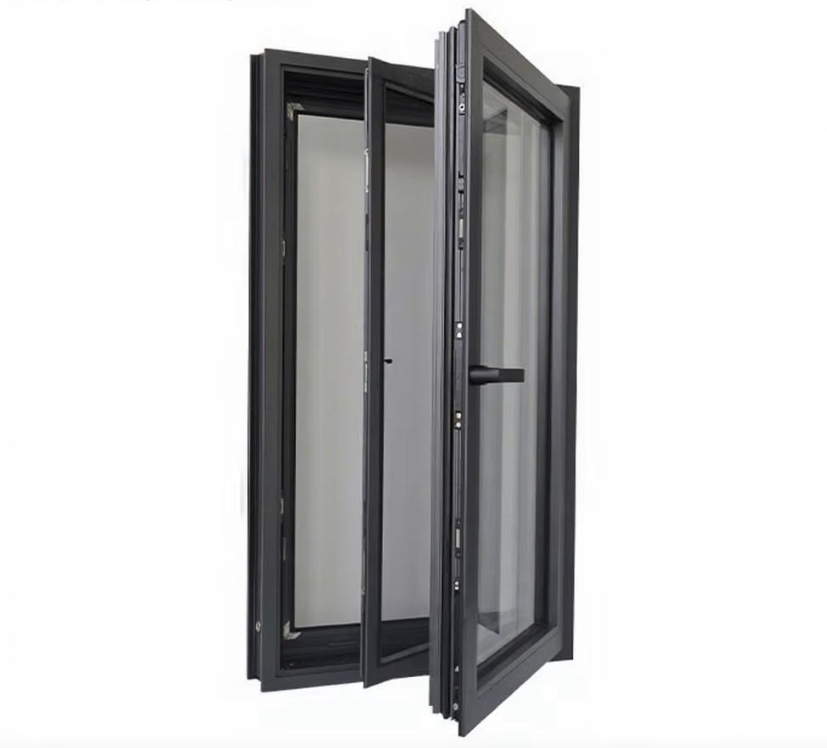
This article systematically addresses the core procurement concern: how durable are aluminum double-glazed casement windows, and what makes powder-coated frames the decisive differentiator? We examine the material science behind aluminum alloy frames, the anti-corrosion and anti-warping mechanisms of electrostatic powder coating, the compliance standards procurement teams must verify, and the total cost of ownership logic that justifies specification over lower-cost alternatives.
Whether you are sourcing for a high-rise commercial development, a coastal hospitality project, or an industrial facility, the data presented here provides a structured framework for making defensible procurement decisions based on performance benchmarks rather than price alone.
1: What Makes Aluminum Double-Glazed Casement Windows Structurally Durable
1.1: Material Properties of Aluminum Frames vs. Alternative Window Materials
Aluminum alloy — typically 6063-T5 grade used in architectural extrusions — delivers a tensile strength of approximately 160–200 MPa, significantly outperforming uPVC (40–55 MPa) and timber in structural load-bearing capacity. This strength-to-weight ratio allows aluminum frames to maintain dimensional precision across large window spans without requiring the bulky cross-sections that weaker materials demand.
Three material properties define aluminum’s durability advantage in fenestration:
- Thermal expansion coefficient: Aluminum expands at approximately 23 × 10⁻⁶/°C, which is higher than steel but substantially more predictable and manageable than timber. Critically, this expansion is uniform and reversible — aluminum frames return to original dimensions without permanent deformation.
- Corrosion behavior: Unlike steel, aluminum forms a passive oxide layer that halts oxidation progression. With powder coating applied, this natural protection is reinforced by a chemical barrier, making the frame suitable for Class C4/C5 corrosion environments per ISO 12944.
- Service life: Industry data consistently places well-maintained aluminum window frames at 40–60 years of functional service life, compared to 20–30 years for uPVC and 15–25 years for untreated timber in comparable exposure conditions.
For procurement teams specifying large-volume commercial projects, these differences translate directly into reduced lifecycle replacement costs and lower facility management overhead.
1.2: How Double-Glazed Units Reinforce Overall Window Integrity
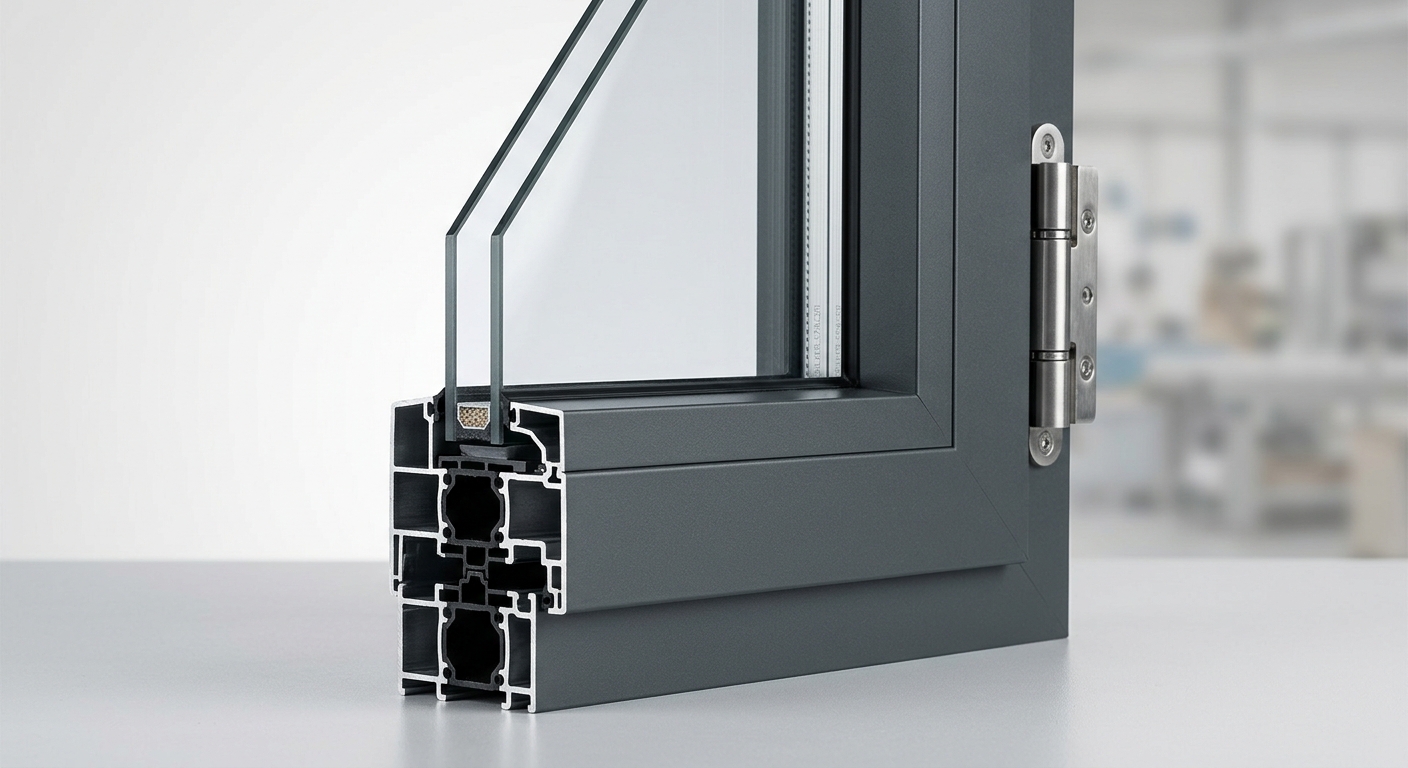
The double-glazed insulating glass unit (IGU) is not merely an energy performance component — it contributes meaningfully to the structural integrity of the complete window assembly. A standard IGU comprises two glass lites separated by a warm-edge spacer bar (typically 12–16 mm), with the cavity filled with argon or krypton gas and sealed with primary and secondary sealants (polyisobutylene and silicone or polysulfide).
This sealed unit creates a rigid composite panel that distributes wind load across the frame more evenly than single-pane glazing. The structural silicone perimeter bond between the IGU and the aluminum frame further prevents racking under lateral pressure. In high-wind-zone applications, this assembly integrity is critical to maintaining air and water tightness over the window’s operational life.
| Performance Dimension | Aluminum Alloy Frame | uPVC Frame | Timber Frame |
|---|---|---|---|
| Tensile Strength (MPa) | 160–200 | 40–55 | 40–100 (species-dependent) |
| Thermal Expansion (×10⁻⁶/°C) | 23 | 70–80 | 3–8 (variable with moisture) |
| Corrosion Resistance Grade | C4/C5 (with coating) | C3–C4 | C2–C3 (treated) |
| Expected Service Life (years) | 40–60 | 20–30 | 15–25 |
| Maintenance Cycle | 15–20 years (recoat) | 5–10 years (seal/clean) | 3–5 years (repaint/treat) |
| Suitable Climate Types | All, including marine | Temperate/moderate | Dry/temperate preferred |
2: How Powder-Coated Frames Prevent Corrosion and Warping
2.1: Powder Coating Process and Anti-Corrosion Mechanism
Powder coating applied to aluminum window frames is an electrostatic spray process in which thermosetting polymer particles — typically polyester or PVDF-based — are electrostatically charged and deposited onto pre-treated aluminum profiles before curing at 180–200°C. The result is a cross-linked, non-porous coating with a standard dry film thickness of 60–80 μm (per Qualicoat Class 1 specifications), with architectural-grade coatings reaching 80–100 μm.
The anti-corrosion performance of powder coating operates through two mechanisms:
- Physical barrier: The dense, pinhole-free coating prevents moisture, chloride ions, and atmospheric pollutants from reaching the aluminum substrate. This is the primary defense in coastal and industrial environments where salt spray and chemical exposure are continuous.
- Adhesion to pre-treatment layer: Before coating, frames undergo chromate-free or chrome-based conversion coating (typically zirconium-based for RoHS compliance), which bonds the powder coat to the aluminum at a molecular level and prevents undercutting corrosion if the surface is scratched.
Compared to liquid paint systems, powder-coated aluminum frames demonstrate 3–5× greater resistance to UV-induced chalking and color fade in accelerated weathering tests, and maintain adhesion integrity significantly longer in salt spray exposure (>1,000 hours per ISO 9227 vs. <500 hours for standard liquid paint).
2.2: Warping Prevention Under Thermal and Humidity Stress
Warping in window frames occurs when differential thermal or moisture-induced expansion creates internal stress that exceeds the material’s elastic recovery limit. Timber is highly susceptible because moisture absorption is non-uniform across grain directions. uPVC is vulnerable at elevated temperatures (above 60°C surface temperature), where its high expansion coefficient causes visible bowing in dark-colored profiles exposed to direct solar radiation.
Aluminum’s warping resistance derives from two compounding factors:
- Low and uniform expansion: The 23 × 10⁻⁶/°C coefficient is consistent across all axes of an extruded profile, meaning the frame expands and contracts as a single unit without internal stress concentration.
- Powder coating as thermal insulator: The coating layer reduces peak surface temperature by reflecting infrared radiation, particularly in lighter colorways. This reduces the delta-T experienced by the frame cross-section, directly limiting the magnitude of thermal expansion cycles.
In humid tropical or marine environments, the sealed powder coat surface absorbs negligible moisture, eliminating hygroscopic swelling entirely — a failure mode that disqualifies timber from most commercial coastal specifications.
3: Compliance Standards and Performance Benchmarks
3.1: Key International Standards for Aluminum Casement Windows
Procurement specifications for aluminum double-glazed casement windows should reference applicable regional and international standards that define minimum performance thresholds:
- EN 14351-1 (Europe): Covers air permeability (Classes 1–4), water tightness (Classes 1A–E), and wind resistance (Classes 1–5) for external windows. Class 3 air permeability and Class 7A water tightness are standard commercial specifications.
- AAMA/WDMA 101/I.S.2/NAFS (North America): Classifies windows into Performance Classes (R, LC, CW, AW) with AW (Architectural) being the highest grade for commercial applications, requiring structural test pressure of ≥720 Pa.
- AS 2047 (Australia/New Zealand): Mandates wind pressure resistance testing, water penetration resistance, and operational force requirements relevant to high-wind-zone coastal projects.
- ISO 12944: Governs corrosion protection of steel structures but is widely referenced for coating system selection by corrosivity category (C1–C5M), applicable to aluminum frame coating specifications in marine environments.
3.2: Testing Protocols Procurement Teams Should Verify
When evaluating supplier qualification, request documented test results for three non-negotiable performance indicators:
- Salt spray resistance (≥1,000 hours): Per ISO 9227, powder-coated aluminum frames should show no blistering, delamination, or creep beyond 1 mm from a scribe line after 1,000 hours of neutral salt spray exposure. This validates coastal and industrial suitability.
- UV aging resistance: Per ISO 11507 or ASTM G154, coatings should retain ≥90% gloss and show ΔE color shift <2.0 after 2,000 hours of accelerated UV weathering — a critical metric for facade-facing applications.
- Operational cycle durability (≥25,000 cycles): Casement hardware and frame-sash interface should complete 25,000 open-close cycles without functional failure, seal degradation, or measurable increase in operating force — per EN 14351-1 or equivalent.
Suppliers unable to provide third-party certified test documentation for these three metrics should be removed from consideration for commercial-scale specifications.
4: Application Scenarios and Long-Term Commercial Value
4.1: High-Demand Use Cases — Commercial, Coastal, and Industrial Projects
Coastal and marine environments represent the most demanding test case for window durability. Salt-laden air at concentrations exceeding 60 mg/m²/day (ISO 12944 C5-M classification) will degrade unprotected aluminum within 5–7 years. Powder-coated aluminum double-glazed casement windows with Qualicoat Class 2 or AAMA 2605 coating specifications maintain surface integrity for 15–20 years in these conditions without recoating.
High-rise commercial buildings require windows that perform under sustained wind loads (>1,000 Pa in many urban zones), maintain air and water tightness across thousands of thermal cycles annually, and require minimal maintenance access — a critical operational constraint when facade access requires scaffolding or rope access teams. Aluminum’s dimensional stability and powder coat durability directly reduce the frequency and cost of maintenance interventions.
Industrial facilities — including food processing plants, chemical manufacturing sites, and warehouses — present chemical exposure risks beyond standard atmospheric corrosion. PVDF-based powder coatings offer superior resistance to mild acids and alkalis compared to standard polyester coatings, making them the specified choice for these environments.
4.2: Total Cost of Ownership vs. Initial Procurement Cost
The procurement price of aluminum double-glazed casement windows typically runs 15–25% higher than equivalent uPVC systems and significantly higher than standard timber. However, a total cost of ownership (TCO) analysis consistently reverses this cost relationship over a 20-year horizon:
| Cost Category | Aluminum (Powder-Coated) | uPVC | Timber |
|---|---|---|---|
| Initial Unit Cost (index) | 100 | 75–85 | 60–80 |
| Maintenance Cycle | 15–20 years | 5–7 years | 3–5 years |
| Recoat/Refinish Cost | Low (spot repair) | Moderate (full replace) | High (annual treatment) |
| Expected Replacement (20yr) | None | Possible (1×) | Likely (1–2×) |
| 20-Year TCO (index) | 100 | 110–130 | 140–180 |
The coating refinish cycle of 15–20 years for powder-coated aluminum — versus annual or biennial treatment requirements for timber — represents a compounding operational saving that becomes decisive in large-scale commercial projects with hundreds or thousands of window units.
Часто задаваемые вопросы
Q1: How many years can powder-coated aluminum casement windows last in coastal or high-humidity environments?
With Qualicoat Class 2 or AAMA 2605-compliant powder coating applied over properly pre-treated aluminum, frames in coastal C5-M environments typically maintain structural and aesthetic integrity for 25–35 years before requiring recoating. The aluminum substrate itself will continue to function structurally for 40–60 years. Regular cleaning (biannual rinsing to remove salt deposits) is the primary maintenance requirement.
Q2: What certifications should I request from suppliers to verify corrosion resistance compliance?
Request the following documentation: Qualicoat or GSB International coating certification (European standard), AAMA 2604 or 2605 test reports (North American standard), ISO 9227 salt spray test results (≥1,000 hours, third-party certified), and ISO 12944 corrosivity category suitability declaration. For Australian projects, AS/NZS 2728 finish durability classification is additionally relevant.
Q3: Do aluminum double-glazed casement windows require repainting or re-sealing over their lifespan?
Powder-coated aluminum frames do not require repainting under normal service conditions for 15–20 years. Perimeter sealants (frame-to-wall interface) should be inspected every 10 years and replaced as needed. IGU seal integrity should be assessed if condensation forms between panes, typically after 15–25 years depending on sealant quality and thermal cycling severity. Neither intervention requires window replacement.
Заключение
The durability case for aluminum double-glazed casement windows is not built on a single material property — it is the result of compounding engineering advantages: the structural strength and dimensional stability of aluminum alloy, the corrosion barrier and thermal protection of electrostatic powder coating, and the load-distribution rigidity of the sealed insulating glass unit.
For procurement teams, the critical insight is that initial cost comparisons systematically undervalue aluminum’s lifecycle economics. When maintenance frequency, recoating intervals, and replacement probability are factored into a 20-year TCO model, powder-coated aluminum consistently outperforms uPVC and timber on a cost-per-year-of-service basis — particularly in high-exposure environments where the performance gap is most pronounced.
Specification decisions should be anchored to verifiable compliance documentation: salt spray test results, UV aging data, and operational cycle certifications from accredited third-party laboratories. Suppliers who can provide this documentation are positioned to deliver the durability performance that commercial projects require.
To discuss technical specifications, coating grade options, or custom sizing for your project requirements, contact our technical sales team for a detailed product consultation.